THE ADVENTURE COLLECTIVE® · Independent discovery and booking for outdoor travel

Walk the shadowed paths around the Acropolis with an electrifying storyteller and hear the darker versions of Greek myths. Small-group, 1.5–2.5 hour evening walk through Athens’ historic center—mature themes and stone-paved streets.
Walk the shadowed paths around the Acropolis with an electrifying storyteller and hear the darker versions of Greek myths. Small-group, 1.5–2.5 hour evening walk through Athens’ historic center—mature themes and stone-paved streets.
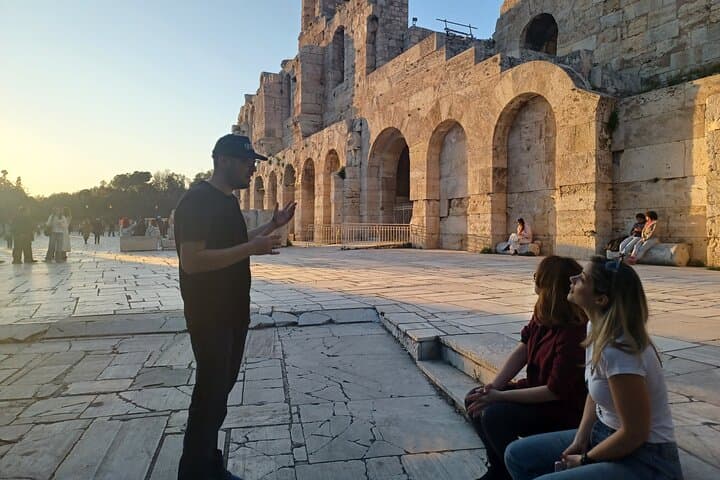
The streetlights throw long shadows across ancient flagstones as you step onto Dionysiou Areopagitou and the city seems to inhale—the Acropolis watching, quiet and immovable. At night, the stones take on character: the fractured marble remembers festivals and courtroom cries; the alleys hum with vendors and distant traffic while a storyteller threads old, unsettling tales through the present.
Verified experiences and guided adventures in the surrounding area.
Operated by Hellas Revival · Athens, Attica
The streetlights throw long shadows across ancient flagstones as you step onto Dionysiou Areopagitou and the city seems to inhale—the Acropolis watching, quiet and immovable. At night, the stones take on character: the fractured marble remembers festivals and courtroom cries; the alleys hum with vendors and distant traffic while a storyteller threads old, unsettling tales through the present.
This two-hour walking experience traces Athens’ classical spine—Dionysiou Areopagitou, the Odeon of Herodes Atticus, Apostolou Pavlou and the labyrinth of Monastiraki—bringing to life the darker side of Greek myth: monstrous births, vengeful gods and tragic transformations. Geologically, you’re moving across limestone and Pentelic marble laid down in the region’s ancient seabeds and quarried by civilizations from Pericles to Hadrian; culturally you’ll pass Roman libraries, Byzantine churches and modern market stalls that all layer Athens’ long human story.
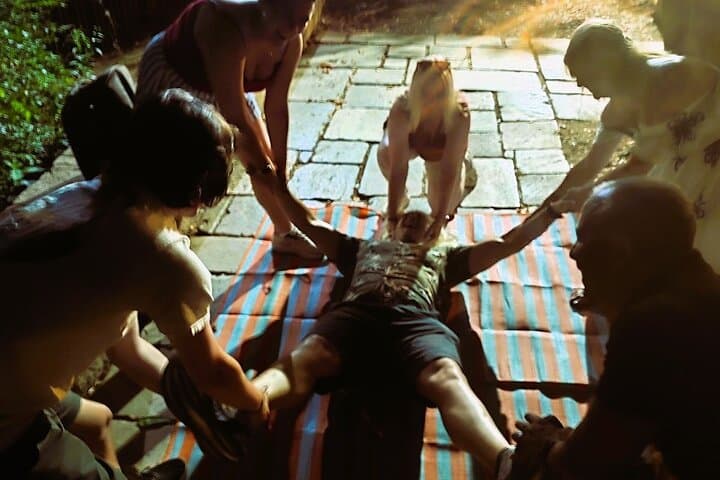
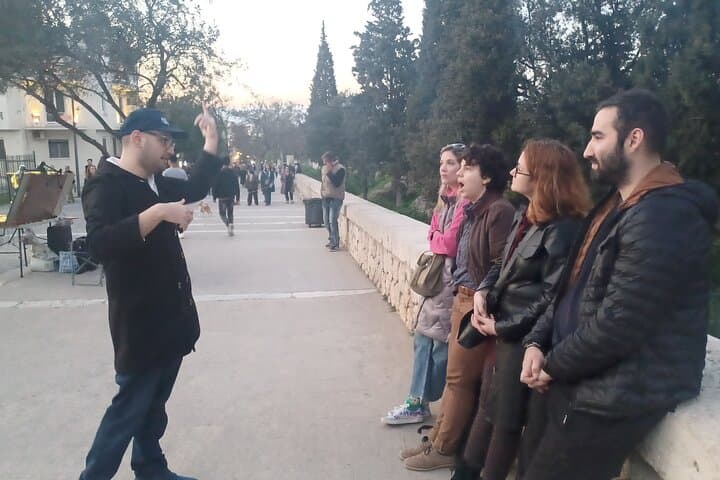
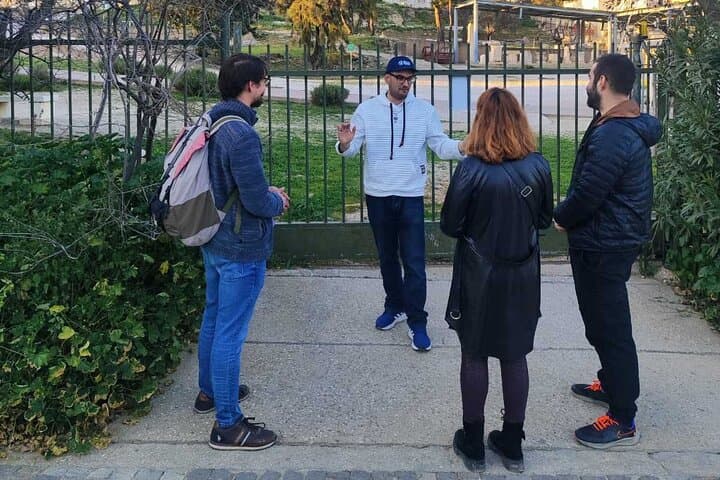
The tour balances staged storytelling with urban exploration: expect short walking intervals (about 3 km total for the full route), stone-paved streets, brief stops outside ruins and a finish at Monastiraki Square. It’s designed for small groups—2–6 people—so the atmosphere stays intimate and theatrical. Practical notes: wear sensible shoes for uneven pavement, bring water, and be prepared for mature themes; an explicit trigger warning is given for sexual violence and body horror. Public transport serves the start and end points, and tours run after sunset when the city’s contours sharpen.
This is theater on foot—history, geology and myth converging under the Acropolis’ silhouette. Listen closely: Athens’ stones will tell you their darker stories if you’re brave enough to hear them.
easy.
1.5–2.5 hours.
Suitable for most fitness levels; requires standing and walking up to 3 km on stone surfaces.
The tour is aimed at adults; teenagers may join with parental consent due to mature themes and graphic myth elements.
The full route covers roughly 3 km over about 2–2.5 hours with frequent stops; a shorter 2 km option (1.5–2 hours) is available that skips Monastiraki.
The listing notes wheelchair accessibility, though some historic surfaces may be uneven—contact the operator to confirm specific mobility needs before booking.
Tours can be canceled for bad weather with full refunds if canceled at least 24 hours before departure; check the operator’s policy for last-minute changes.
You’ll walk past sites spanning classical Athens to Hadrian’s Roman additions (Hadrian’s Library, 132 AD), each layer reflecting changing civic life over millennia.
This area is part of a protected archaeological zone—respect barriers, avoid climbing on ruins and keep noise and litter to a minimum to preserve fragile sites.
Hellas Revival operates guided outdoor trips and adventures with an emphasis on safety, stewardship, and memorable experiences.
The streetlights throw long shadows across ancient flagstones as you step onto Dionysiou Areopagitou and the city seems to inhale—the Acropolis watching, quiet and immovable. At night, the stones take on character: the fractured marble remembers festivals and courtroom cries; the alleys hum with vendors and distant traffic while a storyteller threads old, unsettling tales through the present.
The streetlights throw long shadows across ancient flagstones as you step onto Dionysiou Areopagitou and the city seems to inhale—the Acropolis watching, quiet and immovable. At night, the stones take on character: the fractured marble remembers festivals and courtroom cries; the alleys hum with vendors and distant traffic while a storyteller threads old, unsettling tales through the present.
This two-hour walking experience traces Athens’ classical spine—Dionysiou Areopagitou, the Odeon of Herodes Atticus, Apostolou Pavlou and the labyrinth of Monastiraki—bringing to life the darker side of Greek myth: monstrous births, vengeful gods and tragic transformations. Geologically, you’re moving across limestone and Pentelic marble laid down in the region’s ancient seabeds and quarried by civilizations from Pericles to Hadrian; culturally you’ll pass Roman libraries, Byzantine churches and modern market stalls that all layer Athens’ long human story.
The tour balances staged storytelling with urban exploration: expect short walking intervals (about 3 km total for the full route), stone-paved streets, brief stops outside ruins and a finish at Monastiraki Square. It’s designed for small groups—2–6 people—so the atmosphere stays intimate and theatrical. Practical notes: wear sensible shoes for uneven pavement, bring water, and be prepared for mature themes; an explicit trigger warning is given for sexual violence and body horror. Public transport serves the start and end points, and tours run after sunset when the city’s contours sharpen.
This is theater on foot—history, geology and myth converging under the Acropolis’ silhouette. Listen closely: Athens’ stones will tell you their darker stories if you’re brave enough to hear them.