THE ADVENTURE COLLECTIVE® · Independent discovery and booking for outdoor travel

Walk the lower Athabasca Glacier on a guided, four-hour exploration of ice, rock and meltwater channels. Small groups and ACMG-certified guides make this a practical, science-forward way to experience the Columbia Icefield.
Walk the lower Athabasca Glacier on a guided, four-hour exploration of ice, rock and meltwater channels. Small groups and ACMG-certified guides make this a practical, science-forward way to experience the Columbia Icefield.
The wind off ancient ice cuts clear as you step from the RV lot onto the moraine, crampons clicking on a surface that is part rock, part blue compacted snow. In the first minutes your guide points out pressure ridges and melt channels; the ice seems to breathe, cracking and shifting with a slow, deliberate pulse.
Verified experiences and guided adventures in the surrounding area.
Operated by Rockaboo Mountain Adventures · Jasper, Alberta
The wind off ancient ice cuts clear as you step from the RV lot onto the moraine, crampons clicking on a surface that is part rock, part blue compacted snow. In the first minutes your guide points out pressure ridges and melt channels; the ice seems to breathe, cracking and shifting with a slow, deliberate pulse.
This four-hour route crosses the lower Athabasca Glacier, a visible remnant of the Pleistocene ice sheet carved between Columbia Icefield peaks. Geology here is raw: layered glacial till, polished bedrock, and moulins that funnel melt. Indigenous peoples, including the Stoney and Cree, traveled valley corridors for trade and seasonal hunting long before the first European explorers recorded these headwaters.
Expect close-up lessons in glaciology—how ice flows, why crevasses open, and how the glacier feeds rivers downstream. Guides from ACMG teach safe crampon technique and may, conditions permitting, demonstrate ropework or collect simple scientific samples to show how the glacier is changing.
Practical guidance: dress in layers with a windproof outer shell, wear sturdy boots that fit crampons, and carry water and sun protection—UV at this elevation is strong. The terrain alternates between rocky scree and hard ice; the pace is steady but not rushed to allow time for interpretation and photo stops.
Small-group size keeps impact low and learning focused. Book with clear fitness expectations: you should be comfortable walking on uneven ground for several hours and following guide instructions. Arrive prepared, sign the waiver online, and expect a compact, tactile encounter with one of the Rockies’ most dynamic landscapes.
moderate.
4 hours.
Suitable for hikers with moderate fitness who can walk uneven, icy terrain for several hours.
The route is rated moderate: steady walking on uneven moraine and hard ice for about four hours; guides teach basic crampon use as needed.
Yes—use of crampons, hiking poles, and footwear is included as part of the guided program.
No prior glacier experience is required, but participants should be comfortable walking on icy and rocky terrain and follow guide instructions.
All guides are ACMG-certified and manage risk on the glacier; the booking is non-refundable so check weather and fitness before purchasing.
The Athabasca Glacier is part of the Columbia Icefield system, long used as a travel corridor and more recently studied for rapid retreat since the early 20th century.
Tours operate in small groups to minimize impact; following guide routes and packing out waste helps protect fragile glacial and alpine environments.
Rockaboo Mountain Adventures operates guided outdoor trips and adventures with an emphasis on safety, stewardship, and memorable experiences.


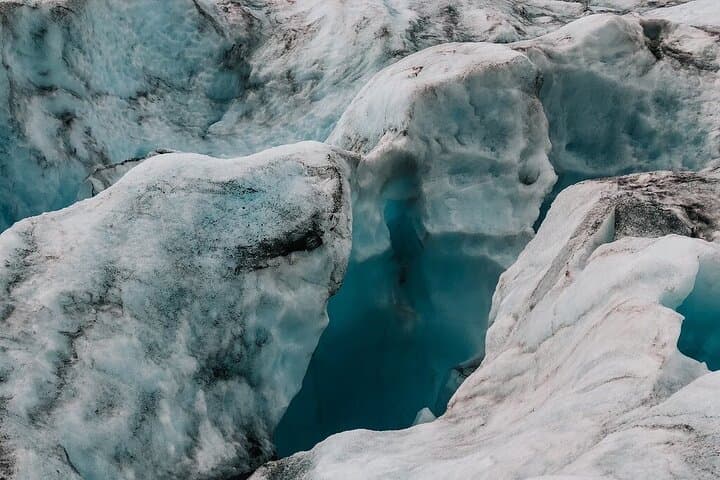

The wind off ancient ice cuts clear as you step from the RV lot onto the moraine, crampons clicking on a surface that is part rock, part blue compacted snow. In the first minutes your guide points out pressure ridges and melt channels; the ice seems to breathe, cracking and shifting with a slow, deliberate pulse.
The wind off ancient ice cuts clear as you step from the RV lot onto the moraine, crampons clicking on a surface that is part rock, part blue compacted snow. In the first minutes your guide points out pressure ridges and melt channels; the ice seems to breathe, cracking and shifting with a slow, deliberate pulse.
This four-hour route crosses the lower Athabasca Glacier, a visible remnant of the Pleistocene ice sheet carved between Columbia Icefield peaks. Geology here is raw: layered glacial till, polished bedrock, and moulins that funnel melt. Indigenous peoples, including the Stoney and Cree, traveled valley corridors for trade and seasonal hunting long before the first European explorers recorded these headwaters.
Expect close-up lessons in glaciology—how ice flows, why crevasses open, and how the glacier feeds rivers downstream. Guides from ACMG teach safe crampon technique and may, conditions permitting, demonstrate ropework or collect simple scientific samples to show how the glacier is changing.
Practical guidance: dress in layers with a windproof outer shell, wear sturdy boots that fit crampons, and carry water and sun protection—UV at this elevation is strong. The terrain alternates between rocky scree and hard ice; the pace is steady but not rushed to allow time for interpretation and photo stops.
Small-group size keeps impact low and learning focused. Book with clear fitness expectations: you should be comfortable walking on uneven ground for several hours and following guide instructions. Arrive prepared, sign the waiver online, and expect a compact, tactile encounter with one of the Rockies’ most dynamic landscapes.