THE ADVENTURE COLLECTIVE® · Independent discovery and booking for outdoor travel

Ride the world's fastest elevator and step onto the 124th and 125th floors for 360° views of Dubai, the Persian Gulf, and the engineered landscape below. This guide explains what to expect, when to go, and how to make the most of your hour at the top.
Ride the world's fastest elevator and step onto the 124th and 125th floors for 360° views of Dubai, the Persian Gulf, and the engineered landscape below. This guide explains what to expect, when to go, and how to make the most of your hour at the top.
You step out of the air-conditioned lobby and, within seconds, the elevator doors close and the city slips into a silence of speed. In the world’s fastest double-deck elevators you climb at 10 m/s; the glass briefly blurs into streaks and then the skyline unfolds — glass, sand, and the Persian Gulf stretching like a hard-edged horizon.
Verified experiences and guided adventures in the surrounding area.
Operated by Travzi World Travel & Tourism LLC · Dubai, Dubai
You step out of the air-conditioned lobby and, within seconds, the elevator doors close and the city slips into a silence of speed. In the world’s fastest double-deck elevators you climb at 10 m/s; the glass briefly blurs into streaks and then the skyline unfolds — glass, sand, and the Persian Gulf stretching like a hard-edged horizon.
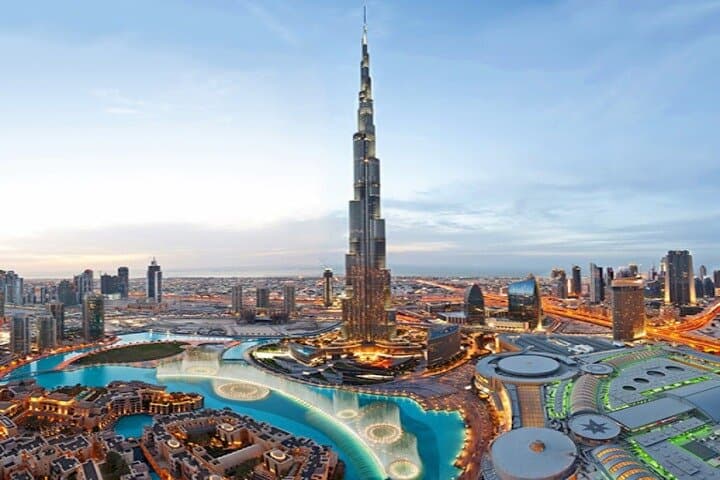
Completed in 2010 and designed by Skidmore, Owings & Merrill, the Burj Khalifa redefined what a skyscraper could be. Its stepped buttress design channels wind and distributes loads, while the tower’s concrete core rises from reclaimed land at the edge of Dubai Creek. The observation levels on 124 and 125 offer 360-degree perspectives on the city’s rapid growth, the engineered waterways below, and the geometric pattern of streets and dunes beyond.
Culturally, the tower sits at the heart of Downtown Dubai — a compact district where high-end retail, public plazas, and the Dubai Fountain converge. Locals and visitors alike time visits for late afternoon light or after-dark illuminations when the building becomes part of the city’s nightly show.
Practically: allow an hour for the full visit including the short multimedia introduction, security screening, and time on the outdoor terrace. Bring a charged camera and your mobile ticket; security is strict and lines peak at sunset. The outdoor deck can be windy and cooler than the lobby, so a light layer helps. If you want the clearest photos, aim for mid-morning or late evening when haze is lowest and lights are on. With planning, the At The Top visit is an efficient way to read Dubai’s scale and ambition from above.
easy.
1 hour.
Suitable for all fitness levels; mostly standing and short walking between elevator and decks
The standard visit is about 60 minutes, including multimedia presentation, elevator ride, and time on the observation levels.
Yes — the attraction is wheelchair accessible with ramps and elevators; inform staff if you require assistance.
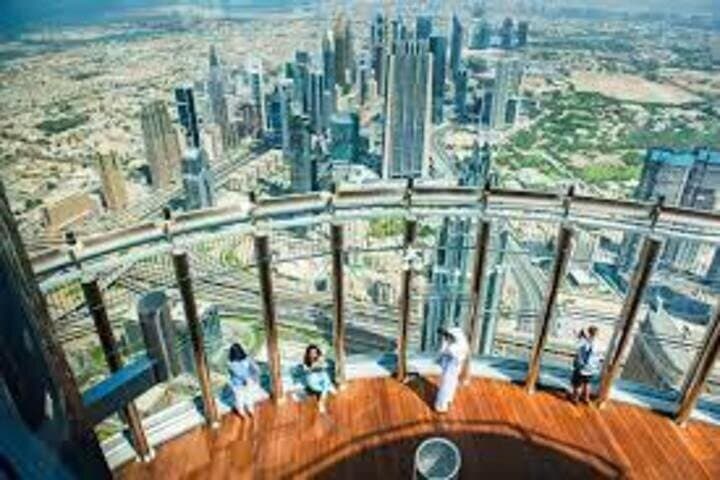
Yes — there is a public outdoor observation terrace on the 125th level, weather permitting and subject to safety checks.
No full-service dining is provided on the observation levels, though nearby restaurants and At.mosphere (122nd floor) offer reservations and dining options.
Opened in 2010 and designed by Skidmore, Owings & Merrill, the Burj Khalifa was built as the keystone of Downtown Dubai’s rapid urban development and remains the world’s tallest structure.
High visitor volumes and energy use are ongoing challenges; visitors are encouraged to minimize waste, follow staff guidance, and use public transport to access the site.
Travzi World Travel & Tourism LLC operates guided outdoor trips and adventures with an emphasis on safety, stewardship, and memorable experiences.
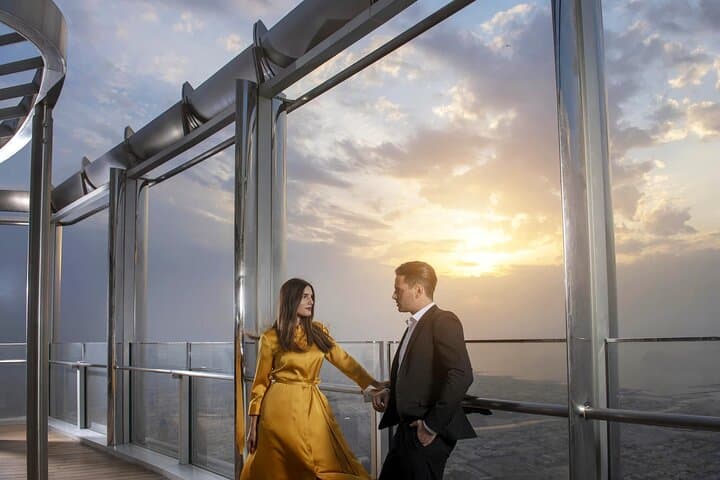
You step out of the air-conditioned lobby and, within seconds, the elevator doors close and the city slips into a silence of speed. In the world’s fastest double-deck elevators you climb at 10 m/s; the glass briefly blurs into streaks and then the skyline unfolds — glass, sand, and the Persian Gulf stretching like a hard-edged horizon.
You step out of the air-conditioned lobby and, within seconds, the elevator doors close and the city slips into a silence of speed. In the world’s fastest double-deck elevators you climb at 10 m/s; the glass briefly blurs into streaks and then the skyline unfolds — glass, sand, and the Persian Gulf stretching like a hard-edged horizon.
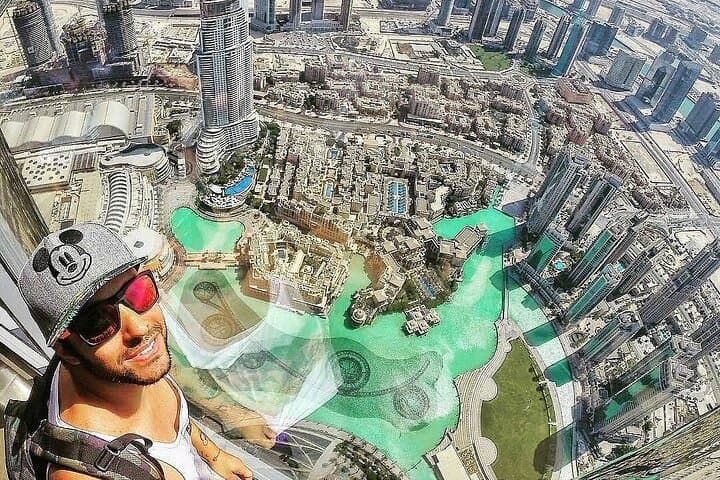
Completed in 2010 and designed by Skidmore, Owings & Merrill, the Burj Khalifa redefined what a skyscraper could be. Its stepped buttress design channels wind and distributes loads, while the tower’s concrete core rises from reclaimed land at the edge of Dubai Creek. The observation levels on 124 and 125 offer 360-degree perspectives on the city’s rapid growth, the engineered waterways below, and the geometric pattern of streets and dunes beyond.
Culturally, the tower sits at the heart of Downtown Dubai — a compact district where high-end retail, public plazas, and the Dubai Fountain converge. Locals and visitors alike time visits for late afternoon light or after-dark illuminations when the building becomes part of the city’s nightly show.
Practically: allow an hour for the full visit including the short multimedia introduction, security screening, and time on the outdoor terrace. Bring a charged camera and your mobile ticket; security is strict and lines peak at sunset. The outdoor deck can be windy and cooler than the lobby, so a light layer helps. If you want the clearest photos, aim for mid-morning or late evening when haze is lowest and lights are on. With planning, the At The Top visit is an efficient way to read Dubai’s scale and ambition from above.