THE ADVENTURE COLLECTIVE® · Independent discovery and booking for outdoor travel

Ride the world’s fastest double-deck elevators and step onto 360-degree observation decks high above Dubai. This guide covers what to expect from the 124th–125th floor experience, timing, and practical tips for planning your visit.
Ride the world’s fastest double-deck elevators and step onto 360-degree observation decks high above Dubai. This guide covers what to expect from the 124th–125th floor experience, timing, and practical tips for planning your visit.
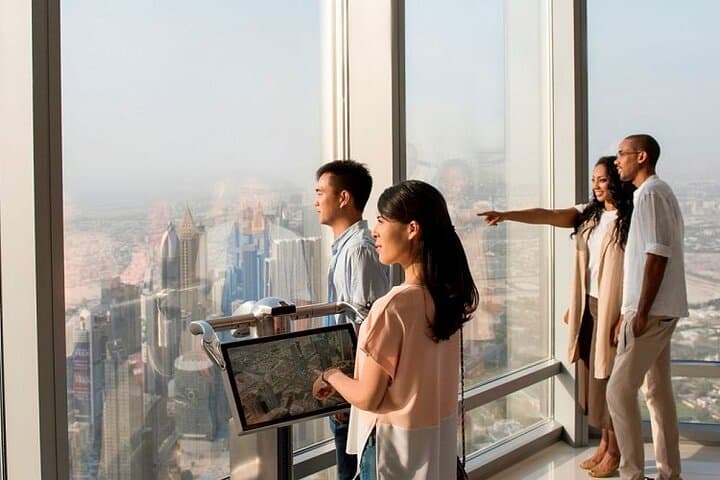
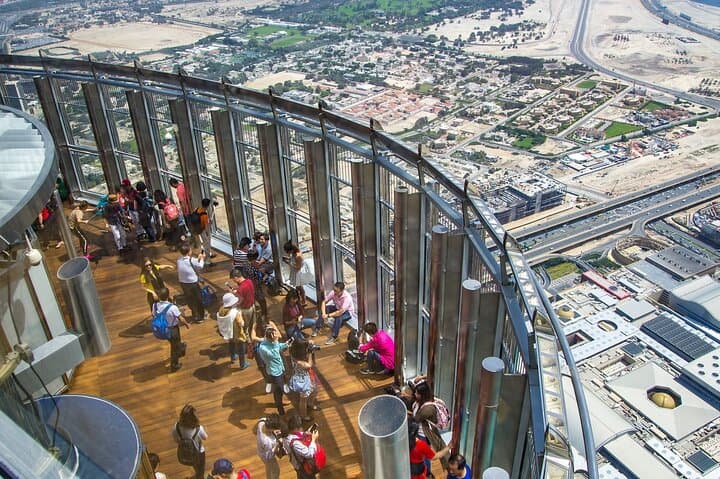
Glass and steel rush past at 10 m/s as the elevator climbs—within a minute the noise of Dubai dissolves and the city straightens into geometry. On the 124th and 125th floors the observation decks open like a stage: a 360-degree sweep of the Arabian Gulf, the drifting desert, and rows of skyscrapers that push the horizon into new lines.
Verified experiences and guided adventures in the surrounding area.
Operated by Trip Ventura · Dubai, Dubai
Glass and steel rush past at 10 m/s as the elevator climbs—within a minute the noise of Dubai dissolves and the city straightens into geometry. On the 124th and 125th floors the observation decks open like a stage: a 360-degree sweep of the Arabian Gulf, the drifting desert, and rows of skyscrapers that push the horizon into new lines.
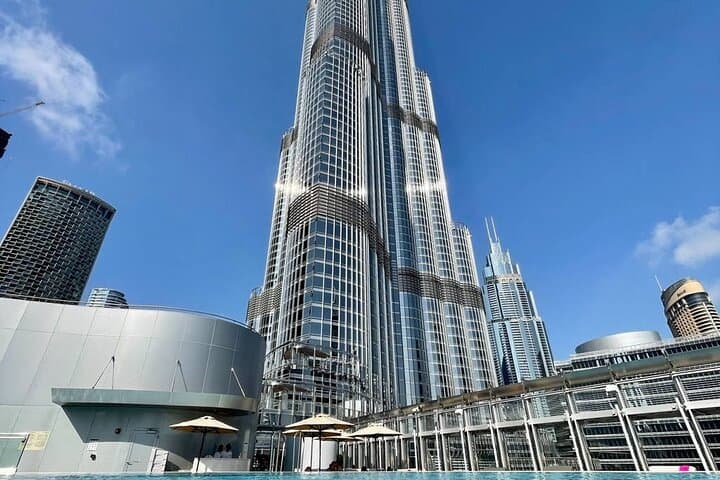
The Burj Khalifa rose from the sands in 2010 as a deliberate marker of Dubai’s rapid transformation from pearling village to global hub. Engineered to 828 meters, the tower sits on reclaimed coastal plain and a concrete piling system that anchors it to compacted fill—an architectural answer to local geology and climate. Cultural touches appear in the mashrabiya screens on level 125 and the displays that trace the emirate’s history and growth.
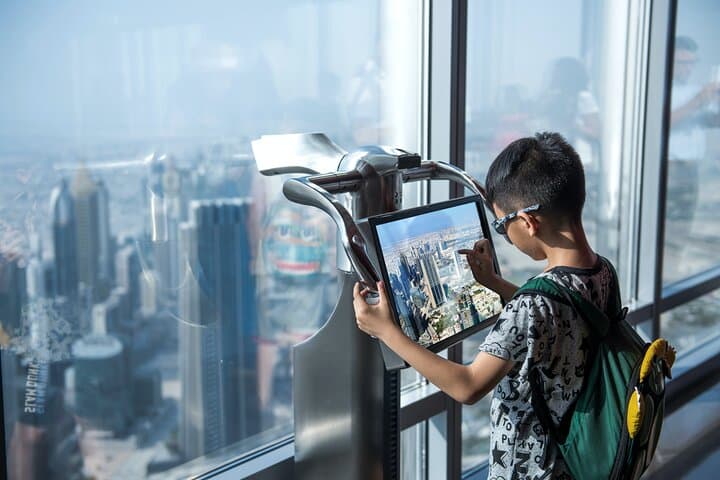
Practical guidance is straightforward: the observation experience typically includes a reserved time slot with roughly 30 minutes on the deck, though the full appointment window can run longer depending on transfers and security. Expect airport-style security, telescopes for detailed viewing, and a VR feature for a simulated ascent. Sunrise and sunset deliver the sharpest light—book early for sunrise to avoid crowds, or late for city lights. Public transit (Dubai Metro) and pedestrian paths connect directly to the base; plan water and sun protection for exterior viewing areas and allow extra time for photo queues. Accessibility is good—elevators and ramps are provided—but the height can be challenging for those with vertigo. With the city at your feet, the experience is equal parts engineering and perspective: rapid ascent, panoramic payoff, and a clear sense of how place, ambition, and landscape meet.
easy.
30 minutes–4 hours.
Suitable for all fitness levels; requires minimal mobility to navigate elevators and decks
Visitors usually spend about 30–60 minutes on the decks, though the full visit window including security and displays can extend to a few hours.
Tickets are generally non-refundable and are sold for a specific time slot; check your booking terms—this operator lists sales as final.
Yes—elevators and ramps provide access to the observation levels, though some external areas may have thresholds; staff can assist as needed.
Large bags may be subject to security screening and tripods are often restricted; contact the operator if you need to bring professional photography gear.
Completed in 2010, the Burj Khalifa was designed by Adrian Smith and stands at 828 meters, symbolizing Dubai’s rapid urban and economic development.
High visitor numbers require sensible behavior—use public transit, minimize single-use plastics, and respect viewing-area limits to reduce congestion and wear.
Trip Ventura operates guided outdoor trips and adventures with an emphasis on safety, stewardship, and memorable experiences.
Glass and steel rush past at 10 m/s as the elevator climbs—within a minute the noise of Dubai dissolves and the city straightens into geometry. On the 124th and 125th floors the observation decks open like a stage: a 360-degree sweep of the Arabian Gulf, the drifting desert, and rows of skyscrapers that push the horizon into new lines.
Glass and steel rush past at 10 m/s as the elevator climbs—within a minute the noise of Dubai dissolves and the city straightens into geometry. On the 124th and 125th floors the observation decks open like a stage: a 360-degree sweep of the Arabian Gulf, the drifting desert, and rows of skyscrapers that push the horizon into new lines.
The Burj Khalifa rose from the sands in 2010 as a deliberate marker of Dubai’s rapid transformation from pearling village to global hub. Engineered to 828 meters, the tower sits on reclaimed coastal plain and a concrete piling system that anchors it to compacted fill—an architectural answer to local geology and climate. Cultural touches appear in the mashrabiya screens on level 125 and the displays that trace the emirate’s history and growth.
Practical guidance is straightforward: the observation experience typically includes a reserved time slot with roughly 30 minutes on the deck, though the full appointment window can run longer depending on transfers and security. Expect airport-style security, telescopes for detailed viewing, and a VR feature for a simulated ascent. Sunrise and sunset deliver the sharpest light—book early for sunrise to avoid crowds, or late for city lights. Public transit (Dubai Metro) and pedestrian paths connect directly to the base; plan water and sun protection for exterior viewing areas and allow extra time for photo queues. Accessibility is good—elevators and ramps are provided—but the height can be challenging for those with vertigo. With the city at your feet, the experience is equal parts engineering and perspective: rapid ascent, panoramic payoff, and a clear sense of how place, ambition, and landscape meet.