THE ADVENTURE COLLECTIVE® · Independent discovery and booking for outdoor travel

Ride a lightning-fast elevator to 555 meters and stand above Dubai’s grid of light. This guide explains what you’ll see on levels 125 and 148, plus practical tips for timing, tickets, and visibility.
Ride a lightning-fast elevator to 555 meters and stand above Dubai’s grid of light. This guide explains what you’ll see on levels 125 and 148, plus practical tips for timing, tickets, and visibility.
The doors whisper open and the elevator rises so fast the city compresses into a grid of light below; within a minute you're looking out from 555 meters, where glass meets horizon and the Persian Gulf edges into the distance.
Verified experiences and guided adventures in the surrounding area.
Operated by ORIENT TOURS LLC SOLE PROPRIETORSHIP · Dubai, Dubai
The doors whisper open and the elevator rises so fast the city compresses into a grid of light below; within a minute you're looking out from 555 meters, where glass meets horizon and the Persian Gulf edges into the distance.
Burj Khalifa opened in 2010 and holds the title of the world's tallest building at 828 meters. The climbing concrete and steel core rests on a deep piled foundation that translates Dubai’s desert into vertical architecture. From levels 125 and 148 you get staged perspectives: the geometric sweep of Downtown Dubai, the fountains gushing like a coached performance, and Palm Jumeirah arcing into the sea.
Culturally, the tower is a modern landmark for a rapidly evolving city—visitors often pair their visit with Arabic coffee and dates, and watch the city’s skyline shift from sunlit gold to neon at night. The observation decks use telescopes and multimedia displays to orient you to landmarks and local history.
Practically: your booking assigns a strict time slot—arrive at least 10 minutes early, carry a valid photo ID to exchange your PDF voucher for a physical ticket, and expect short waits during peak periods. Weather-driven haze can limit visibility; there is no refund for low visibility. The decks are accessible for most fitness levels but involve elevator security and some queues.
Plan sunrise or sunset for dramatic light, bring a light layer against the high-altitude wind, and allow 60–120 minutes to soak the view and use the telescopes. At this height the city feels both immediate and distant—a clear, ordered panorama best experienced with a measure of patience and a charged camera.
easy.
60–120 minutes.
Suitable for all fitness levels; mostly standing and short walks between elevator and viewing platforms
Bring the operator PDF voucher or 7-digit order number on your phone plus a valid photo ID—staff will scan the voucher to issue the physical ticket.
You may stay as long as you like after entry, but you must enter during your assigned time slot; allow 60–120 minutes to explore both decks and use telescopes.
Yes—At the Top features accessible entry and elevators, though you should notify the operator in advance if you require assistance.
There is no refund for reduced visibility; if your time slot is unavailable at booking they may reassign the nearest available time subject to availability.
Completed in 2010, Burj Khalifa was designed by architect Adrian Smith and anchored Dubai’s image as a global city; its construction transformed reclaimed desert into dense downtown development.
High visitor numbers concentrate impact in a small urban site; stick to marked areas, avoid littering, and be mindful that energy use for lighting and elevators is significant in tall structures.
ORIENT TOURS LLC SOLE PROPRIETORSHIP operates guided outdoor trips and adventures with an emphasis on safety, stewardship, and memorable experiences.


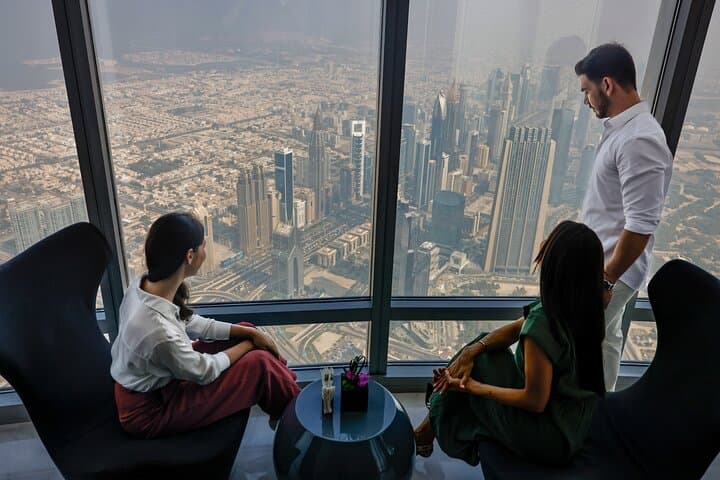

The doors whisper open and the elevator rises so fast the city compresses into a grid of light below; within a minute you're looking out from 555 meters, where glass meets horizon and the Persian Gulf edges into the distance.
The doors whisper open and the elevator rises so fast the city compresses into a grid of light below; within a minute you're looking out from 555 meters, where glass meets horizon and the Persian Gulf edges into the distance.
Burj Khalifa opened in 2010 and holds the title of the world's tallest building at 828 meters. The climbing concrete and steel core rests on a deep piled foundation that translates Dubai’s desert into vertical architecture. From levels 125 and 148 you get staged perspectives: the geometric sweep of Downtown Dubai, the fountains gushing like a coached performance, and Palm Jumeirah arcing into the sea.
Culturally, the tower is a modern landmark for a rapidly evolving city—visitors often pair their visit with Arabic coffee and dates, and watch the city’s skyline shift from sunlit gold to neon at night. The observation decks use telescopes and multimedia displays to orient you to landmarks and local history.
Practically: your booking assigns a strict time slot—arrive at least 10 minutes early, carry a valid photo ID to exchange your PDF voucher for a physical ticket, and expect short waits during peak periods. Weather-driven haze can limit visibility; there is no refund for low visibility. The decks are accessible for most fitness levels but involve elevator security and some queues.
Plan sunrise or sunset for dramatic light, bring a light layer against the high-altitude wind, and allow 60–120 minutes to soak the view and use the telescopes. At this height the city feels both immediate and distant—a clear, ordered panorama best experienced with a measure of patience and a charged camera.