THE ADVENTURE COLLECTIVE® · Independent discovery and booking for outdoor travel

Ascend to the At The Top observation decks and see Dubai unfold from 124 floors up. This guide covers timing, what to expect, practical tips and why sunset slots sell out fast.
Ascend to the At The Top observation decks and see Dubai unfold from 124 floors up. This guide covers timing, what to expect, practical tips and why sunset slots sell out fast.
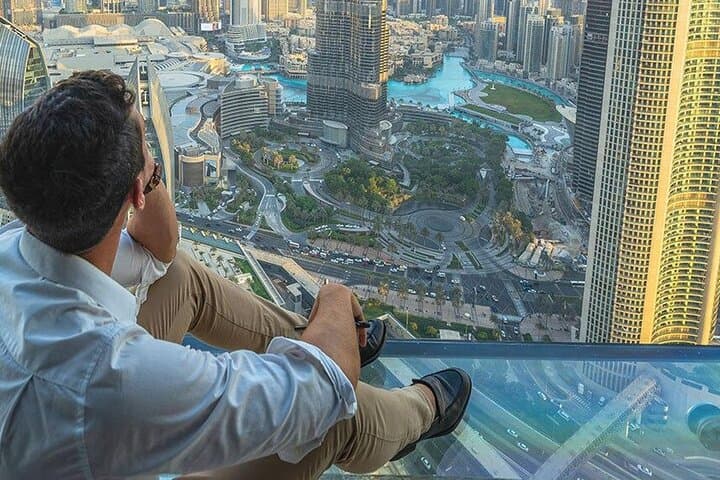
You step into a climate-controlled vortex and, in less than a minute, the city tilts beneath you — glass, chrome, and the Arabian Gulf shrinking to a map. The elevator climbs past 124 floors with engineered poise; when the doors open, Dubai spreads in a precise, bright panorama. Wind skims the facades below, fountains choreograph their arcs, and the desert edges the horizon like a different country daring you to cross it.
Verified experiences and guided adventures in the surrounding area.
Operated by Bin Tours · Dubai, Dubai
You step into a climate-controlled vortex and, in less than a minute, the city tilts beneath you — glass, chrome, and the Arabian Gulf shrinking to a map. The elevator climbs past 124 floors with engineered poise; when the doors open, Dubai spreads in a precise, bright panorama. Wind skims the facades below, fountains choreograph their arcs, and the desert edges the horizon like a different country daring you to cross it.
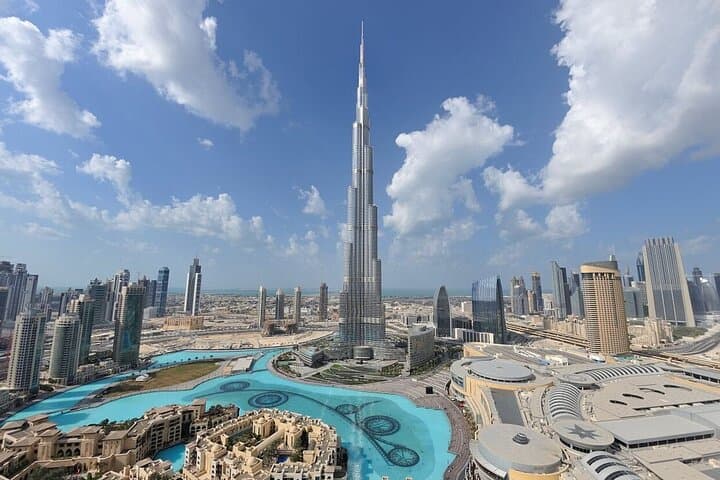
The Burj Khalifa rose from sand and ambition after the 2000s oil boom, a steel-and-concrete answer to rapid urbanization and a global race for superlatives. The tower sits on reclaimed ground beside the Dubai Fountain and Dubai Mall — a cluster of modern landmarks that shifted the city's cultural gravity toward spectacle and tourism. Geologically the view spans coastal flats into Pleistocene dunes; culturally you read Dubai’s recent history in grids of development and the boats that still slice the creek.
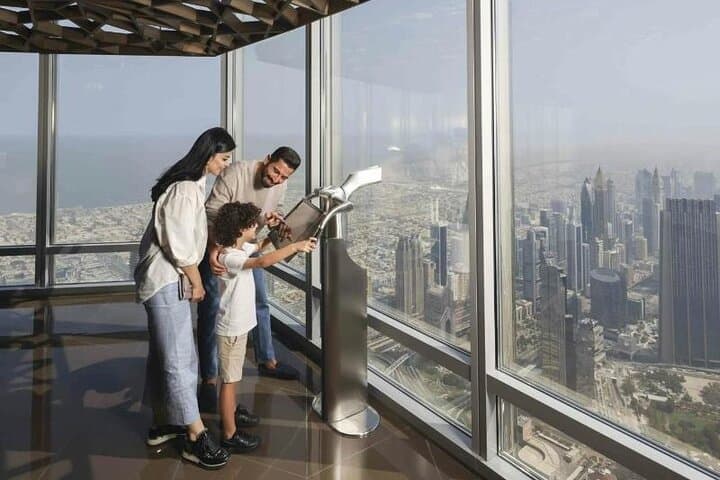
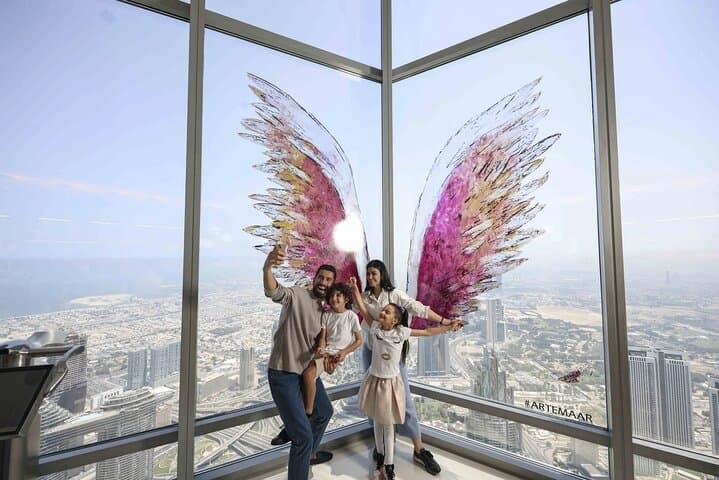
For visitors, the decks offer more than a selfie backdrop: interpretive displays, high-powered binoculars, and lines that move fastest outside sunset windows. Sunset tickets deliver the best light but are busiest; morning slots often have clearer air. Security screening is straightforward; leave large bags behind and expect a short wait to board the elevator. Hydrate before you arrive, charge a camera, and budget 60–90 minutes to explore both indoor and outdoor vantage points.
Whether you’re measuring engineering, photography, or plain wonder, the At The Top experience condenses Dubai into a clean, vertical narrative — practical to plan, unforgettable to stand above.
easy.
1–1.5 hours.
Suitable for all fitness levels; requires only short walks and elevator access
Most visitors spend 60–90 minutes including elevator time, viewing, and exhibits; longer if you wait for sunset.
Tickets are for specific time slots; many providers allow cancellations up to 24 hours prior, but changes depend on availability.
Yes — the Burj Khalifa offers accessible routes and elevators; notify staff of special requirements when booking.
Yes — personal photography and video are permitted; tripods and professional gear may be restricted without prior permission.
Completed in 2010, the Burj Khalifa anchored Dubai’s move from regional trade center to global tourist hub and a showcase of modern engineering.
The tower’s operation emphasizes energy systems and water recycling in a desert environment; visitors are encouraged to minimize waste and use nearby recycling bins.
Bin Tours operates guided outdoor trips and adventures with an emphasis on safety, stewardship, and memorable experiences.
You step into a climate-controlled vortex and, in less than a minute, the city tilts beneath you — glass, chrome, and the Arabian Gulf shrinking to a map. The elevator climbs past 124 floors with engineered poise; when the doors open, Dubai spreads in a precise, bright panorama. Wind skims the facades below, fountains choreograph their arcs, and the desert edges the horizon like a different country daring you to cross it.
You step into a climate-controlled vortex and, in less than a minute, the city tilts beneath you — glass, chrome, and the Arabian Gulf shrinking to a map. The elevator climbs past 124 floors with engineered poise; when the doors open, Dubai spreads in a precise, bright panorama. Wind skims the facades below, fountains choreograph their arcs, and the desert edges the horizon like a different country daring you to cross it.
The Burj Khalifa rose from sand and ambition after the 2000s oil boom, a steel-and-concrete answer to rapid urbanization and a global race for superlatives. The tower sits on reclaimed ground beside the Dubai Fountain and Dubai Mall — a cluster of modern landmarks that shifted the city's cultural gravity toward spectacle and tourism. Geologically the view spans coastal flats into Pleistocene dunes; culturally you read Dubai’s recent history in grids of development and the boats that still slice the creek.
For visitors, the decks offer more than a selfie backdrop: interpretive displays, high-powered binoculars, and lines that move fastest outside sunset windows. Sunset tickets deliver the best light but are busiest; morning slots often have clearer air. Security screening is straightforward; leave large bags behind and expect a short wait to board the elevator. Hydrate before you arrive, charge a camera, and budget 60–90 minutes to explore both indoor and outdoor vantage points.
Whether you’re measuring engineering, photography, or plain wonder, the At The Top experience condenses Dubai into a clean, vertical narrative — practical to plan, unforgettable to stand above.