THE ADVENTURE COLLECTIVE® · Independent discovery and booking for outdoor travel

Ascend to the Burj Khalifa’s 124th and 125th floors for sweeping views of Dubai’s skyline, desert, and sea. This timed observation-deck visit mixes high-speed elevators, floor-to-ceiling glass, and an open-air terrace for dramatic panoramas.
Ascend to the Burj Khalifa’s 124th and 125th floors for sweeping views of Dubai’s skyline, desert, and sea. This timed observation-deck visit mixes high-speed elevators, floor-to-ceiling glass, and an open-air terrace for dramatic panoramas.
You step from the elevator into air that feels thinner and brighter—glass walls open the city like a living map beneath your feet. The Burj Khalifa’s 124th and 125th floors deliver a measured vertigo: the desert gives way to geometric neighborhoods, the Persian Gulf glints, and an open-air terrace lets wind push at your jacket like an impatient guide.
Verified experiences and guided adventures in the surrounding area.
Operated by Arabian Destination Tourism Dubai · Dubai, Dubai
You step from the elevator into air that feels thinner and brighter—glass walls open the city like a living map beneath your feet. The Burj Khalifa’s 124th and 125th floors deliver a measured vertigo: the desert gives way to geometric neighborhoods, the Persian Gulf glints, and an open-air terrace lets wind push at your jacket like an impatient guide.
Built as the world’s tallest tower and opened in 2010, Burj Khalifa was designed by Skidmore, Owings & Merrill with a spiraling concrete core inspired by regional patterns and Islamic architecture. The tower sits on Dubai Creek's reclaimed plain and uses advanced cladding and condensate-capture systems to manage heat and water in an arid climate.
Culturally, the tower signals Dubai’s rapid 21st-century growth and is a focal point for New Year’s fireworks and city celebrations. Expect pointed glass façades, elevator rides that climb at high speed, and multilingual staff handling steady visitor flows.
Practical guidance: book timed tickets to avoid queues, bring an ID for verification, and aim for sunset slots for shifting light across the skyline—early-morning visits are calmer. Security checkpoints are standard; backpacks may be inspected. Wear comfortable shoes: you’ll stand and walk on polished surfaces. Binoculars are provided, but carry a camera with a zoom for skyline detail. Hydration matters in Dubai’s heat—plan transit ahead, as the tower is next to Dubai Mall and linked to public transport and taxis.
The visit is accessible for most fitness levels and offers a compact, high-reward vertical viewpoint of the Gulf metropolis.
easy.
1–2 hours.
Suitable for all fitness levels; requires standing and short walks between viewpoints
No—mobile tickets are accepted; have the booking confirmation and a photo ID ready for entry.
Yes, the observation experience includes an open-air terrace on the designated levels; weather may affect access.
Yes—Burj Khalifa observation decks and routes are wheelchair accessible with elevators and suitable surfaces.
Allocate 60–120 minutes to account for security checks, elevator transfer, and time at multiple viewing levels.
Completed in 2010 and designed by Adrian Smith of SOM, Burj Khalifa became the world’s tallest structure, symbolizing Dubai’s rapid urban expansion.
The tower incorporates condensate collection and efficient cladding to reduce cooling loads; visitors are encouraged to minimize single-use plastic and follow site rules to limit wear on facilities.
Arabian Destination Tourism Dubai operates guided outdoor trips and adventures with an emphasis on safety, stewardship, and memorable experiences.
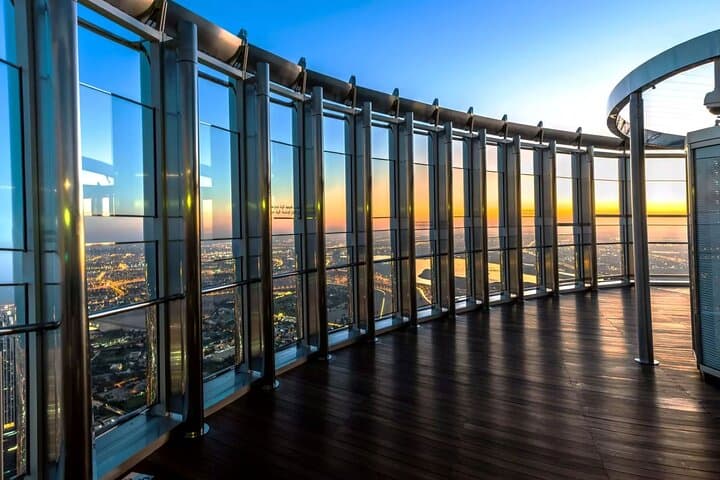
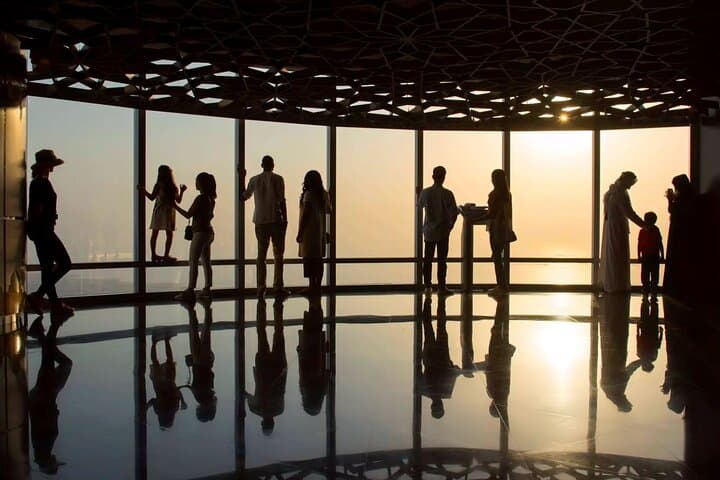
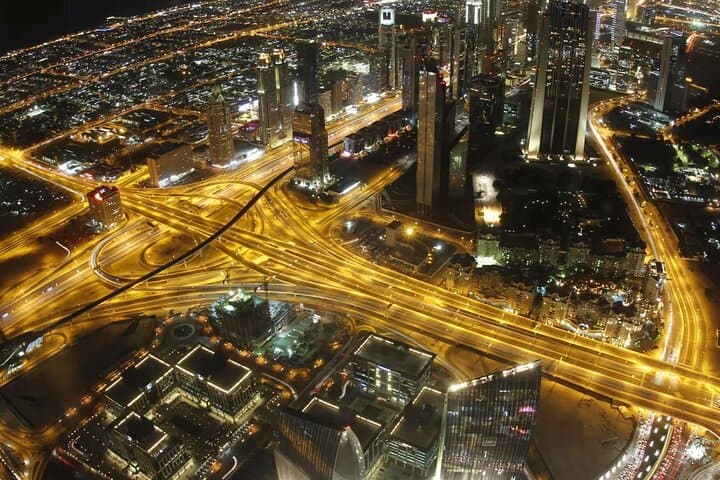
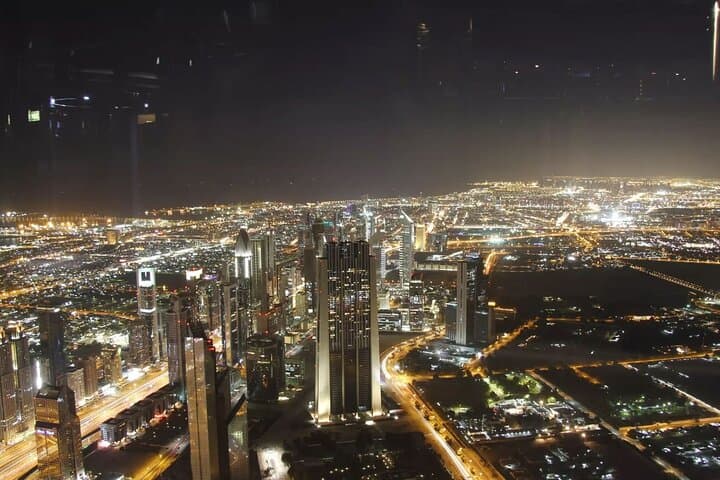
You step from the elevator into air that feels thinner and brighter—glass walls open the city like a living map beneath your feet. The Burj Khalifa’s 124th and 125th floors deliver a measured vertigo: the desert gives way to geometric neighborhoods, the Persian Gulf glints, and an open-air terrace lets wind push at your jacket like an impatient guide.
You step from the elevator into air that feels thinner and brighter—glass walls open the city like a living map beneath your feet. The Burj Khalifa’s 124th and 125th floors deliver a measured vertigo: the desert gives way to geometric neighborhoods, the Persian Gulf glints, and an open-air terrace lets wind push at your jacket like an impatient guide.
Built as the world’s tallest tower and opened in 2010, Burj Khalifa was designed by Skidmore, Owings & Merrill with a spiraling concrete core inspired by regional patterns and Islamic architecture. The tower sits on Dubai Creek's reclaimed plain and uses advanced cladding and condensate-capture systems to manage heat and water in an arid climate.
Culturally, the tower signals Dubai’s rapid 21st-century growth and is a focal point for New Year’s fireworks and city celebrations. Expect pointed glass façades, elevator rides that climb at high speed, and multilingual staff handling steady visitor flows.
Practical guidance: book timed tickets to avoid queues, bring an ID for verification, and aim for sunset slots for shifting light across the skyline—early-morning visits are calmer. Security checkpoints are standard; backpacks may be inspected. Wear comfortable shoes: you’ll stand and walk on polished surfaces. Binoculars are provided, but carry a camera with a zoom for skyline detail. Hydration matters in Dubai’s heat—plan transit ahead, as the tower is next to Dubai Mall and linked to public transport and taxis.
The visit is accessible for most fitness levels and offers a compact, high-reward vertical viewpoint of the Gulf metropolis.