THE ADVENTURE COLLECTIVE® · Independent discovery and booking for outdoor travel

Ride one of the world’s fastest elevators to the 124th and 125th floors of Burj Khalifa for sweeping 360° views of Dubai, the desert and the Gulf. Learn what to expect—from timing and transfers to the open-air terrace—before you go.
Ride one of the world’s fastest elevators to the 124th and 125th floors of Burj Khalifa for sweeping 360° views of Dubai, the desert and the Gulf. Learn what to expect—from timing and transfers to the open-air terrace—before you go.
The doors close and the world compresses into a glass capsule that rockets you upward—seconds later you step onto a platform 452 meters above Dubai and the city stretches away like a living map.
Verified experiences and guided adventures in the surrounding area.
Operated by Mona Tourism LLC · Dubai, Dubai
The doors close and the world compresses into a glass capsule that rockets you upward—seconds later you step onto a platform 452 meters above Dubai and the city stretches away like a living map.
At The Top on the 124th and 125th floors of Burj Khalifa offers uninterrupted 360° views of Dubai’s skyline, the Persian Gulf, and the surrounding desert. The ascent itself is part of the story: a high-speed elevator with a multimedia briefing on Dubai’s rapid growth and the engineering behind the tower’s Y-shaped concrete-and-steel core.
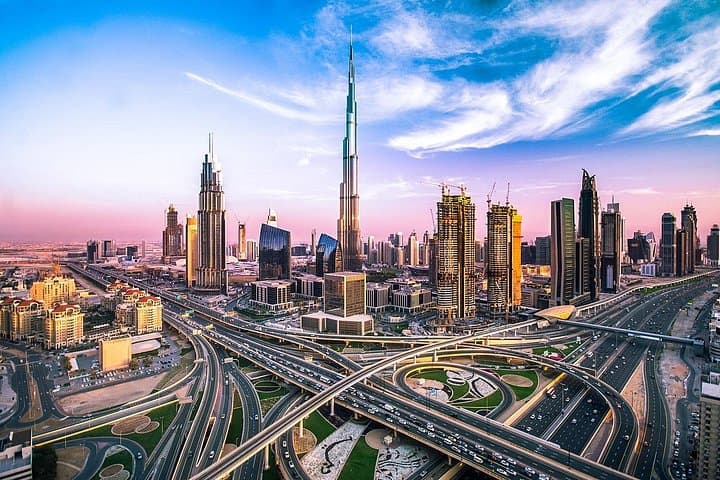
Opened in 2010 and designed by international engineers, Burj Khalifa redefined what a built environment can do in a coastal desert. The tower sits on reclaimed and compacted land at the edge of the downtown district; from the observation level you can read the city’s layers—planned islands in the gulf, linear highways, and the grid of low-rise neighborhoods that meet the desert’s pale horizon.
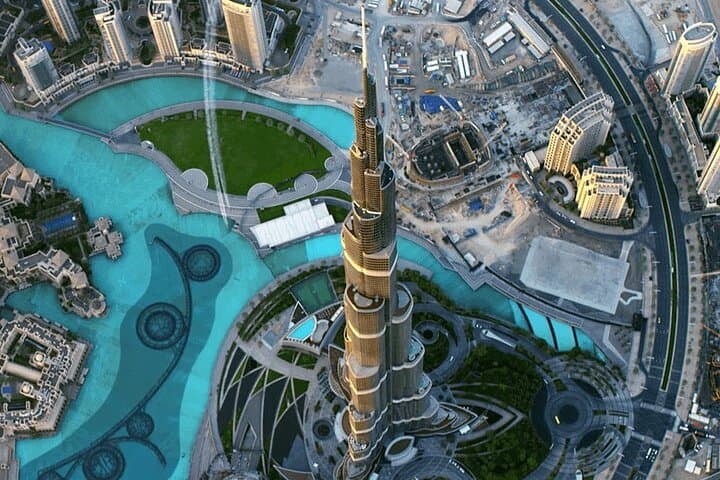
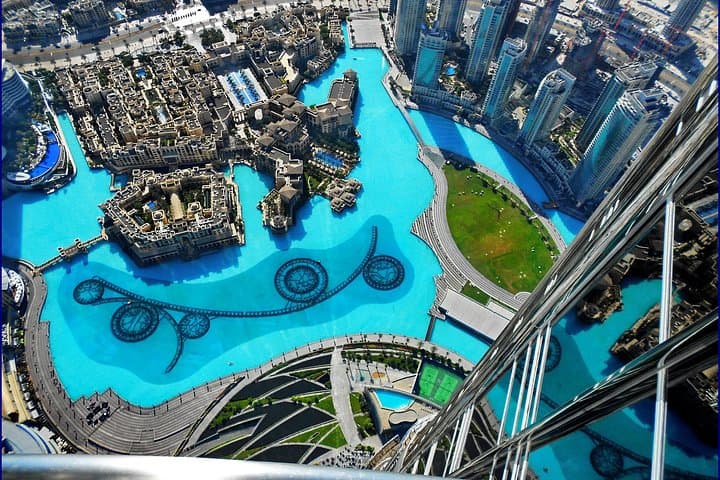
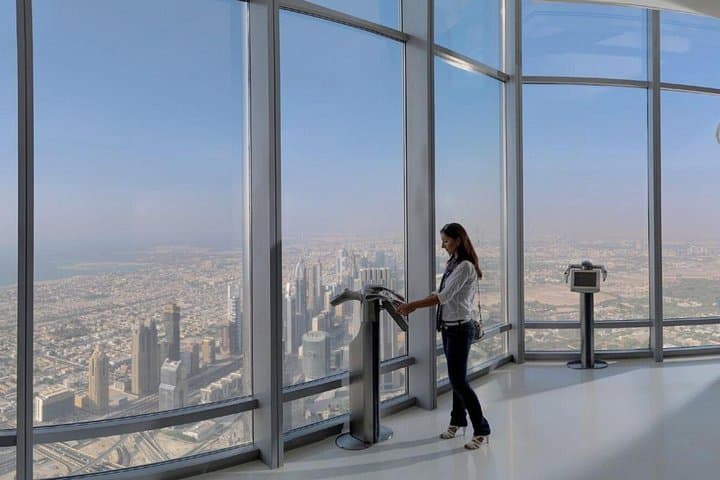
Culturally, the tower is a modern landmark that anchors Dubai’s showpiece developments: Dubai Mall, the Dubai Fountain, and adjacent waterfront promenades. Small details reward the curious—telescopes for zooming into neighborhoods, an open-air terrace for wind-worn views, and a compact souvenir shop.
Practical guidance: allow 60–90 minutes for the full visit, arrive early or late afternoon to avoid peak crowds, and use public transport or provided transfers to skip parking headaches. Bring sun protection for the terrace, a charged phone for photos, and sensible timing if you want sunset without the long queues.
easy.
1–2 hours.
Accessible to most visitors; must be able to stand and transfer into an elevator and up/down short stair sections.
Yes, admission is for an assigned entry time; arrive at least 20–30 minutes before your slot to clear security and catch the elevator presentation.
Yes—At The Top facilities and elevators are wheelchair accessible; the site lists accessibility options and staff can assist with transfers.
Yes—there is an open-air terrace on the observation level, though access may be limited in high wind or maintenance periods.
Yes—personal photography is permitted and telescopes are available for closer views; tripods and professional equipment policies may be restricted, so check ahead.
Completed in 2010 and designed by a global architectural team, Burj Khalifa became the world’s tallest structure and a focal point of Dubai’s rapid urban expansion.
High-visitation and energy use are ongoing concerns; visitors can reduce impact by using public transit, avoiding single-use plastics, and following site rules to protect shared spaces.
Mona Tourism LLC operates guided outdoor trips and adventures with an emphasis on safety, stewardship, and memorable experiences.
The doors close and the world compresses into a glass capsule that rockets you upward—seconds later you step onto a platform 452 meters above Dubai and the city stretches away like a living map.
The doors close and the world compresses into a glass capsule that rockets you upward—seconds later you step onto a platform 452 meters above Dubai and the city stretches away like a living map.
At The Top on the 124th and 125th floors of Burj Khalifa offers uninterrupted 360° views of Dubai’s skyline, the Persian Gulf, and the surrounding desert. The ascent itself is part of the story: a high-speed elevator with a multimedia briefing on Dubai’s rapid growth and the engineering behind the tower’s Y-shaped concrete-and-steel core.
Opened in 2010 and designed by international engineers, Burj Khalifa redefined what a built environment can do in a coastal desert. The tower sits on reclaimed and compacted land at the edge of the downtown district; from the observation level you can read the city’s layers—planned islands in the gulf, linear highways, and the grid of low-rise neighborhoods that meet the desert’s pale horizon.
Culturally, the tower is a modern landmark that anchors Dubai’s showpiece developments: Dubai Mall, the Dubai Fountain, and adjacent waterfront promenades. Small details reward the curious—telescopes for zooming into neighborhoods, an open-air terrace for wind-worn views, and a compact souvenir shop.
Practical guidance: allow 60–90 minutes for the full visit, arrive early or late afternoon to avoid peak crowds, and use public transport or provided transfers to skip parking headaches. Bring sun protection for the terrace, a charged phone for photos, and sensible timing if you want sunset without the long queues.