THE ADVENTURE COLLECTIVE® · Independent discovery and booking for outdoor travel

Ride a high-speed elevator to levels 124 and 125 of the Burj Khalifa for sweeping city and sea views. This timed-entry tour with transfers is ideal for first-time visitors who want efficient access, sunset photos, and a short window into Dubai’s vertical skyline.
Ride a high-speed elevator to levels 124 and 125 of the Burj Khalifa for sweeping city and sea views. This timed-entry tour with transfers is ideal for first-time visitors who want efficient access, sunset photos, and a short window into Dubai’s vertical skyline.
You step into a mirrored elevator and the city compresses beneath you—glass and steel blur into a ribbon, Dubai’s coastline and desert folding out like a map. By the time doors open onto levels 124 and 125, the skyline has rearranged itself: highways become threads, the Dubai Fountain a black circle edged in light, and the Persian Gulf a distant sheet pushing toward the horizon.
Verified experiences and guided adventures in the surrounding area.
Operated by Moway Tourism · Dubai, Dubai
You step into a mirrored elevator and the city compresses beneath you—glass and steel blur into a ribbon, Dubai’s coastline and desert folding out like a map. By the time doors open onto levels 124 and 125, the skyline has rearranged itself: highways become threads, the Dubai Fountain a black circle edged in light, and the Persian Gulf a distant sheet pushing toward the horizon.
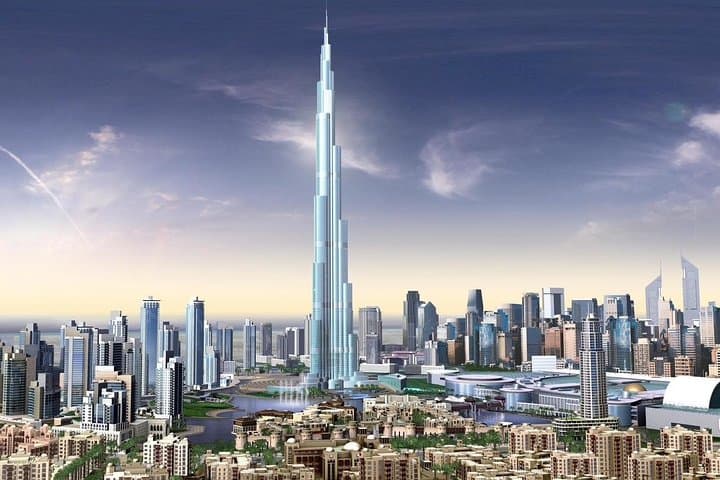
Completed in 2010 and designed by Adrian Smith of Skidmore, Owings & Merrill, the Burj Khalifa is the world’s tallest built structure and the anchor of Downtown Dubai. The tower rises from the reclaimed and leveled desert plain, a engineered spire of reinforced concrete and curtain glass that reshaped the city’s cultural and commercial identity. From the deck you can read the city’s layers—new development, traditional souks a short drive away, and the man-made islands farther out.
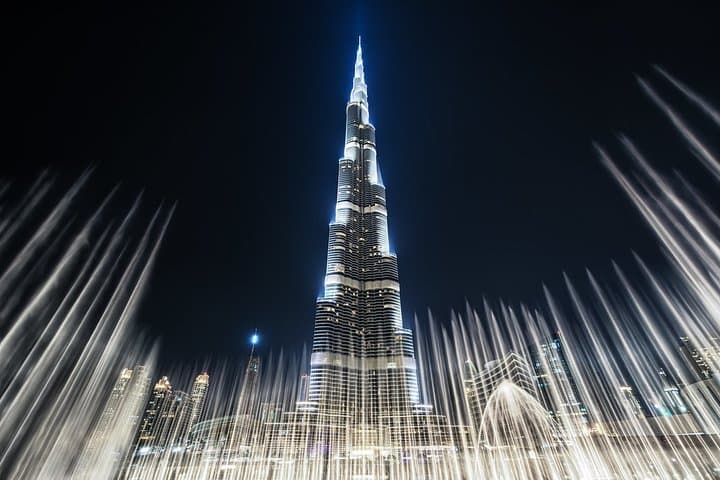
Practical guidance: tours last about three hours including transfers and mall time; arrive at least 15–20 minutes before your slot to pass security and enjoy timed-entry flow. Peak sunset slots sell out—book early if you want golden-hour light and the Fountain show choreography below. The elevators are swift but can feel vertiginous; the deck is fully accessible with elevators and ramps. Carry a light layer—the wind and air-conditioning at height make it cooler than street level. Photography is straightforward but use a polarizer to cut glass glare and keep valuables secure; crowds concentrate near the panoramic glass, so plan for short waits at prime windows.
This visit pairs urban spectacle with efficient logistics: transfers are included, tickets are mobile-friendly, and the experience is largely accessible to most travelers.
easy.
2–3 hours.
Minimal fitness required; suitable for travelers comfortable with elevators and short walks
The listed duration is about three hours including hotel transfers and discretionary time in the Dubai Mall and at the Fountain.
Yes—levels 124/125 are accessible via elevators and ramps; the tour notes wheelchair-accessible transport as well.
Yes—the Fountain is visible from the deck, but the best vantage point for the Fountain’s performance is the mall promenade at ground level where you can watch the choreography up close.
Children are allowed; ticketing policies vary by operator—infants may be required to sit on laps during transfers, but confirm age-based ticket rules when booking.
The Burj Khalifa opened in 2010 as part of Emaar’s Downtown Dubai project and quickly became a global symbol of Dubai’s rapid urban expansion and architectural ambition.
High-rise visitor centers manage capacity through timed tickets to reduce crowding; travelers are encouraged to minimize waste and use public transit or shared transfers to lower per-visitor emissions.
Moway Tourism operates guided outdoor trips and adventures with an emphasis on safety, stewardship, and memorable experiences.
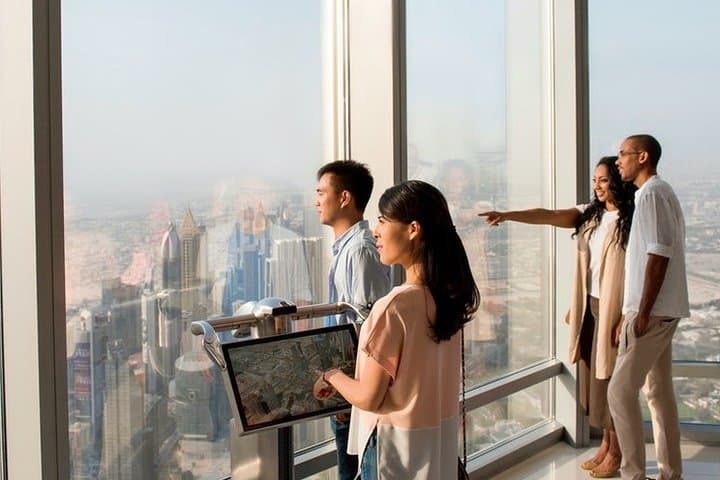
You step into a mirrored elevator and the city compresses beneath you—glass and steel blur into a ribbon, Dubai’s coastline and desert folding out like a map. By the time doors open onto levels 124 and 125, the skyline has rearranged itself: highways become threads, the Dubai Fountain a black circle edged in light, and the Persian Gulf a distant sheet pushing toward the horizon.
You step into a mirrored elevator and the city compresses beneath you—glass and steel blur into a ribbon, Dubai’s coastline and desert folding out like a map. By the time doors open onto levels 124 and 125, the skyline has rearranged itself: highways become threads, the Dubai Fountain a black circle edged in light, and the Persian Gulf a distant sheet pushing toward the horizon.
Completed in 2010 and designed by Adrian Smith of Skidmore, Owings & Merrill, the Burj Khalifa is the world’s tallest built structure and the anchor of Downtown Dubai. The tower rises from the reclaimed and leveled desert plain, a engineered spire of reinforced concrete and curtain glass that reshaped the city’s cultural and commercial identity. From the deck you can read the city’s layers—new development, traditional souks a short drive away, and the man-made islands farther out.
Practical guidance: tours last about three hours including transfers and mall time; arrive at least 15–20 minutes before your slot to pass security and enjoy timed-entry flow. Peak sunset slots sell out—book early if you want golden-hour light and the Fountain show choreography below. The elevators are swift but can feel vertiginous; the deck is fully accessible with elevators and ramps. Carry a light layer—the wind and air-conditioning at height make it cooler than street level. Photography is straightforward but use a polarizer to cut glass glare and keep valuables secure; crowds concentrate near the panoramic glass, so plan for short waits at prime windows.
This visit pairs urban spectacle with efficient logistics: transfers are included, tickets are mobile-friendly, and the experience is largely accessible to most travelers.