THE ADVENTURE COLLECTIVE® · Independent discovery and booking for outdoor travel

Ride one of the world’s fastest elevators to floors 124 and 125 of the Burj Khalifa for panoramic views of Dubai, the Arabian Gulf, and the desert beyond. This compact visit pairs efficient logistics with dramatic vantage points—book ahead and plan 60–90 minutes to experience the observation decks fully.
Ride one of the world’s fastest elevators to floors 124 and 125 of the Burj Khalifa for panoramic views of Dubai, the Arabian Gulf, and the desert beyond. This compact visit pairs efficient logistics with dramatic vantage points—book ahead and plan 60–90 minutes to experience the observation decks fully.
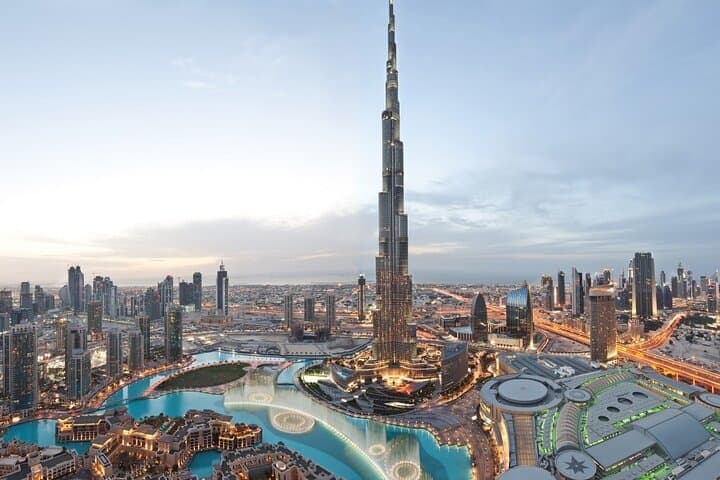
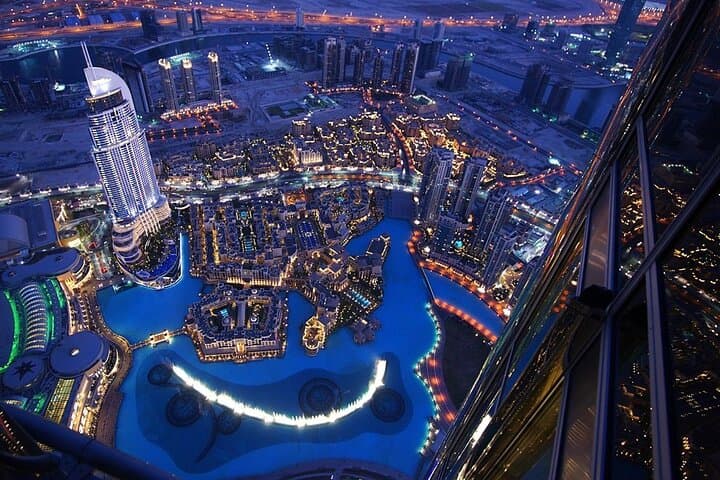
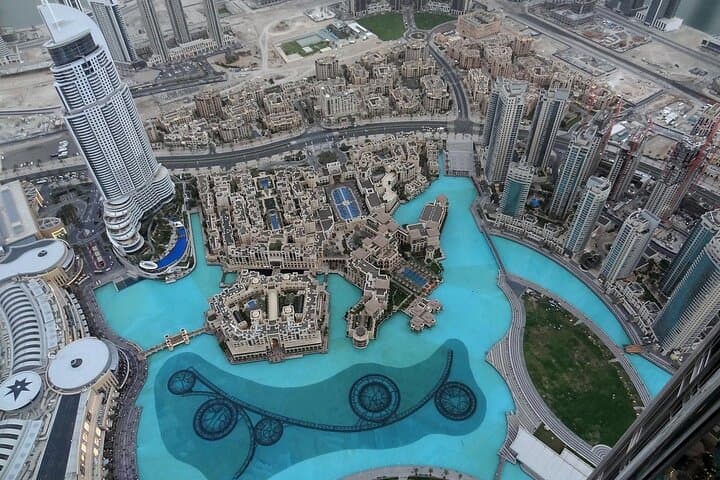
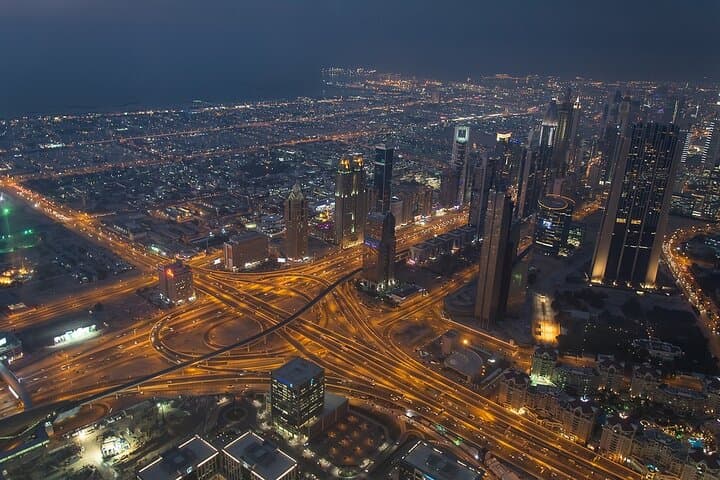
The elevator hums, the city compresses into a mosaic of glass and sand, and within a blink you are more than four hundred meters above a shoreline that seems to stretch and push outward. From levels 124 and 125 of the Burj Khalifa the city rearranges itself: the Dubai Fountain sketches formal arcs below, the Persian Gulf holds a pale, patient horizon, and the desert edges press against the urban grid.
Verified experiences and guided adventures in the surrounding area.
Operated by Efficient Tourism · Dubai, Dubai
The elevator hums, the city compresses into a mosaic of glass and sand, and within a blink you are more than four hundred meters above a shoreline that seems to stretch and push outward. From levels 124 and 125 of the Burj Khalifa the city rearranges itself: the Dubai Fountain sketches formal arcs below, the Persian Gulf holds a pale, patient horizon, and the desert edges press against the urban grid.
Completed in 2010 and designed by Skidmore, Owings & Merrill, Burj Khalifa reconfigured Dubai’s skyline and ambition. The tower’s concrete-encased reinforced core sits on a raft foundation set into coastal, sandy alluvium; designers balanced sculpted setbacks against wind and thermal stresses to achieve its height. Culturally, the deck has become a platform for celebrations and perspective—New Year fireworks, skyline photography, and a daily cross-section of global visitors.
Practical guidance: book timed tickets in advance (non-prime windows reduce crowds), have photo ID ready, and expect standard security screening. The high-speed elevator delivers you in under a minute; plan 60–90 minutes for arrival, views, and exhibits. The decks have floor-to-ceiling glass, interpretive displays, and coin-operated telescopes—bring a camera with a wide-angle lens or use HDR settings for high-contrast scenes. Strollers and public transit access are supported, but no food or drink is allowed on the observation floors.
Timing matters—early morning light sharpens architectural lines, late evening offers lit cityscapes. Respect posted rules, move through busy vantage points with courtesy, and pair your visit with a stroll along the Burj Khalifa Park for a ground-level counterpoint to the heights.
easy.
60–90 minutes.
Minimal fitness required; mobility concerns should be discussed in advance though floors are elevator-accessible
No—mobile tickets are accepted; have the booking confirmation and a valid photo ID ready at entry.
All sales are final according to the provider—no refunds for cancellations, so check times before booking.
Children are welcome; kids under 4 are free but must be accompanied by an adult at all times.
Allow 60–90 minutes including security, elevator access, time on the decks, and viewing exhibits.
Completed in 2010 and designed by Skidmore, Owings & Merrill, the tower marked Dubai’s push into global architecture and tourism with its record-breaking height.
The site manages visitor flow to protect interior finishes and reduce crowding; favor public transit to lower parking demand and urban congestion.
Efficient Tourism operates guided outdoor trips and adventures with an emphasis on safety, stewardship, and memorable experiences.
The elevator hums, the city compresses into a mosaic of glass and sand, and within a blink you are more than four hundred meters above a shoreline that seems to stretch and push outward. From levels 124 and 125 of the Burj Khalifa the city rearranges itself: the Dubai Fountain sketches formal arcs below, the Persian Gulf holds a pale, patient horizon, and the desert edges press against the urban grid.
The elevator hums, the city compresses into a mosaic of glass and sand, and within a blink you are more than four hundred meters above a shoreline that seems to stretch and push outward. From levels 124 and 125 of the Burj Khalifa the city rearranges itself: the Dubai Fountain sketches formal arcs below, the Persian Gulf holds a pale, patient horizon, and the desert edges press against the urban grid.
Completed in 2010 and designed by Skidmore, Owings & Merrill, Burj Khalifa reconfigured Dubai’s skyline and ambition. The tower’s concrete-encased reinforced core sits on a raft foundation set into coastal, sandy alluvium; designers balanced sculpted setbacks against wind and thermal stresses to achieve its height. Culturally, the deck has become a platform for celebrations and perspective—New Year fireworks, skyline photography, and a daily cross-section of global visitors.
Practical guidance: book timed tickets in advance (non-prime windows reduce crowds), have photo ID ready, and expect standard security screening. The high-speed elevator delivers you in under a minute; plan 60–90 minutes for arrival, views, and exhibits. The decks have floor-to-ceiling glass, interpretive displays, and coin-operated telescopes—bring a camera with a wide-angle lens or use HDR settings for high-contrast scenes. Strollers and public transit access are supported, but no food or drink is allowed on the observation floors.
Timing matters—early morning light sharpens architectural lines, late evening offers lit cityscapes. Respect posted rules, move through busy vantage points with courtesy, and pair your visit with a stroll along the Burj Khalifa Park for a ground-level counterpoint to the heights.