THE ADVENTURE COLLECTIVE® · Independent discovery and booking for outdoor travel

Ride a high-speed elevator to the Burj Khalifa’s 124/125 observation decks for sweeping views of Dubai’s skyline, palm-shaped islands and desert edge. This guide covers history, what you’ll see, and practical tips to make the most of a 45-minute visit.
Ride a high-speed elevator to the Burj Khalifa’s 124/125 observation decks for sweeping views of Dubai’s skyline, palm-shaped islands and desert edge. This guide covers history, what you’ll see, and practical tips to make the most of a 45-minute visit.
You step into a glass-walled elevator and the city compresses beneath you—marina, highways, and low-rise blocks folding away into a glittering grid as the cabin climbs almost silently toward the 124th and 125th floors.
Verified experiences and guided adventures in the surrounding area.
Operated by Golden Link Tourism LLC · Dubai, Dubai
You step into a glass-walled elevator and the city compresses beneath you—marina, highways, and low-rise blocks folding away into a glittering grid as the cabin climbs almost silently toward the 124th and 125th floors.
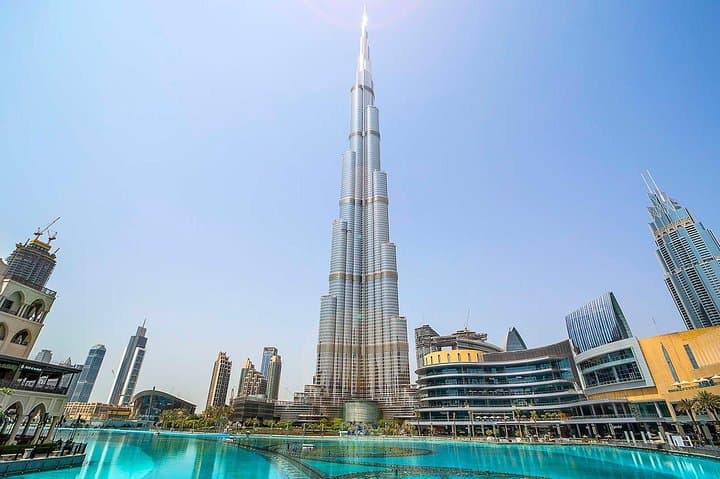
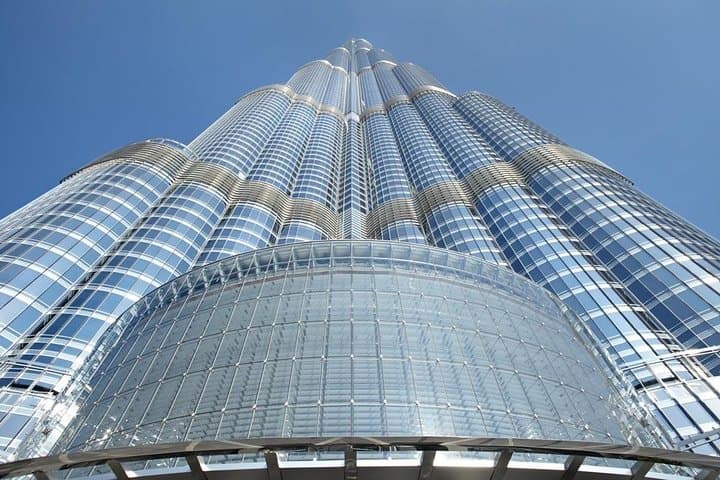
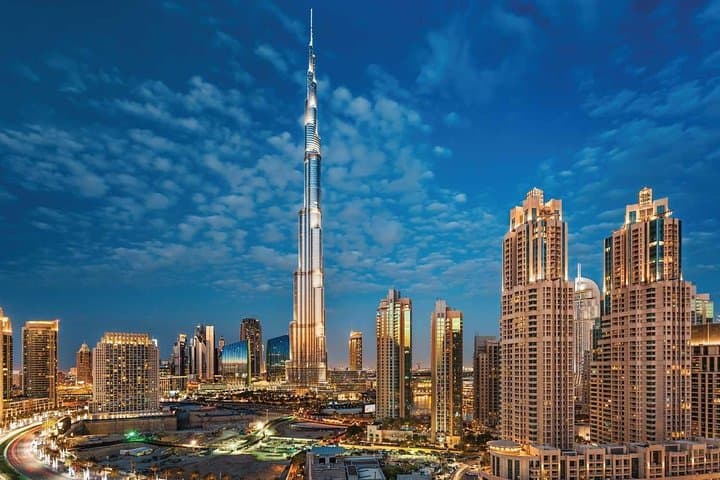
Completed in 2010 after years of rapid construction, the Burj Khalifa stands at 829.8 meters and remains the world’s tallest building. Its stepped, telescoping form is a product of modern engineering: a reinforced concrete core seated on deep piles bored into Dubai’s coastal plain. The tower is both an architectural landmark and a symbol of Dubai’s accelerated urban growth over the last two decades.
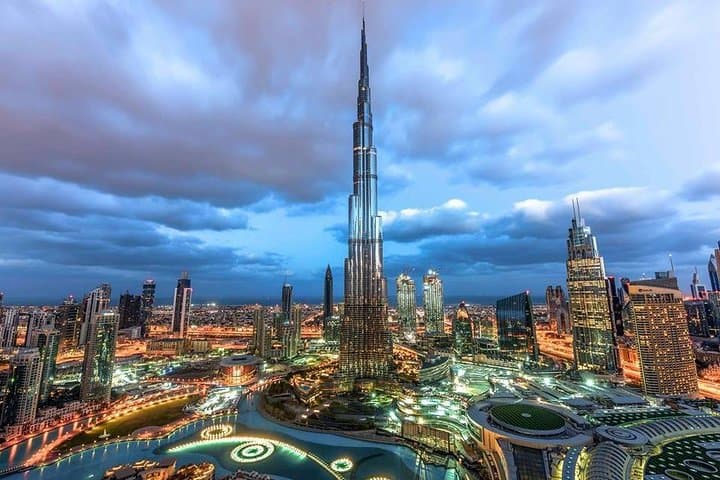
From the observation decks you’ll read the city like a map—man-made islands pushing into the Persian Gulf, the geometric blocks of Downtown, and desert that edges into the horizon. Culture here is civic spectacle: curated light shows at the base, fountains that answer the skyline, and a constant flow of international visitors.
Practical guidance: book a timed ticket to avoid lines and aim for early morning or late afternoon for clearer air and softer light. Security checks are standard; the high-speed elevator reaches the decks in under a minute, so expect a quick ascent and crowding at peak times. The decks are fully accessible and have indoor and outdoor viewing areas; bring a camera with a zoom and be prepared for glare on sunny days. Allow 45–90 minutes to visit, include a stroll around Burj Park afterward for different photo perspectives, and use the Dubai Metro or a taxi to avoid limited parking and heavy downtown traffic.
easy.
45 minutes.
Suitable for all fitness levels; requires minimal walking and elevator access
Most visitors spend 45–90 minutes including elevator time, viewing, and photo stops; allocate more time for sunset visits due to crowds.
Yes—the decks, elevators, and surrounding areas are wheelchair accessible; staff can assist where needed.
Restrooms are available; for dining options, the Dubai Mall and ground-level outlets around the tower offer a wider selection.
Access is tied to your timed ticket; re-entry policies vary—check your ticket terms or ask staff on arrival.
Designed by Skidmore, Owings & Merrill with chief architect Adrian Smith, the Burj Khalifa opened in 2010 and quickly became a global landmark for height and engineering ambition.
The tower sits within a high-impact urban zone; visitors can help by minimizing single-use plastics and following on-site waste and recycling guidance.
Golden Link Tourism LLC operates guided outdoor trips and adventures with an emphasis on safety, stewardship, and memorable experiences.
You step into a glass-walled elevator and the city compresses beneath you—marina, highways, and low-rise blocks folding away into a glittering grid as the cabin climbs almost silently toward the 124th and 125th floors.
You step into a glass-walled elevator and the city compresses beneath you—marina, highways, and low-rise blocks folding away into a glittering grid as the cabin climbs almost silently toward the 124th and 125th floors.
Completed in 2010 after years of rapid construction, the Burj Khalifa stands at 829.8 meters and remains the world’s tallest building. Its stepped, telescoping form is a product of modern engineering: a reinforced concrete core seated on deep piles bored into Dubai’s coastal plain. The tower is both an architectural landmark and a symbol of Dubai’s accelerated urban growth over the last two decades.
From the observation decks you’ll read the city like a map—man-made islands pushing into the Persian Gulf, the geometric blocks of Downtown, and desert that edges into the horizon. Culture here is civic spectacle: curated light shows at the base, fountains that answer the skyline, and a constant flow of international visitors.
Practical guidance: book a timed ticket to avoid lines and aim for early morning or late afternoon for clearer air and softer light. Security checks are standard; the high-speed elevator reaches the decks in under a minute, so expect a quick ascent and crowding at peak times. The decks are fully accessible and have indoor and outdoor viewing areas; bring a camera with a zoom and be prepared for glare on sunny days. Allow 45–90 minutes to visit, include a stroll around Burj Park afterward for different photo perspectives, and use the Dubai Metro or a taxi to avoid limited parking and heavy downtown traffic.