THE ADVENTURE COLLECTIVE® · Independent discovery and booking for outdoor travel

A full-day shared transfer from Aswan to Luxor that includes guided visits to Kom Ombo and Edfu Temples, offering close-up history of Ptolemaic monuments and rural Nile life. Comfortable coach travel with optional Egyptologist guide and entrance fees.
A full-day shared transfer from Aswan to Luxor that includes guided visits to Kom Ombo and Edfu Temples, offering close-up history of Ptolemaic monuments and rural Nile life. Comfortable coach travel with optional Egyptologist guide and entrance fees.
You step onto an air-conditioned coach in Aswan before dawn, the Nile running alongside like a slow current daring you forward. Over seven to eight hours the road becomes a living museum: green irrigation strips, mud-brick villages, and two monumental temples that tell Egypt’s layered story.
Verified experiences and guided adventures in the surrounding area.
Operated by Tour Egypt Club - Private Day Tours · Aswan, Aswan Governorate
You step onto an air-conditioned coach in Aswan before dawn, the Nile running alongside like a slow current daring you forward. Over seven to eight hours the road becomes a living museum: green irrigation strips, mud-brick villages, and two monumental temples that tell Egypt’s layered story.
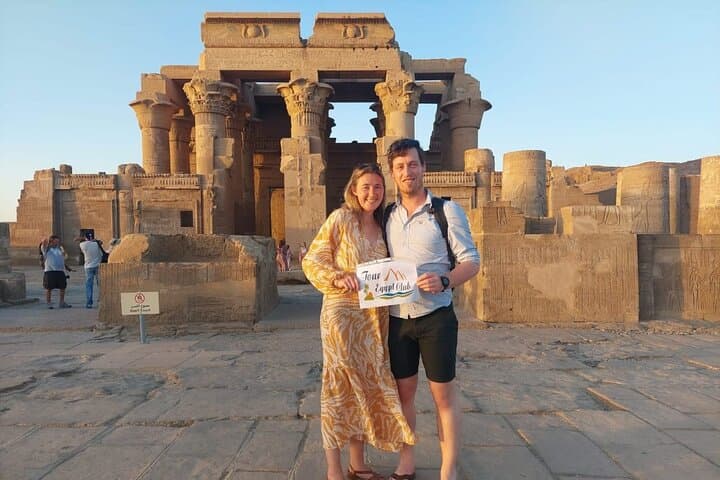
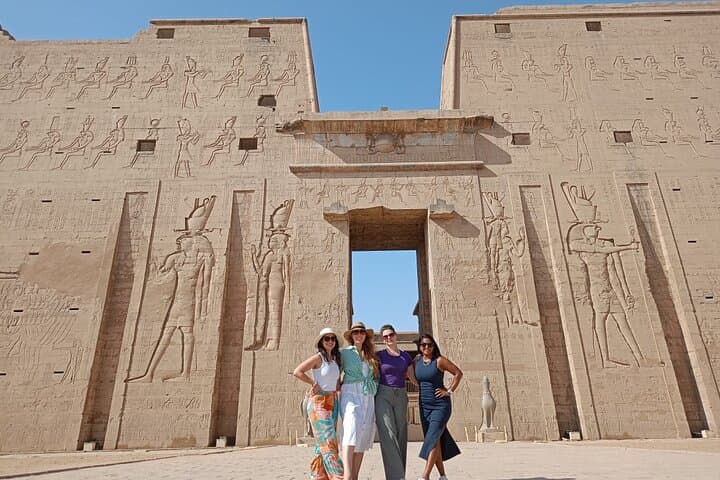
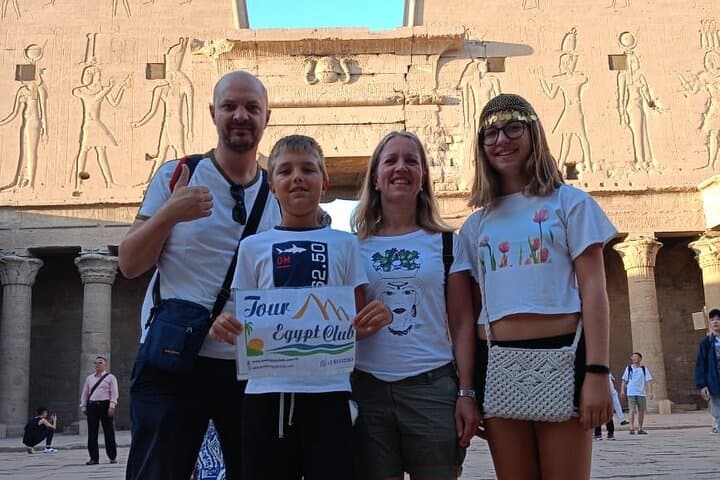
Kom Ombo sits on a bluff with a direct Nile view — a dual temple dedicated to Sobek, the crocodile god, and Horus, the falcon. Nearby, a small crocodile museum holds mummified examples that point to ancient ritual practice. Edfu, built over nearly two centuries in the Ptolemaic era, is one of Egypt’s best preserved temples; its sheer pylons and intact reliefs offer a clear window into ritual life and Greco-Egyptian craftsmanship.
Geology and culture overlap here: the Nile’s annual irrigation created the fertile bands you pass, enabling temple economies and village life. French and European expeditions in the 19th century brought these sites into modern archaeology; local guides now translate inscriptions and ritual scenes into practical narratives.
Practicalities: expect two guided stops of roughly an hour each and a shared drop-off in Luxor. Entrance fees and expert Egyptologist guides are often optional add-ons; bring cash for tickets and local purchases. Wear sturdy shoes for uneven stone, sun protection for exposed temple forecourts, and carry at least 1–2 liters of water — the sun presses hard even on cooler days. Restroom access at stops is basic; plan for short walks and photo windows. This transfer blends efficient travel with focused cultural stops, ideal for travelers who want to move between cities without missing Egypt’s major river-side monuments.
easy.
7–8 hours.
Suitable for travelers with basic mobility; involves short walks (≈0.5–1 km) on uneven surfaces at each stop.
Total travel time is about 7–8 hours; expect roughly one hour at Kom Ombo and one hour at Edfu, plus driving and rest stops.
Entrance fees and a professional Egyptologist guide are typically optional add-ons—verify your booking option and bring cash if needed.
The coach and some transfer logistics are wheelchair accessible, but temple grounds have uneven surfaces and steps—access at the monuments may be limited.
Restroom facilities at stops are basic; bring snacks or plan to buy simple food locally during breaks or at the arrival in Luxor.
Kom Ombo’s dual dedication reflects regional cult practices to Sobek and Horus; Edfu is a largely intact Ptolemaic temple completed over nearly two centuries and rediscovered by European expeditions.
Sites are protected by Egypt’s antiquities authorities; visitors should avoid touching reliefs, support licensed guides, and minimize plastic waste to reduce local impact.
Tour Egypt Club - Private Day Tours operates guided outdoor trips and adventures with an emphasis on safety, stewardship, and memorable experiences.
You step onto an air-conditioned coach in Aswan before dawn, the Nile running alongside like a slow current daring you forward. Over seven to eight hours the road becomes a living museum: green irrigation strips, mud-brick villages, and two monumental temples that tell Egypt’s layered story.
You step onto an air-conditioned coach in Aswan before dawn, the Nile running alongside like a slow current daring you forward. Over seven to eight hours the road becomes a living museum: green irrigation strips, mud-brick villages, and two monumental temples that tell Egypt’s layered story.
Kom Ombo sits on a bluff with a direct Nile view — a dual temple dedicated to Sobek, the crocodile god, and Horus, the falcon. Nearby, a small crocodile museum holds mummified examples that point to ancient ritual practice. Edfu, built over nearly two centuries in the Ptolemaic era, is one of Egypt’s best preserved temples; its sheer pylons and intact reliefs offer a clear window into ritual life and Greco-Egyptian craftsmanship.
Geology and culture overlap here: the Nile’s annual irrigation created the fertile bands you pass, enabling temple economies and village life. French and European expeditions in the 19th century brought these sites into modern archaeology; local guides now translate inscriptions and ritual scenes into practical narratives.
Practicalities: expect two guided stops of roughly an hour each and a shared drop-off in Luxor. Entrance fees and expert Egyptologist guides are often optional add-ons; bring cash for tickets and local purchases. Wear sturdy shoes for uneven stone, sun protection for exposed temple forecourts, and carry at least 1–2 liters of water — the sun presses hard even on cooler days. Restroom access at stops is basic; plan for short walks and photo windows. This transfer blends efficient travel with focused cultural stops, ideal for travelers who want to move between cities without missing Egypt’s major river-side monuments.