THE ADVENTURE COLLECTIVE® · Independent discovery and booking for outdoor travel

A private transfer from Aswan delivers you to Edfu’s remarkably intact Temple of Horus—one of Egypt’s best-preserved Ptolemaic sanctuaries. Expect 5–6 hours round trip, detailed reliefs, and the option to add an Egyptologist guide for deeper context.
A private transfer from Aswan delivers you to Edfu’s remarkably intact Temple of Horus—one of Egypt’s best-preserved Ptolemaic sanctuaries. Expect 5–6 hours round trip, detailed reliefs, and the option to add an Egyptologist guide for deeper context.
You arrive before the heat takes hold, the Nile a slow silver belt between papyrus-studded banks as the vehicle eases onto the long straight road toward Edfu. The desert opens and the Temple of Horus appears—massive stone facades cut against a bright sky, reliefs still crisply carved after two millennia. Walking through its pylon gateways, you feel the scale and deliberate geometry of a Ptolemaic sanctuary built for a god with a falcon’s head.
Verified experiences and guided adventures in the surrounding area.
Operated by Eyes of Egypt · Edfu, Aswan Governorate
You arrive before the heat takes hold, the Nile a slow silver belt between papyrus-studded banks as the vehicle eases onto the long straight road toward Edfu. The desert opens and the Temple of Horus appears—massive stone facades cut against a bright sky, reliefs still crisply carved after two millennia. Walking through its pylon gateways, you feel the scale and deliberate geometry of a Ptolemaic sanctuary built for a god with a falcon’s head.
Edfu is one of Egypt’s best-preserved temples, completed in the 1st century BCE on older sacred ground. Its walls record rituals, mythic trials between Horus and Set, and practical decrees etched by priests. The stone comes from nearby quarries and sits in the Nile floodplain; the river that sustained pharaonic life still shapes the landscape and local agriculture today. Nearby villages keep traditional crafts and offer a quieter view of Nile-side life than Aswan’s bustle.
Practical guidance: this private transfer runs 5–6 hours round trip from Aswan—plan for a full morning or afternoon. Wear sturdy shoes for uneven temple floors, sun protection, and carry at least one liter of water per person. If you choose a guided Golden or Diamond option, an Egyptologist will unpack the reliefs and rituals; otherwise, allow extra time with a guidebook or audio guide to decode inscriptions.
Photograph respectfully—many surfaces are fragile—and schedule visits early or late to avoid peak sun. The temple rewards patience: sit on the shaded stone steps and let this ancient place reassert its presence, the river quietly urging onward beyond the columns.
easy.
5–6 hours.
Suitable for most fitness levels; involves short walks and standing on uneven surfaces
The private transfer takes about 1.5–2 hours each way, depending on traffic and stops along the route.
Entrance is included only in the Diamond package; Silver and Golden may require separate ticket purchase on site unless specified.
Yes—Golden and Diamond packages offer optional expert Egyptologists; Silver includes a private transfer without a specialist guide.
The tour lists wheelchair-accessible transportation and some accessible areas at the site, but temple interiors have uneven stone floors—contact the operator to confirm specific accommodations.
Edfu Temple was built in the Ptolemaic period (237–57 BCE) and remained a major cult center for Horus, preserving detailed temple records and rituals.
The site is managed under national antiquities authorities—visitors are asked not to touch carvings, and limited access areas help protect fragile surfaces.
Eyes of Egypt operates guided outdoor trips and adventures with an emphasis on safety, stewardship, and memorable experiences.
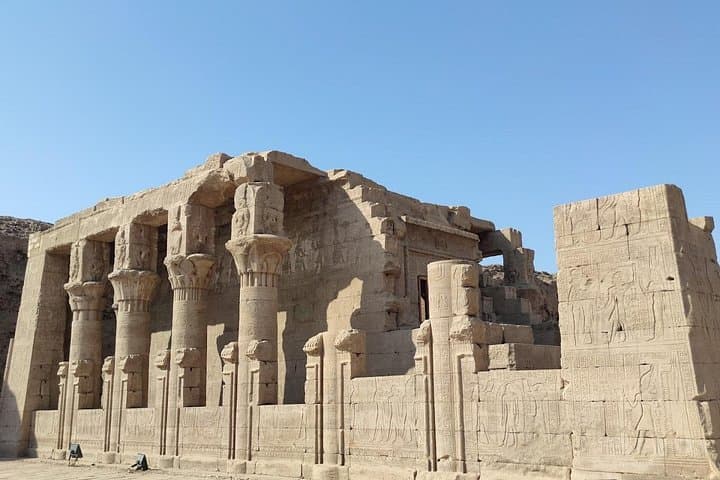
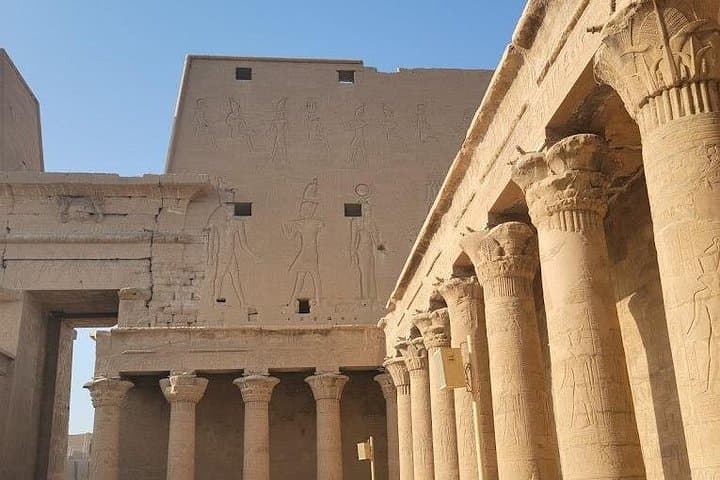
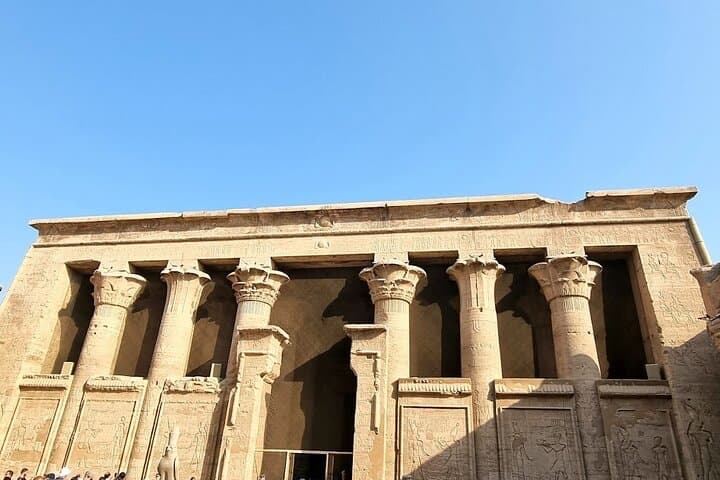
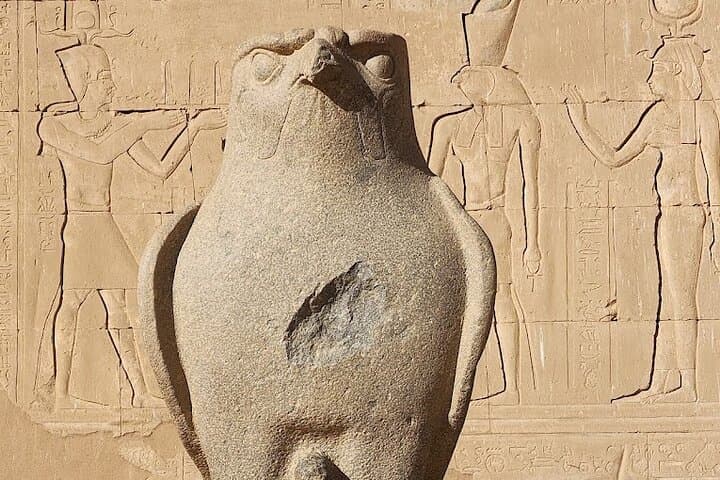
You arrive before the heat takes hold, the Nile a slow silver belt between papyrus-studded banks as the vehicle eases onto the long straight road toward Edfu. The desert opens and the Temple of Horus appears—massive stone facades cut against a bright sky, reliefs still crisply carved after two millennia. Walking through its pylon gateways, you feel the scale and deliberate geometry of a Ptolemaic sanctuary built for a god with a falcon’s head.
You arrive before the heat takes hold, the Nile a slow silver belt between papyrus-studded banks as the vehicle eases onto the long straight road toward Edfu. The desert opens and the Temple of Horus appears—massive stone facades cut against a bright sky, reliefs still crisply carved after two millennia. Walking through its pylon gateways, you feel the scale and deliberate geometry of a Ptolemaic sanctuary built for a god with a falcon’s head.
Edfu is one of Egypt’s best-preserved temples, completed in the 1st century BCE on older sacred ground. Its walls record rituals, mythic trials between Horus and Set, and practical decrees etched by priests. The stone comes from nearby quarries and sits in the Nile floodplain; the river that sustained pharaonic life still shapes the landscape and local agriculture today. Nearby villages keep traditional crafts and offer a quieter view of Nile-side life than Aswan’s bustle.
Practical guidance: this private transfer runs 5–6 hours round trip from Aswan—plan for a full morning or afternoon. Wear sturdy shoes for uneven temple floors, sun protection, and carry at least one liter of water per person. If you choose a guided Golden or Diamond option, an Egyptologist will unpack the reliefs and rituals; otherwise, allow extra time with a guidebook or audio guide to decode inscriptions.
Photograph respectfully—many surfaces are fragile—and schedule visits early or late to avoid peak sun. The temple rewards patience: sit on the shaded stone steps and let this ancient place reassert its presence, the river quietly urging onward beyond the columns.