THE ADVENTURE COLLECTIVE® · Independent discovery and booking for outdoor travel

Board an early train from Aswan and step into the Ptolemaic world at Edfu’s Temple of Horus. This practical day trip blends a scenic Nile rail ride with a focused exploration of one of Egypt’s best-preserved ancient temples.
Board an early train from Aswan and step into the Ptolemaic world at Edfu’s Temple of Horus. This practical day trip blends a scenic Nile rail ride with a focused exploration of one of Egypt’s best-preserved ancient temples.
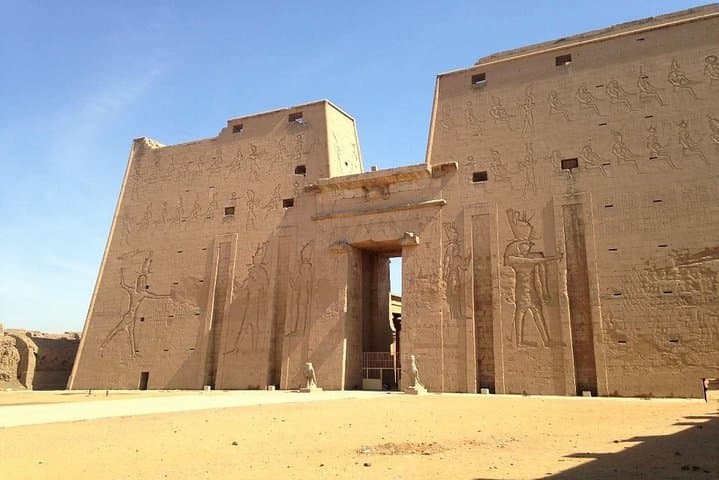
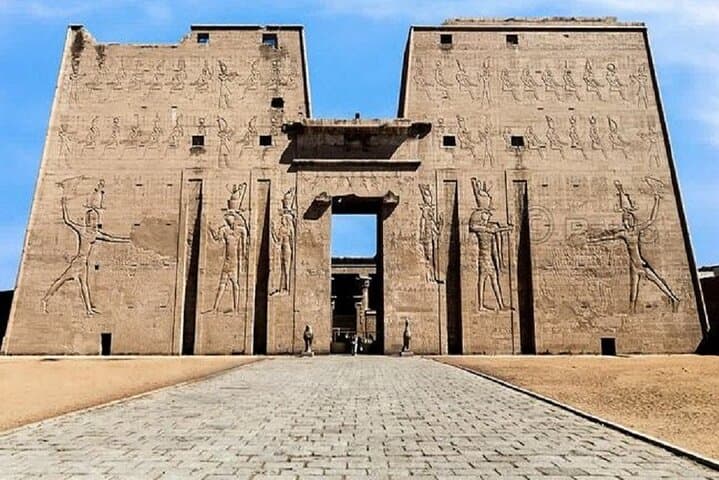
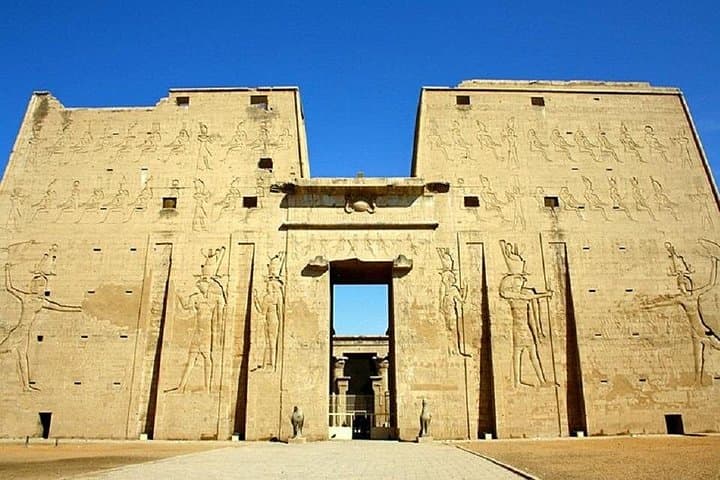
The train eases out of Aswan before dawn, the Nile sliding past in a pale ribbon that seems to dare you to keep up. By midmorning the town of Edfu appears: flat fields, a handful of mudbrick houses and the hulking silhouette of the Temple of Horus rising from the bank. Visitors arrive by carriage or on foot, stepping from modern rails into the slow, monumental geometry of a Ptolemaic shrine.
Verified experiences and guided adventures in the surrounding area.
Operated by Sure Egypt · Edfu, Aswan Governorate
The train eases out of Aswan before dawn, the Nile sliding past in a pale ribbon that seems to dare you to keep up. By midmorning the town of Edfu appears: flat fields, a handful of mudbrick houses and the hulking silhouette of the Temple of Horus rising from the bank. Visitors arrive by carriage or on foot, stepping from modern rails into the slow, monumental geometry of a Ptolemaic shrine.
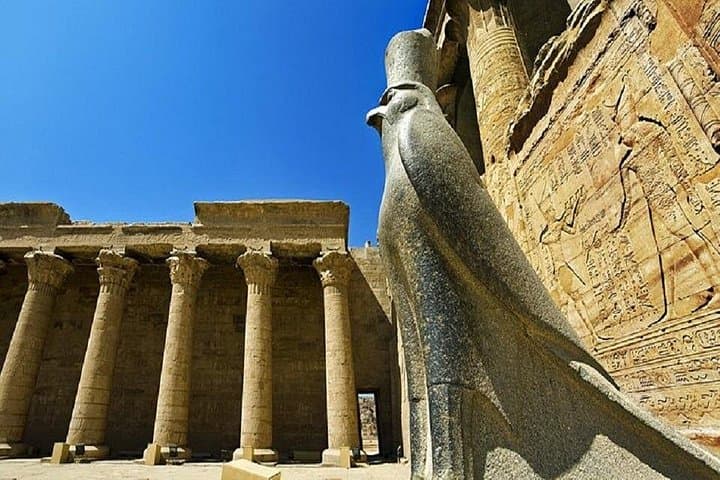
Edfu’s temple was carved between 237 and 57 BC, built over limestone beds and river silt where the Nile’s seasonal moods have always shaped settlement. Its reliefs record myths, temple rites and a blending of Egyptian and Hellenistic influences; inscriptions here are crucial to understanding religion in Greco-Roman Egypt. Culturally, Edfu remains a place where local farmers cross the river and children play beneath the temple walls, while tourists file through the hypostyle halls.
Practical planning makes the day work: trains take roughly 1½–2 hours each way, a horse carriage covers the final approach, and the site is best visited in the cool morning. Wear sturdy shoes for uneven stone, carry sun protection and water, and allow time to read the inscriptions with a guide to unlock the iconography. Expect a 7‑hour outing from hotel pickup through return.
For photographers, low-angle noon light can wash the reliefs—aim for morning or late afternoon. Keep small Egyptian pounds available for carriage drivers, tips and small purchases. This is a compact, historically dense excursion that rewards curiosity and basic planning.
easy.
7 hours.
Suitable for most fitness levels; involves short walks and some standing during the temple visit
The one-way train journey is roughly 1½–2 hours depending on the service and stops.
Access is limited—there are steps and uneven surfaces; contact the operator ahead to arrange assistance or alternative routes.
This tour includes entry tickets; confirm with the operator if you need printed or mobile vouchers.
Most itineraries include a short break for snacks or a light lunch near the site, but full restaurant service can be limited—pack snacks if preferred.
Edfu Temple was constructed in the Ptolemaic period (237–57 BC) and is among Egypt’s best-preserved large temples, with extensive inscriptions on ritual and mythology.
The site is managed to limit wear on delicate reliefs; visitors are asked not to touch carvings and to use marked paths to reduce erosion.
Sure Egypt operates guided outdoor trips and adventures with an emphasis on safety, stewardship, and memorable experiences.
The train eases out of Aswan before dawn, the Nile sliding past in a pale ribbon that seems to dare you to keep up. By midmorning the town of Edfu appears: flat fields, a handful of mudbrick houses and the hulking silhouette of the Temple of Horus rising from the bank. Visitors arrive by carriage or on foot, stepping from modern rails into the slow, monumental geometry of a Ptolemaic shrine.
The train eases out of Aswan before dawn, the Nile sliding past in a pale ribbon that seems to dare you to keep up. By midmorning the town of Edfu appears: flat fields, a handful of mudbrick houses and the hulking silhouette of the Temple of Horus rising from the bank. Visitors arrive by carriage or on foot, stepping from modern rails into the slow, monumental geometry of a Ptolemaic shrine.
Edfu’s temple was carved between 237 and 57 BC, built over limestone beds and river silt where the Nile’s seasonal moods have always shaped settlement. Its reliefs record myths, temple rites and a blending of Egyptian and Hellenistic influences; inscriptions here are crucial to understanding religion in Greco-Roman Egypt. Culturally, Edfu remains a place where local farmers cross the river and children play beneath the temple walls, while tourists file through the hypostyle halls.
Practical planning makes the day work: trains take roughly 1½–2 hours each way, a horse carriage covers the final approach, and the site is best visited in the cool morning. Wear sturdy shoes for uneven stone, carry sun protection and water, and allow time to read the inscriptions with a guide to unlock the iconography. Expect a 7‑hour outing from hotel pickup through return.
For photographers, low-angle noon light can wash the reliefs—aim for morning or late afternoon. Keep small Egyptian pounds available for carriage drivers, tips and small purchases. This is a compact, historically dense excursion that rewards curiosity and basic planning.