THE ADVENTURE COLLECTIVE® · Independent discovery and booking for outdoor travel

Spend a focused half-day in Aswan visiting three signature sites: the High Dam, Philae Temple and the Unfinished Obelisk. This private tour blends modern engineering, island temples and ancient quarrying with hotel pickup and a local Egyptologist guide.
Spend a focused half-day in Aswan visiting three signature sites: the High Dam, Philae Temple and the Unfinished Obelisk. This private tour blends modern engineering, island temples and ancient quarrying with hotel pickup and a local Egyptologist guide.
The morning sun glances off the Nile as a private car eases away from Aswan’s hotels; within an hour you’re standing under the shadow of modern concrete and ancient stone. The High Dam looms — a straight-edged answer to the river’s tantrums — then the guide steers the conversation toward the island temple where boats cut through blue water to reach Philae.
Verified experiences and guided adventures in the surrounding area.
Operated by Egypt Gift Tours · Aswan, Aswan Governorate
The morning sun glances off the Nile as a private car eases away from Aswan’s hotels; within an hour you’re standing under the shadow of modern concrete and ancient stone. The High Dam looms — a straight-edged answer to the river’s tantrums — then the guide steers the conversation toward the island temple where boats cut through blue water to reach Philae.
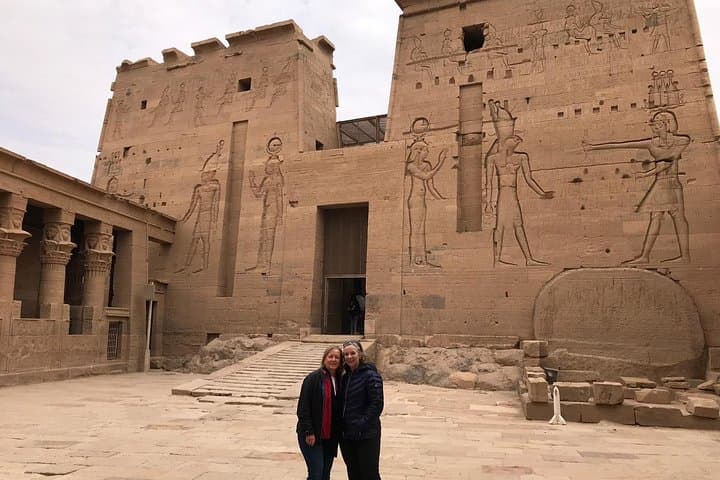
Philae’s temple complex, relocated to Agilkia Island after the High Dam raised the river, preserves Greco-Roman columns and the carved scenes dedicated to Isis. Nearby the Unfinished Obelisk sits where ancient quarrying stopped: a 40‑meter block of granite still attached to bedrock, a clear lesson in Egyptian ambition and the limits of ancient tools. The High Dam, completed between 1960–1970 with Soviet assistance, changed the region’s agriculture, electricity and archeological priorities.
Geology here is immediate — pink granite outcrops, Nile silt flats, and engineered concrete meeting natural stone. Culturally, Aswan is a crossroads of Nubian heritage and modern Egyptian life; expect stories about Nubian migration and riverine livelihoods.
Practically, the tour runs about 4 hours with short shore walks, a brief motorboat transfer to Philae, and minimal elevation gain. Paths are mostly paved but include temple steps and uneven quarry rock. Bring sun protection, comfortable walking shoes, and a camera with extra battery. Morning departures avoid the heat and golden light favors photography. The private guide and hotel pickup streamline logistics, leaving time to listen, ask about conservation, and let the Nile dare you forward.
easy.
3–4 hours.
Suitable for most fitness levels; involves short walks and some steps
Entrance fees are typically not included in tour pricing; check the booking details and bring cash or card for tickets.
A short motorboat transfer is used to reach Philae (on Agilkia Island); boats are arranged by the guide or local operators.
Many parts are accessible with assistance, and vehicle pickup is provided, but some temple areas and the quarry have steps and uneven ground.
This tour includes a professional English-speaking Egyptologist guide; other languages may be available on request.
The High Dam (1960–1970) reshaped the Nile’s flood cycle and required UNESCO-led relocations of temples like Philae to higher ground.
Relocation saved many monuments but the dam altered ecosystems; visitors should follow local guidelines, avoid touching reliefs, and support sustainable operators.
Egypt Gift Tours operates guided outdoor trips and adventures with an emphasis on safety, stewardship, and memorable experiences.



The morning sun glances off the Nile as a private car eases away from Aswan’s hotels; within an hour you’re standing under the shadow of modern concrete and ancient stone. The High Dam looms — a straight-edged answer to the river’s tantrums — then the guide steers the conversation toward the island temple where boats cut through blue water to reach Philae.
The morning sun glances off the Nile as a private car eases away from Aswan’s hotels; within an hour you’re standing under the shadow of modern concrete and ancient stone. The High Dam looms — a straight-edged answer to the river’s tantrums — then the guide steers the conversation toward the island temple where boats cut through blue water to reach Philae.
Philae’s temple complex, relocated to Agilkia Island after the High Dam raised the river, preserves Greco-Roman columns and the carved scenes dedicated to Isis. Nearby the Unfinished Obelisk sits where ancient quarrying stopped: a 40‑meter block of granite still attached to bedrock, a clear lesson in Egyptian ambition and the limits of ancient tools. The High Dam, completed between 1960–1970 with Soviet assistance, changed the region’s agriculture, electricity and archeological priorities.
Geology here is immediate — pink granite outcrops, Nile silt flats, and engineered concrete meeting natural stone. Culturally, Aswan is a crossroads of Nubian heritage and modern Egyptian life; expect stories about Nubian migration and riverine livelihoods.
Practically, the tour runs about 4 hours with short shore walks, a brief motorboat transfer to Philae, and minimal elevation gain. Paths are mostly paved but include temple steps and uneven quarry rock. Bring sun protection, comfortable walking shoes, and a camera with extra battery. Morning departures avoid the heat and golden light favors photography. The private guide and hotel pickup streamline logistics, leaving time to listen, ask about conservation, and let the Nile dare you forward.