THE ADVENTURE COLLECTIVE® · Independent discovery and booking for outdoor travel

Spend a full day tracing Aswan’s human and geological story: from the High Dam’s modern sweep to the Unfinished Obelisk’s raw granite, across Philae’s relocated temples and a serene felucca sail to a vibrant Nubian village. This private tour balances history, river time and local encounters.
Spend a full day tracing Aswan’s human and geological story: from the High Dam’s modern sweep to the Unfinished Obelisk’s raw granite, across Philae’s relocated temples and a serene felucca sail to a vibrant Nubian village. This private tour balances history, river time and local encounters.
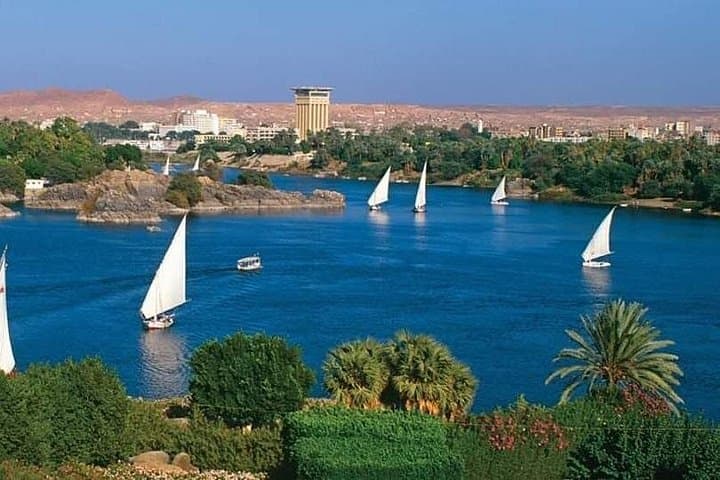
The sun pushes a white ribbon across the Nile as your private vehicle crosses Aswan toward the High Dam. Winded granite outcrops recede, feluccas drift like stitched sails on blue water, and the city loosens into river and rock — this is a day that moves between millennia.
Verified experiences and guided adventures in the surrounding area.
Operated by Eyes of Egypt · Aswan, Aswan Governorate
The sun pushes a white ribbon across the Nile as your private vehicle crosses Aswan toward the High Dam. Winded granite outcrops recede, feluccas drift like stitched sails on blue water, and the city loosens into river and rock — this is a day that moves between millennia.
Begin at the Aswan High Dam, a modern engineering horizon that tamed seasonal floods and created Lake Nasser in the 1960s. From there the Unfinished Obelisk reveals ancient quarrying: a 1,200-ton monument still attached to bedrock, its abandoned flank a direct lesson in Pharaonic stonecraft and the geology that made Aswan Egypt’s granite source.
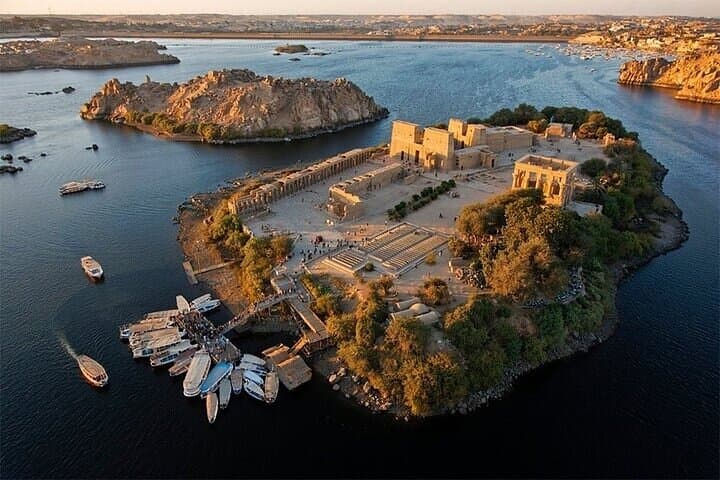
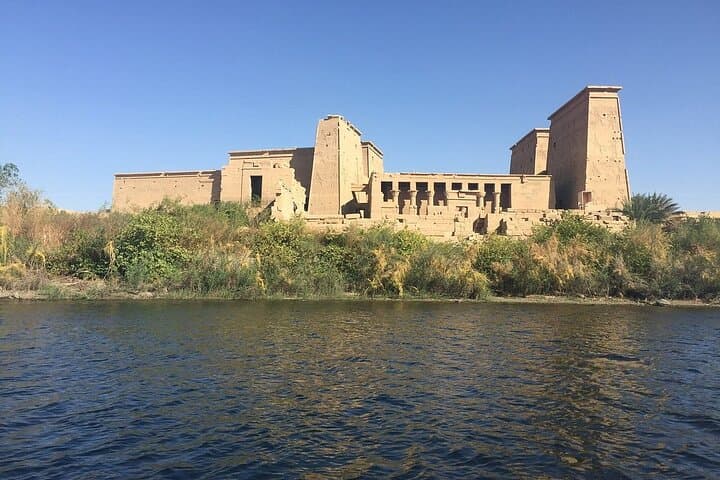
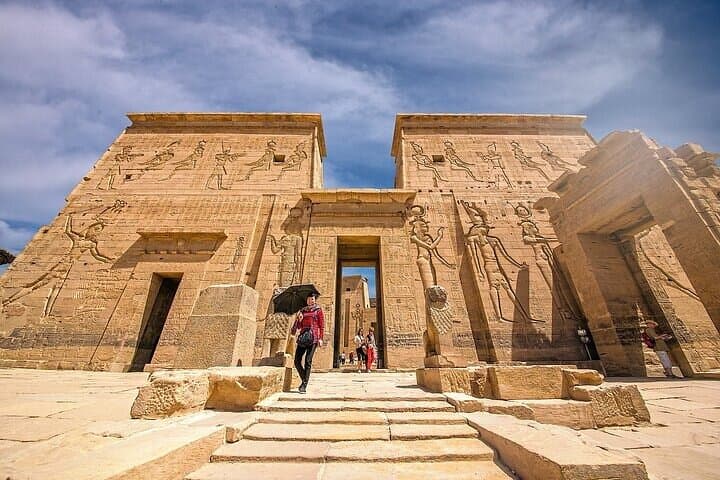
A short drive and a brief motorboat crossing bring you to Philae — island temples relocated in the 20th century to save them from the reservoir — where carved reliefs, Nilometers and Roman kiosks mark layers of belief from Isis to the Copts.
A half-hour felucca ride gives a calm, wind-driven interlude: river breeze, birdcalls, and views of Kitchener’s Island and the Aga Khan Mausoleum. The day closes with a visit to a Nubian village, colorful homes, spice gardens, henna artists and warm cups of tea that open straightforward conversation about local life.
Practical edge: start early to avoid midday heat, wear modest sun protection and comfortable shoes for uneven temple stones, and carry small bills for local crafts and tips. The itinerary moves by air-conditioned vehicle and short boats; plan camera batteries and a lightweight pack — it’s a full 9–10 hour day that stitches modern Aswan to its ancient stones.
easy.
9–10 hours.
Suitable for travelers in average fitness: involves short walks, standing at sites, boat transfers and minimal elevation changes
The tour includes admission to key sites like the Unfinished Obelisk and Philae Temple and the necessary boat transfers to Philae and the Nubian village; confirm any optional extras with the operator.
The offering lists wheelchair-accessible transportation and services, but island access and some temple areas have steps and uneven ground — contact the provider to review specific accessibility needs.
Light, modest clothing covering shoulders and knees is recommended; a hat and sunscreen are essential, and be prepared to remove shoes for some home visits if requested.
Morning visits avoid the hottest hours for temple exploration; felucca sails are most pleasant in the cooler morning or late afternoon when the breeze picks up and light is best for photos.
The Aswan High Dam (completed in the 1960s) reshaped the Nile and necessitated UNESCO-led relocation of Philae’s temples to higher ground to protect them from Lake Nasser’s waters.
Relocation and conservation projects saved Philae’s reliefs, but visitor pressure and boat traffic require low-impact behavior—avoid touching reliefs, dispose of waste properly, and support local guides who practice sustainable tourism.
Eyes of Egypt operates guided outdoor trips and adventures with an emphasis on safety, stewardship, and memorable experiences.
The sun pushes a white ribbon across the Nile as your private vehicle crosses Aswan toward the High Dam. Winded granite outcrops recede, feluccas drift like stitched sails on blue water, and the city loosens into river and rock — this is a day that moves between millennia.
The sun pushes a white ribbon across the Nile as your private vehicle crosses Aswan toward the High Dam. Winded granite outcrops recede, feluccas drift like stitched sails on blue water, and the city loosens into river and rock — this is a day that moves between millennia.
Begin at the Aswan High Dam, a modern engineering horizon that tamed seasonal floods and created Lake Nasser in the 1960s. From there the Unfinished Obelisk reveals ancient quarrying: a 1,200-ton monument still attached to bedrock, its abandoned flank a direct lesson in Pharaonic stonecraft and the geology that made Aswan Egypt’s granite source.
A short drive and a brief motorboat crossing bring you to Philae — island temples relocated in the 20th century to save them from the reservoir — where carved reliefs, Nilometers and Roman kiosks mark layers of belief from Isis to the Copts.
A half-hour felucca ride gives a calm, wind-driven interlude: river breeze, birdcalls, and views of Kitchener’s Island and the Aga Khan Mausoleum. The day closes with a visit to a Nubian village, colorful homes, spice gardens, henna artists and warm cups of tea that open straightforward conversation about local life.
Practical edge: start early to avoid midday heat, wear modest sun protection and comfortable shoes for uneven temple stones, and carry small bills for local crafts and tips. The itinerary moves by air-conditioned vehicle and short boats; plan camera batteries and a lightweight pack — it’s a full 9–10 hour day that stitches modern Aswan to its ancient stones.