THE ADVENTURE COLLECTIVE® · Independent discovery and booking for outdoor travel

Make a long but rewarding day of it: fly from Cairo to Aswan, transfer across desert to Abu Simbel and spend a few hours inside two of Egypt’s most dramatic rock-cut temples. Expect early flights, a multi-hour drive from Aswan, and a guided tour of the Ramses II and Nefertari temples.
Make a long but rewarding day of it: fly from Cairo to Aswan, transfer across desert to Abu Simbel and spend a few hours inside two of Egypt’s most dramatic rock-cut temples. Expect early flights, a multi-hour drive from Aswan, and a guided tour of the Ramses II and Nefertari temples.
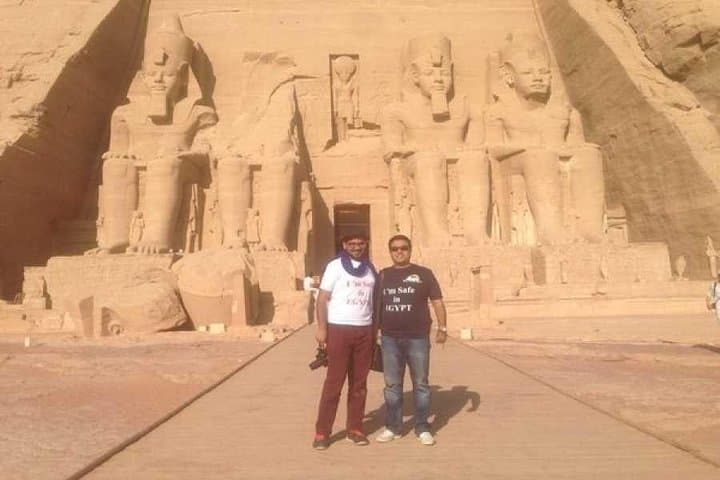
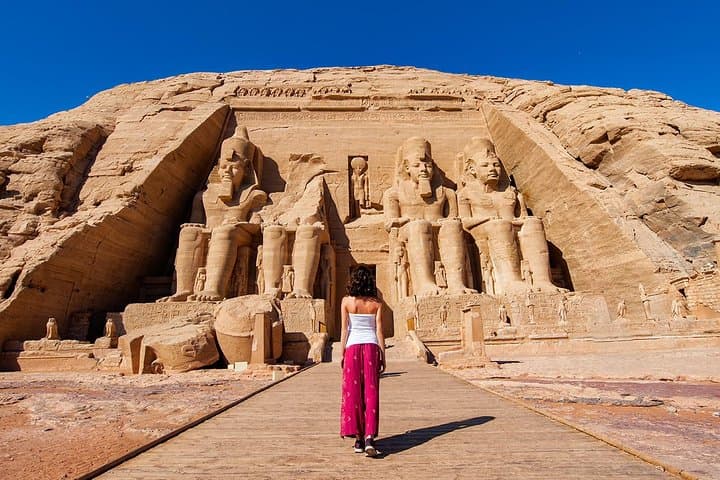
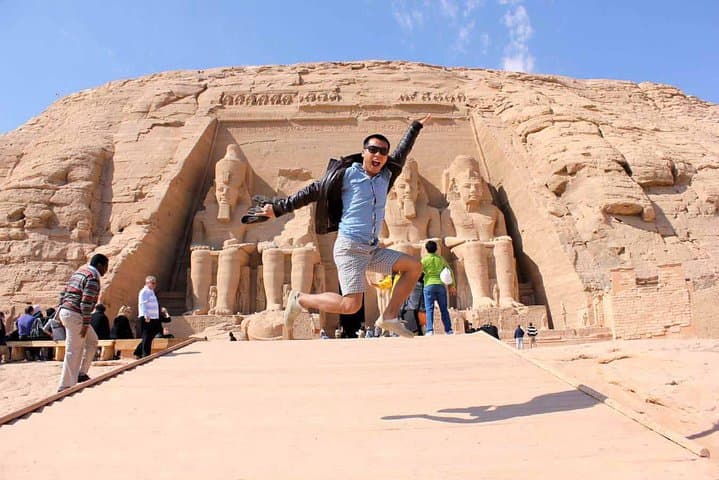
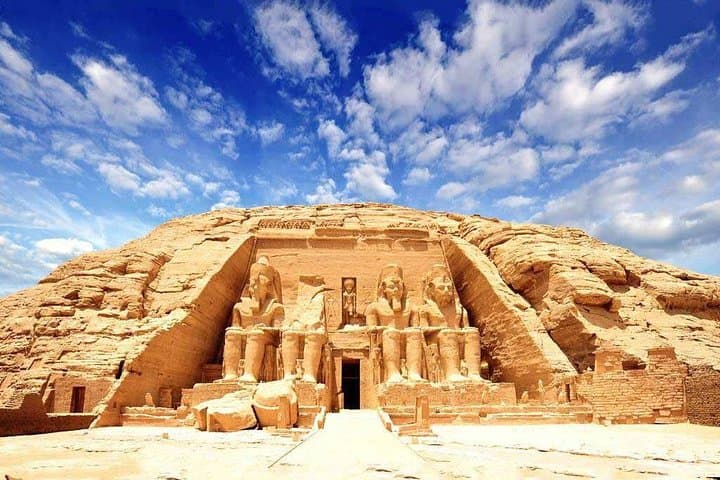
You arrive before dawn: Cairo’s airport still dark, a short domestic flight to Aswan, then a long ribbon of desert toward a bluff where colossal stone faces stare down across Lake Nasser. The temple façades of Abu Simbel are sudden and theatrical — four seated Ramses II figures carved into the mountain, eyes catching the low light as if the rock itself remembers being king.
Verified experiences and guided adventures in the surrounding area.
Operated by Camel Ride at Giza Pyramids · Abu Simbel, Aswan Governorate
You arrive before dawn: Cairo’s airport still dark, a short domestic flight to Aswan, then a long ribbon of desert toward a bluff where colossal stone faces stare down across Lake Nasser. The temple façades of Abu Simbel are sudden and theatrical — four seated Ramses II figures carved into the mountain, eyes catching the low light as if the rock itself remembers being king.
Carved in the 13th century BCE under Ramses II, the twin temples — the Great Temple of Ramses and the smaller Temple of Nefertari (dedicated to Hathor) — were painstakingly moved in the 1960s to save them from the rising waters of the Aswan High Dam. The sandstone cliffs here, now set on an artificial hill, still hold the precise axial alignments that admit the sun into the sanctuary on two dates each year.
Expect a full, travel-heavy day: your package typically includes round-trip Cairo–Aswan flights, an air-conditioned transfer of roughly three hours each way from Aswan, and about three hours at the site for guided exploration. Facilities are basic — shaded areas, a visitor center and limited cafes — so plan around heat and crowds.
Practical tactics: bring sun protection and a refillable bottle, carry your passport and booking documents for flights, and wear broken-in walking shoes for uneven stone steps and sandy ground. This is a cultural-heritage outing more than a hike — but its scale and the desert setting give it a distinctly adventurous rhythm: long travel, sudden spectacle, and the quiet weight of millennia carved in stone.
moderate.
15 hours (door-to-door).
Suitable for travelers in average fitness who can handle long travel days and short periods of walking and stairs
Yes — the standard package includes round-trip flights Cairo–Aswan–Cairo; bring the required ID and arrive early for airport procedures.
The road transfer is approximately three hours each way in an air-conditioned vehicle, depending on traffic and stops.
Admission to Abu Simbel is typically included in this tour package; your itinerary notes admission is provided as part of the booking.
Infant seats are available and the tour is generally suitable for a range of fitness levels, but it is not recommended for those with serious spinal, heart or pregnancy-related restrictions; expect steps and uneven surfaces.
The Abu Simbel temples were carved under Ramses II in the 13th century BCE and relocated in the 1960s by an international effort led by UNESCO to save them from the Aswan High Dam reservoir.
Visitor conservation focuses on preventing erosion and damage to reliefs; follow site rules, avoid flash photography indoors if asked, and use marked paths to minimize impact.
Camel Ride at Giza Pyramids operates guided outdoor trips and adventures with an emphasis on safety, stewardship, and memorable experiences.
You arrive before dawn: Cairo’s airport still dark, a short domestic flight to Aswan, then a long ribbon of desert toward a bluff where colossal stone faces stare down across Lake Nasser. The temple façades of Abu Simbel are sudden and theatrical — four seated Ramses II figures carved into the mountain, eyes catching the low light as if the rock itself remembers being king.
You arrive before dawn: Cairo’s airport still dark, a short domestic flight to Aswan, then a long ribbon of desert toward a bluff where colossal stone faces stare down across Lake Nasser. The temple façades of Abu Simbel are sudden and theatrical — four seated Ramses II figures carved into the mountain, eyes catching the low light as if the rock itself remembers being king.
Carved in the 13th century BCE under Ramses II, the twin temples — the Great Temple of Ramses and the smaller Temple of Nefertari (dedicated to Hathor) — were painstakingly moved in the 1960s to save them from the rising waters of the Aswan High Dam. The sandstone cliffs here, now set on an artificial hill, still hold the precise axial alignments that admit the sun into the sanctuary on two dates each year.
Expect a full, travel-heavy day: your package typically includes round-trip Cairo–Aswan flights, an air-conditioned transfer of roughly three hours each way from Aswan, and about three hours at the site for guided exploration. Facilities are basic — shaded areas, a visitor center and limited cafes — so plan around heat and crowds.
Practical tactics: bring sun protection and a refillable bottle, carry your passport and booking documents for flights, and wear broken-in walking shoes for uneven stone steps and sandy ground. This is a cultural-heritage outing more than a hike — but its scale and the desert setting give it a distinctly adventurous rhythm: long travel, sudden spectacle, and the quiet weight of millennia carved in stone.