THE ADVENTURE COLLECTIVE® · Independent discovery and booking for outdoor travel

Spend two nights aboard a traditional Nile cruise between Aswan and the southern river temples. Watch sunrise and sunset over ancient stone, visit riverside temples, and travel at the Nile’s measured pace.
Spend two nights aboard a traditional Nile cruise between Aswan and the southern river temples. Watch sunrise and sunset over ancient stone, visit riverside temples, and travel at the Nile’s measured pace.
Evening light lingers on the Nile as the boat slips away from Aswan — palms passing like slow metronomes, fishermen hauling in nets, and the river’s wide shoulders opening toward ancient stone. A two-night cruise on the Nile is less about speed and more about being carried through layers of Egyptian history: granite quarries at Elephantine, domes and minarets of river towns, and the slow reveal of temples that once commanded the river as a highway.
Verified experiences and guided adventures in the surrounding area.
Evening light lingers on the Nile as the boat slips away from Aswan — palms passing like slow metronomes, fishermen hauling in nets, and the river’s wide shoulders opening toward ancient stone. A two-night cruise on the Nile is less about speed and more about being carried through layers of Egyptian history: granite quarries at Elephantine, domes and minarets of river towns, and the slow reveal of temples that once commanded the river as a highway.
This route follows routes used for millennia by pharaohs and traders. Geologically the Nile corridor exposes Nubian sandstone and Precambrian granite in Aswan, while downstream mud and alluvium built the arable banks that supported ancient civilizations. Culturally, you’ll see modern Nubian villages and the living presence of a river that remains central to agriculture and daily life.
Expect guided visits to riverfront temples, short guided walks, and plenty of deck time at sunrise and sunset when light sharpens columns and birds fill the air. Practical notes: cabins are compact; showers and staircases are standard. Bring a daypack for temple walks, sun protection, and comfortable shoes for uneven stone and temple steps.
Timing visits for golden-hour photography and traveling with a reusable water bottle reduces waste. Respect restricted areas at archaeological sites and follow your guide’s instructions near fragile ruins. The cruise is an immersive, unhurried way to move between Aswan and Luxor while watching the Nile dare you to slow down and look closely.
moderate.
2 nights (approx. 48–72 hours).
Basic fitness for short walks, stairs and boarding; able to walk 1–3 miles over uneven surfaces.
Most operators include pickup from Aswan hotels or the Aswan Nile port; confirm meet-up details with the provider before arrival.
Typical 2-night cruises include breakfast and dinner in the price; check the specific itinerary for included meals and any special dietary requests.
Yes — many two-night itineraries include guided stops at major sites between Aswan and Luxor; confirm which temples are on the itinerary as routes vary.
Yes—cabins are compact but most activities are low-impact; however, temple visits require walking and climbing steps, so consider mobility when booking.
The Nile corridor has been a transport and cultural spine for millennia, with temples and quarries dating from Pharaonic through Greco-Roman periods.
Cruise operators are increasingly reducing plastic use and following site protection rules; travelers should avoid littering and stay on designated paths.
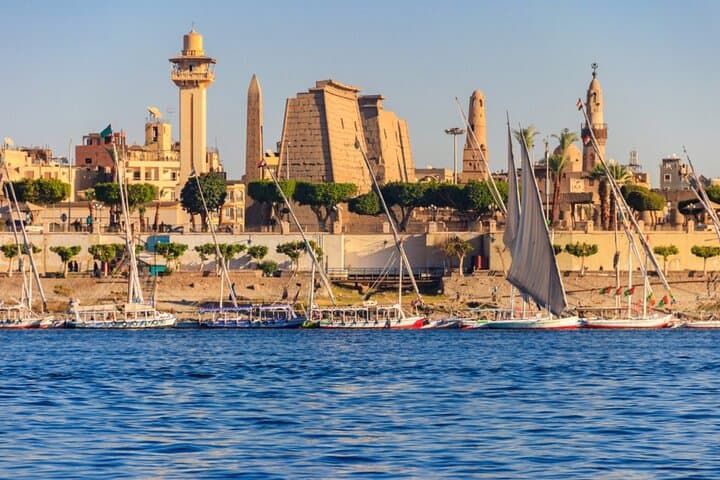
Evening light lingers on the Nile as the boat slips away from Aswan — palms passing like slow metronomes, fishermen hauling in nets, and the river’s wide shoulders opening toward ancient stone. A two-night cruise on the Nile is less about speed and more about being carried through layers of Egyptian history: granite quarries at Elephantine, domes and minarets of river towns, and the slow reveal of temples that once commanded the river as a highway.
Evening light lingers on the Nile as the boat slips away from Aswan — palms passing like slow metronomes, fishermen hauling in nets, and the river’s wide shoulders opening toward ancient stone. A two-night cruise on the Nile is less about speed and more about being carried through layers of Egyptian history: granite quarries at Elephantine, domes and minarets of river towns, and the slow reveal of temples that once commanded the river as a highway.
This route follows routes used for millennia by pharaohs and traders. Geologically the Nile corridor exposes Nubian sandstone and Precambrian granite in Aswan, while downstream mud and alluvium built the arable banks that supported ancient civilizations. Culturally, you’ll see modern Nubian villages and the living presence of a river that remains central to agriculture and daily life.
Expect guided visits to riverfront temples, short guided walks, and plenty of deck time at sunrise and sunset when light sharpens columns and birds fill the air. Practical notes: cabins are compact; showers and staircases are standard. Bring a daypack for temple walks, sun protection, and comfortable shoes for uneven stone and temple steps.
Timing visits for golden-hour photography and traveling with a reusable water bottle reduces waste. Respect restricted areas at archaeological sites and follow your guide’s instructions near fragile ruins. The cruise is an immersive, unhurried way to move between Aswan and Luxor while watching the Nile dare you to slow down and look closely.