THE ADVENTURE COLLECTIVE® · Independent discovery and booking for outdoor travel

Walk ancient lanes above rice terraces to a hilltop breakfast in Asuka. This guided morning hike mixes forest bathing, Amakashi Hill views, and a vegan-friendly picnic with freshly roasted coffee.
Walk ancient lanes above rice terraces to a hilltop breakfast in Asuka. This guided morning hike mixes forest bathing, Amakashi Hill views, and a vegan-friendly picnic with freshly roasted coffee.
Dawn finds you walking through a satoyama that still remembers the first capitals of Japan: rice terraces whisper underfoot as a cool breeze threads the trees and the hill ahead promises a wide view. The guide leads you along a narrow lane, the forest breathing around you, toward Amakashi Hill’s viewpoint where freshly roasted coffee and a plant-forward breakfast await.
Verified experiences and guided adventures in the surrounding area.
Operated by Discover Asuka’s Wonders · Asuka, Nara Prefecture
Dawn finds you walking through a satoyama that still remembers the first capitals of Japan: rice terraces whisper underfoot as a cool breeze threads the trees and the hill ahead promises a wide view. The guide leads you along a narrow lane, the forest breathing around you, toward Amakashi Hill’s viewpoint where freshly roasted coffee and a plant-forward breakfast await.
Asuka was a crucible of early Japanese statecraft from the 6th–8th centuries; volcanic ash and ancient river terraces shaped fields and tomb mounds (kofun) you pass. The geology here is gentle—low tuff and weathered sediment—covered by cedar and mixed broadleaf that supported satoyama agriculture for centuries. Villagers tended these slopes; today the route threads past stone markers, restored irrigation remains, and quiet shrines that keep local memory alive.
The morning program blends a short hike (roughly 3–4 km total) with forest-bathing pauses and a hilltop vegan/vegetarian breakfast—locally sourced rice-flour cookies, seasonal tea, and a hands-on roasted-coffee moment. Expect about 100 m of cumulative elevation gain over mostly gravel and grass tracks with a few steeper switchbacks.
Practical edge: start early to avoid sun and crowds, wear grippy shoes for damp trails, and bring a light layer—mornings can be cool. Keep voices low near shrines, carry out any rubbish, and reserve photography of private properties. This guided experience is accessible to most fitness levels but not suitable for people with serious back or heart conditions. Arrive with curiosity and respect; the landscape asks only that you listen.
easy.
3–4 hours.
Suitable for most people who can walk 3–4 km with short climbs; brief standing/stepping recommended.
The guided experience runs about 3–4 hours total with roughly 3–4 km of walking and ~100 m elevation gain; it’s classified as easy and suitable for most fitness levels.
Yes—the breakfast picnic is designed with vegan and vegetarian-friendly options using local ingredients.
Meeting details are provided at booking; this is a guided tour around Asuka and typically starts near a local pickup or a designated meeting spot in Asuka village—transport to the meeting point is not included unless noted.
The tour may be canceled in bad weather for safety; check the operator’s 24-hour cancellation policy for refunds and rebooking options.
Asuka served as one of Japan’s earliest political centers in the 6th–8th centuries; the area is dotted with kofun burial mounds, old irrigation systems and stone markers from that era.
The satoyama landscape depends on low-intensity agriculture; visitors are urged to stay on paths, avoid littering, and support local producers to maintain traditional land use.
Discover Asuka’s Wonders operates guided outdoor trips and adventures with an emphasis on safety, stewardship, and memorable experiences.
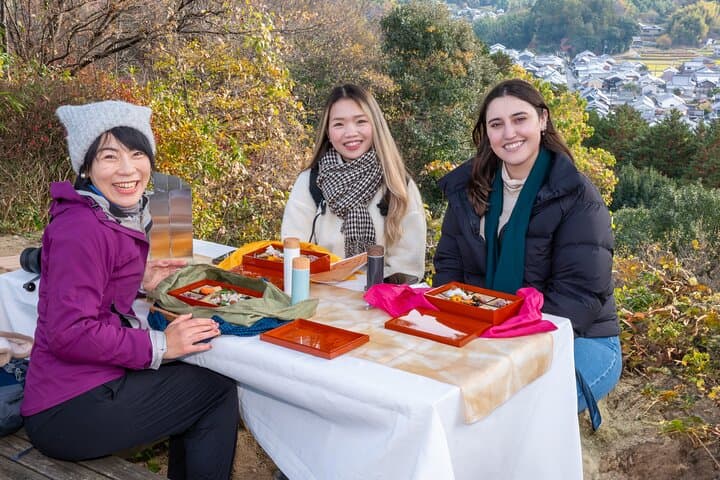

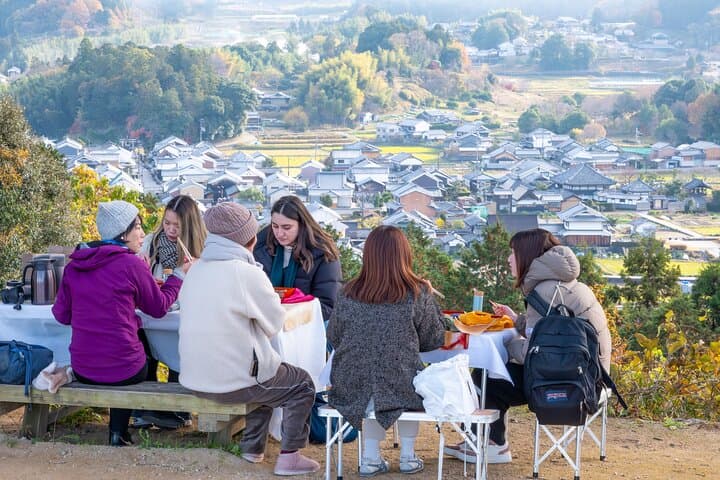
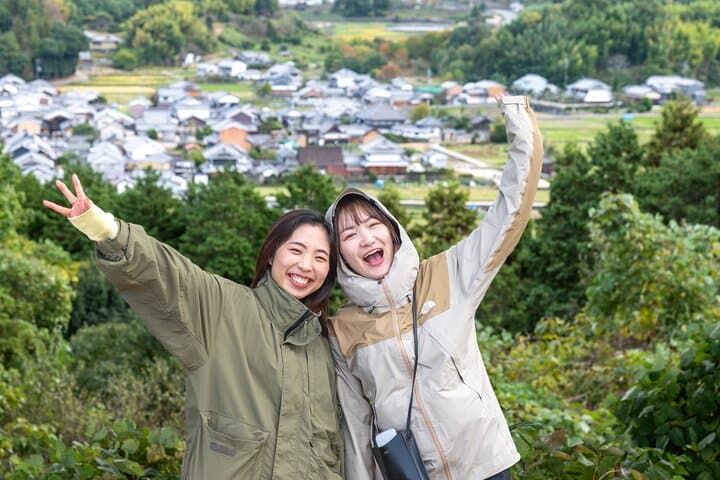
Dawn finds you walking through a satoyama that still remembers the first capitals of Japan: rice terraces whisper underfoot as a cool breeze threads the trees and the hill ahead promises a wide view. The guide leads you along a narrow lane, the forest breathing around you, toward Amakashi Hill’s viewpoint where freshly roasted coffee and a plant-forward breakfast await.
Dawn finds you walking through a satoyama that still remembers the first capitals of Japan: rice terraces whisper underfoot as a cool breeze threads the trees and the hill ahead promises a wide view. The guide leads you along a narrow lane, the forest breathing around you, toward Amakashi Hill’s viewpoint where freshly roasted coffee and a plant-forward breakfast await.
Asuka was a crucible of early Japanese statecraft from the 6th–8th centuries; volcanic ash and ancient river terraces shaped fields and tomb mounds (kofun) you pass. The geology here is gentle—low tuff and weathered sediment—covered by cedar and mixed broadleaf that supported satoyama agriculture for centuries. Villagers tended these slopes; today the route threads past stone markers, restored irrigation remains, and quiet shrines that keep local memory alive.
The morning program blends a short hike (roughly 3–4 km total) with forest-bathing pauses and a hilltop vegan/vegetarian breakfast—locally sourced rice-flour cookies, seasonal tea, and a hands-on roasted-coffee moment. Expect about 100 m of cumulative elevation gain over mostly gravel and grass tracks with a few steeper switchbacks.
Practical edge: start early to avoid sun and crowds, wear grippy shoes for damp trails, and bring a light layer—mornings can be cool. Keep voices low near shrines, carry out any rubbish, and reserve photography of private properties. This guided experience is accessible to most fitness levels but not suitable for people with serious back or heart conditions. Arrive with curiosity and respect; the landscape asks only that you listen.