THE ADVENTURE COLLECTIVE® · Independent discovery and booking for outdoor travel

Follow the route from Assin Manso’s "Last Bath" to the dungeons of Cape Coast and Elmina on a private day tour that traces the human geography of the trans‑Atlantic slave trade. Expect long travel days, steep stairs, and powerful historical interpretation.
Follow the route from Assin Manso’s "Last Bath" to the dungeons of Cape Coast and Elmina on a private day tour that traces the human geography of the trans‑Atlantic slave trade. Expect long travel days, steep stairs, and powerful historical interpretation.
You step off the bus into a humid dawn, the Atlantic already breathing salt into the air as the road from Accra unspools toward Ghana’s Central Region. At Assin Manso, the river waits low and slow — the place known as the "Last Bath" where captured Africans were ritually washed before being held in coastal forts. The water seems to hold memory; the guide's voice threads personal stories into the stones underfoot.
Verified experiences and guided adventures in the surrounding area.
Operated by Frank Doe Travels · Cape Coast, Central
You step off the bus into a humid dawn, the Atlantic already breathing salt into the air as the road from Accra unspools toward Ghana’s Central Region. At Assin Manso, the river waits low and slow — the place known as the "Last Bath" where captured Africans were ritually washed before being held in coastal forts. The water seems to hold memory; the guide's voice threads personal stories into the stones underfoot.
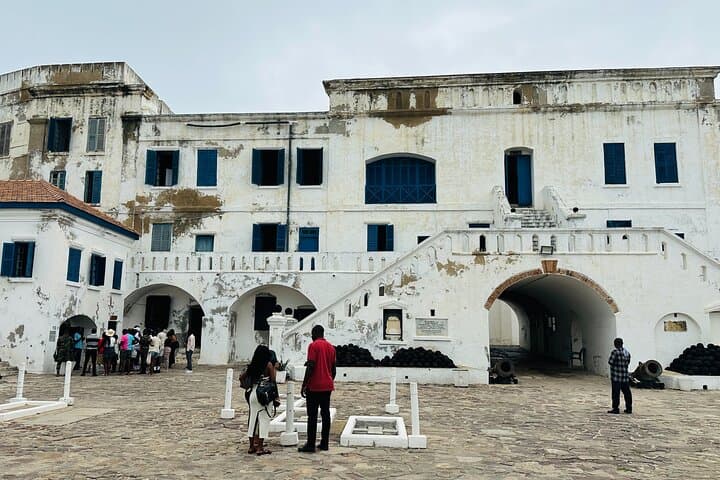
The tour moves from that intimate riverside to the heavier architecture of Cape Coast Castle and then Elmina: late‑15th‑ to 17th‑century walls, narrow dungeons, and sloped ramparts facing the Gulf of Guinea. The geology here is coastal laterite and sandstone, eroded into cliffs and sheltered bays that made these harbors strategic for European traders. Culture and colonization intersect visibly — Akan traditions persist in towns while colonial administrative buildings mark a different era.
Expect cobbled courtyards, steep staircases, tight dungeon passages, and museum exhibits that contextualize the trans‑Atlantic slave trade and local resistance. Bring water, sun protection and comfortable shoes: you'll be on your feet for most of an 11–13 hour day that includes travel between sites. Photography is allowed in many areas but be respectful at memorials.
Practicalities: depart early from Accra, carry Ghana cedi for small purchases, and plan for high humidity and heat later in the day. Guides often frame this as both a historical tour and a pilgrimage; move at a pace that lets the stories land. This is a full, sobering day that connects landscape, history and contemporary Ghanaian culture.
moderate.
11–13 hours.
Moderate fitness is required—long periods on foot, climbing stairs and short walks over uneven ground.
This private day tour typically lasts 11–13 hours with early morning pickup in Accra and returns the same day.
Yes—admission to sites like Cape Coast and Elmina Castles is included in the itinerary.
The tour can be intense and emotionally heavy; parental discretion is advised for younger children and those sensitive to difficult historical content.
Many castle areas involve steep stairs and uneven surfaces; the tour is not recommended for travelers with spinal or serious mobility limitations.
Cape Coast and Elmina were central hubs in the trans‑Atlantic slave trade; Elmina was established by the Portuguese in 1482 and is one of Africa’s oldest European structures south of the Sahara.
Conservation efforts focus on preserving castle fabric and memorial spaces while encouraging responsible visitation that supports local guides and communities.
Frank Doe Travels operates guided outdoor trips and adventures with an emphasis on safety, stewardship, and memorable experiences.

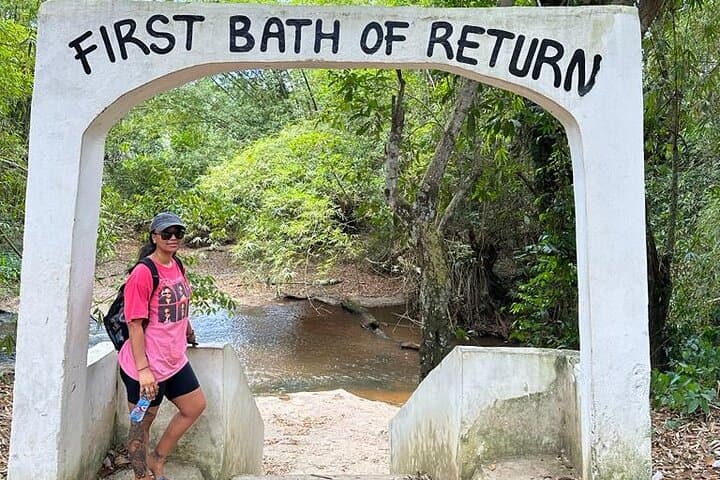
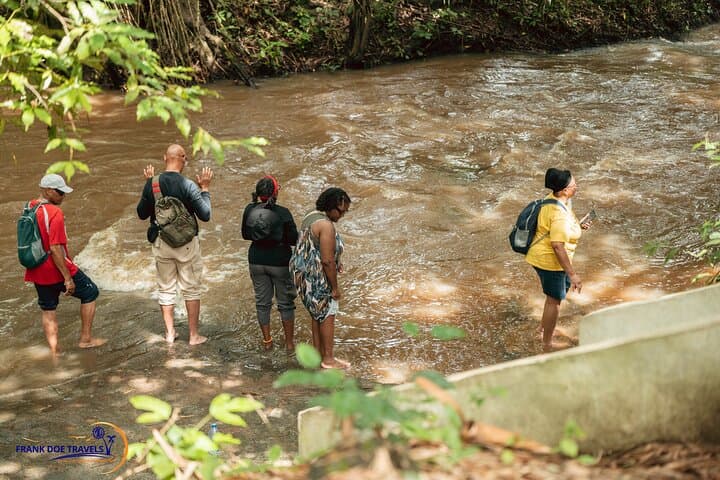
You step off the bus into a humid dawn, the Atlantic already breathing salt into the air as the road from Accra unspools toward Ghana’s Central Region. At Assin Manso, the river waits low and slow — the place known as the "Last Bath" where captured Africans were ritually washed before being held in coastal forts. The water seems to hold memory; the guide's voice threads personal stories into the stones underfoot.
You step off the bus into a humid dawn, the Atlantic already breathing salt into the air as the road from Accra unspools toward Ghana’s Central Region. At Assin Manso, the river waits low and slow — the place known as the "Last Bath" where captured Africans were ritually washed before being held in coastal forts. The water seems to hold memory; the guide's voice threads personal stories into the stones underfoot.
The tour moves from that intimate riverside to the heavier architecture of Cape Coast Castle and then Elmina: late‑15th‑ to 17th‑century walls, narrow dungeons, and sloped ramparts facing the Gulf of Guinea. The geology here is coastal laterite and sandstone, eroded into cliffs and sheltered bays that made these harbors strategic for European traders. Culture and colonization intersect visibly — Akan traditions persist in towns while colonial administrative buildings mark a different era.
Expect cobbled courtyards, steep staircases, tight dungeon passages, and museum exhibits that contextualize the trans‑Atlantic slave trade and local resistance. Bring water, sun protection and comfortable shoes: you'll be on your feet for most of an 11–13 hour day that includes travel between sites. Photography is allowed in many areas but be respectful at memorials.
Practicalities: depart early from Accra, carry Ghana cedi for small purchases, and plan for high humidity and heat later in the day. Guides often frame this as both a historical tour and a pilgrimage; move at a pace that lets the stories land. This is a full, sobering day that connects landscape, history and contemporary Ghanaian culture.