THE ADVENTURE COLLECTIVE® · Independent discovery and booking for outdoor travel

A long, raw day in Iceland’s interior: a Super Jeep crosses black deserts, braided glacier rivers, and the fresh flows of Holuhraun before dropping you at the edge of Askja’s caldera. Expect long drives, short hikes, and geological storytelling.
A long, raw day in Iceland’s interior: a Super Jeep crosses black deserts, braided glacier rivers, and the fresh flows of Holuhraun before dropping you at the edge of Askja’s caldera. Expect long drives, short hikes, and geological storytelling.
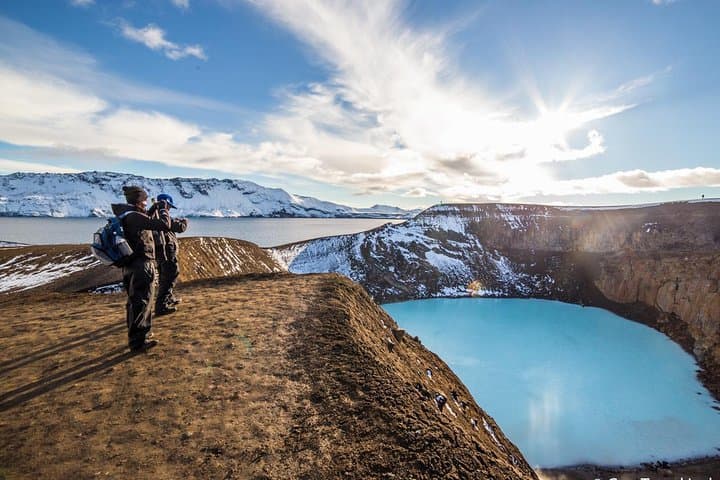
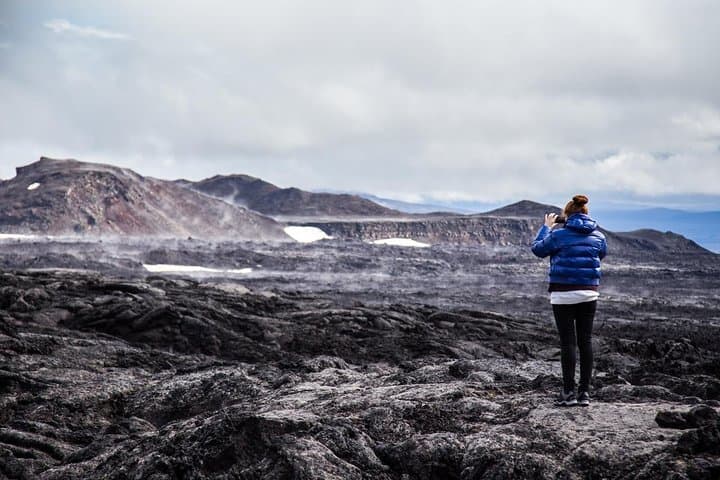
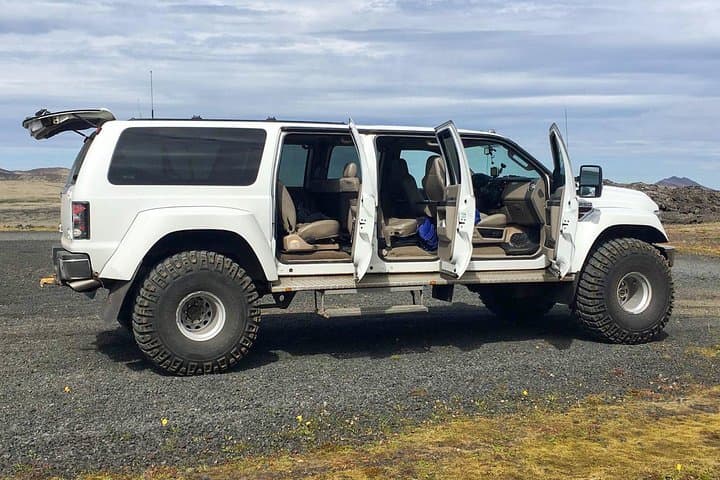
You climb into a Super Jeep before dawn in the flat, reed-fringed edges of Mývatn and the van slides onto an F‑road that looks more like a braided riverbed than a road. The world narrows to low ridges of black sand, braided glacier rivers daring the tires, and distant steam where the highlands breathe. By midmorning the landscape has already shifted twice: first to angular pahoehoe lava and pumice where Holuhraun’s 2014 flow still reads like raw paint, then into the wide, almost alien bowl of Askja where the caldera cuts into the sky.
Verified experiences and guided adventures in the surrounding area.
Operated by Geo Travel ehf · Reykjahlíð, Northeastern Region
You climb into a Super Jeep before dawn in the flat, reed-fringed edges of Mývatn and the van slides onto an F‑road that looks more like a braided riverbed than a road. The world narrows to low ridges of black sand, braided glacier rivers daring the tires, and distant steam where the highlands breathe. By midmorning the landscape has already shifted twice: first to angular pahoehoe lava and pumice where Holuhraun’s 2014 flow still reads like raw paint, then into the wide, almost alien bowl of Askja where the caldera cuts into the sky.
Askja is part of the large volcanic system inside Vatnajökull National Park; its modern story is written in explosive events — the 1961 eruption that reshaped local settlements and the 2014 Holuhraun eruption fed by Bárðarbunga, which birthed fresh lava fields that still glint with mineral hues. Geologically, you’re crossing from basalt plains into a rhyolitic caldera ringed with fine ash, then down to Öskjuvatn, the deep lake that fills the crater. Culturally the highlands are Icelandic in their plain-speaking isolation: few huts, a few hardy summer guides, and a long history of human respect for a landscape that can change overnight.
The day itinerary is pragmatic: about 12 hours from pickup at Reykjahlíð (Icelandair Hotel Mývatn area), multiple off‑road stretches, and focused stops — a short waterfall pull-off, Víkurborgir pseudo-craters, Drekagil (Dragon Canyon) for lunch and a compact walk, a possible soak at Víti (conditions permitting), and 2.5–3.5 hours to explore Askja itself. Terrain underfoot ranges from compacted volcanic sand to jagged lava and wet wooden ladders near streams; expect short hikes up loose slopes and some low-angle scrambling near viewpoints.
Practical edge: bring a substantial packed lunch and 2–3 liters of water, because there are no shops in the highlands. Dress in layers and waterproofs — weather is highly changeable even in summer. Footwear should be sturdy and treaded; gaiters are useful for the pumice. Cameras need spare batteries and weather protection; mineral-rich air and steam can fog lenses.
Timing and safety: road time can be long and bumpy — the Super Jeep makes the route possible but the ride is part of the experience. Weather can close access, and operators will cancel in unsafe conditions. For photographers, mid to late afternoon when low sun slices across lava textures is best, while overcast light brings out subtle colors in the ash and rhyolite.
This tour gives a condensed primer on Iceland’s raw mechanics — fire, ice, and moving water — with practical pace and expert local narration. It’s a long, physical day of scenic driving, short hikes, and geological immersion, best suited to travelers who want to feel the scale of the highlands without multi-day packing or backcountry navigation.
moderate.
12 hours.
Moderate fitness needed: you’ll be on a long day with several short hikes over uneven volcanic terrain.
The day is approximately 12 hours with pickup around 07:35–08:00 from the Mývatn (Reykjahlíð) area.
Guests should have at least moderate fitness; short hikes are required and the long day can be tiring for young children.
Facilities are limited — expect basic stops only; bring hand sanitizer and be prepared for outdoor breaks.
A soak is sometimes possible if conditions and guides allow, but water temperature varies and safety decisions are made on-site.
Operators may cancel for safety; their policy allows full refunds if canceled at least 24 hours before departure or due to bad weather.
Mobile coverage is intermittent in the highlands — plan as if you’ll be offline for large portions of the day.
Askja’s modern era was reshaped by the 1961 eruption, and Holuhraun’s 2014 flow from Bárðarbunga added new lava fields that are still cooling and altering the local hydrology.
The highland ecosystems are fragile — stick to marked tracks, avoid trampling moss and lichen, and follow guide instructions to minimize impact.
Geo Travel ehf operates guided outdoor trips and adventures with an emphasis on safety, stewardship, and memorable experiences.
You climb into a Super Jeep before dawn in the flat, reed-fringed edges of Mývatn and the van slides onto an F‑road that looks more like a braided riverbed than a road. The world narrows to low ridges of black sand, braided glacier rivers daring the tires, and distant steam where the highlands breathe. By midmorning the landscape has already shifted twice: first to angular pahoehoe lava and pumice where Holuhraun’s 2014 flow still reads like raw paint, then into the wide, almost alien bowl of Askja where the caldera cuts into the sky.
You climb into a Super Jeep before dawn in the flat, reed-fringed edges of Mývatn and the van slides onto an F‑road that looks more like a braided riverbed than a road. The world narrows to low ridges of black sand, braided glacier rivers daring the tires, and distant steam where the highlands breathe. By midmorning the landscape has already shifted twice: first to angular pahoehoe lava and pumice where Holuhraun’s 2014 flow still reads like raw paint, then into the wide, almost alien bowl of Askja where the caldera cuts into the sky.
Askja is part of the large volcanic system inside Vatnajökull National Park; its modern story is written in explosive events — the 1961 eruption that reshaped local settlements and the 2014 Holuhraun eruption fed by Bárðarbunga, which birthed fresh lava fields that still glint with mineral hues. Geologically, you’re crossing from basalt plains into a rhyolitic caldera ringed with fine ash, then down to Öskjuvatn, the deep lake that fills the crater. Culturally the highlands are Icelandic in their plain-speaking isolation: few huts, a few hardy summer guides, and a long history of human respect for a landscape that can change overnight.
The day itinerary is pragmatic: about 12 hours from pickup at Reykjahlíð (Icelandair Hotel Mývatn area), multiple off‑road stretches, and focused stops — a short waterfall pull-off, Víkurborgir pseudo-craters, Drekagil (Dragon Canyon) for lunch and a compact walk, a possible soak at Víti (conditions permitting), and 2.5–3.5 hours to explore Askja itself. Terrain underfoot ranges from compacted volcanic sand to jagged lava and wet wooden ladders near streams; expect short hikes up loose slopes and some low-angle scrambling near viewpoints.
Practical edge: bring a substantial packed lunch and 2–3 liters of water, because there are no shops in the highlands. Dress in layers and waterproofs — weather is highly changeable even in summer. Footwear should be sturdy and treaded; gaiters are useful for the pumice. Cameras need spare batteries and weather protection; mineral-rich air and steam can fog lenses.
Timing and safety: road time can be long and bumpy — the Super Jeep makes the route possible but the ride is part of the experience. Weather can close access, and operators will cancel in unsafe conditions. For photographers, mid to late afternoon when low sun slices across lava textures is best, while overcast light brings out subtle colors in the ash and rhyolite.
This tour gives a condensed primer on Iceland’s raw mechanics — fire, ice, and moving water — with practical pace and expert local narration. It’s a long, physical day of scenic driving, short hikes, and geological immersion, best suited to travelers who want to feel the scale of the highlands without multi-day packing or backcountry navigation.