THE ADVENTURE COLLECTIVE® · Independent discovery and booking for outdoor travel

Float into the Appalachian foothills with guides who bring you to waterfalls, stealthy bass holes and quiet coves. This six‑hour kayak fishing and scenic paddle tour combines local angling knowledge with hands‑on instruction and all gear supplied.
Float into the Appalachian foothills with guides who bring you to waterfalls, stealthy bass holes and quiet coves. This six‑hour kayak fishing and scenic paddle tour combines local angling knowledge with hands‑on instruction and all gear supplied.
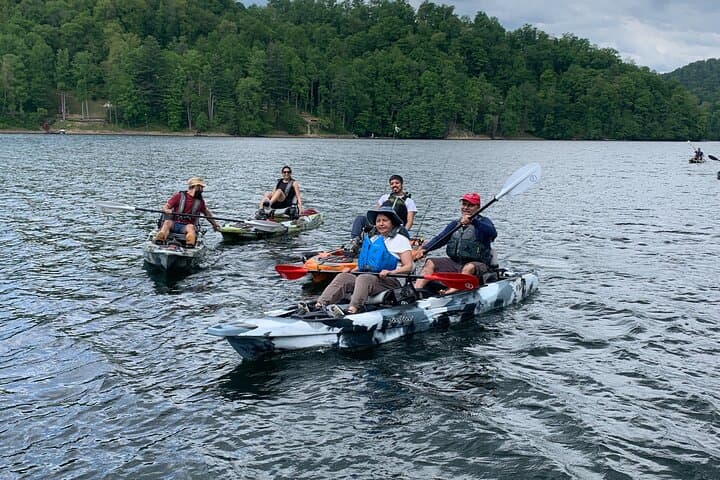
The paddle slips from your hands with a soft, steady rhythm and the water answers in concentric rings — the lake seems to breathe. Morning mist lifts off pockets of cove and the ridge line beyond Asheville cuts a clean silhouette against a pale sky. Your guide steers toward a narrow inlet, exchanges a few low words about current and structure, then casts a line where rock meets shadow. This is not aimless paddling; it’s guided access to places that otherwise take years of local knowledge to find.
Verified experiences and guided adventures in the surrounding area.
Operated by Craig Gorton · Asheville, North Carolina
The paddle slips from your hands with a soft, steady rhythm and the water answers in concentric rings — the lake seems to breathe. Morning mist lifts off pockets of cove and the ridge line beyond Asheville cuts a clean silhouette against a pale sky. Your guide steers toward a narrow inlet, exchanges a few low words about current and structure, then casts a line where rock meets shadow. This is not aimless paddling; it’s guided access to places that otherwise take years of local knowledge to find.
Western North Carolina’s waterways were carved by the ancient forces that raised the southern Appalachians. Streams that once powered sawmills now push cool water past outcrops of metamorphic rock and moss-dark boulders. The area carries layers of human history too — from Cherokee fishing practices to Appalachian angling traditions passed down over generations. Guides here fold that context into the trip: they’ll point out historic mill ruins, explain why a bend concentrates baitfish, and show how seasonal patterns govern where bass and sunfish congregate.
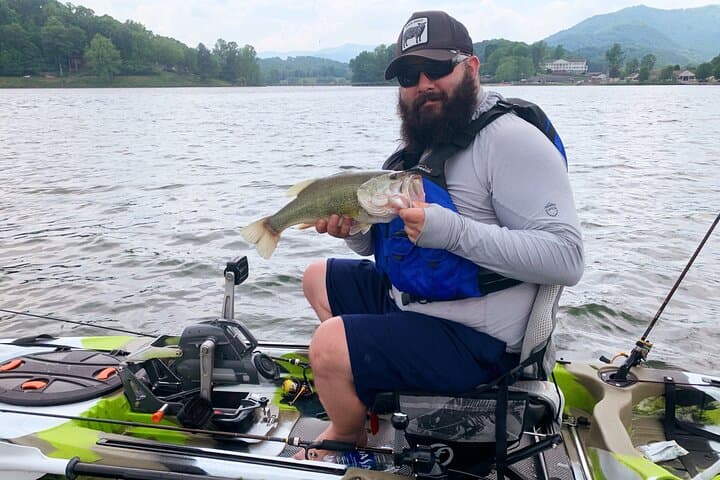
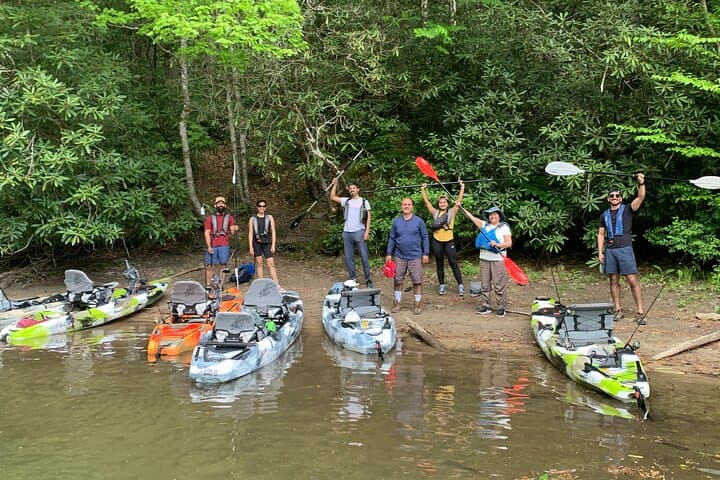
On a typical six-hour outing you’ll paddle 3–6 miles broken by fetching rigs, swapping lures and watching birds quarter the surface. Equipment is provided — fishing kayaks (paddle or pedal), rods, reels, tackle, PFDs, coolers and electrolyte drinks — and guides carry a camera to capture the big catch and candid moments. Groups are intimate (max five), so instruction is hands-on: the basics of paddling, safe casting from a stable hull, and reading water for structure and current.
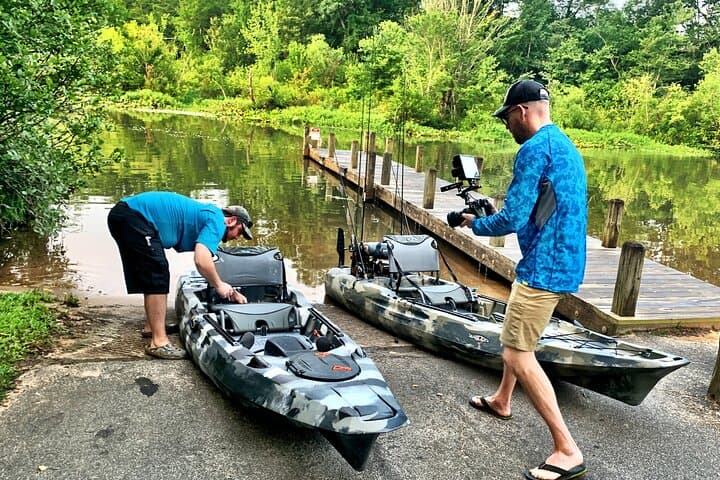
Practicalities matter: meet at the boat launch listed in your confirmation (the operator notes nearby free parking by a closed Wells Fargo lot), arrive with sunscreen and a charged phone in a dry bag, and expect to get wet. Fitness-wise, moderate conditioning is helpful — repeated casts and steering into wind require stamina more than technical expertise — but beginners are welcome. The operator cancels for bad weather; cancel at least 24 hours ahead for a full refund.
For anglers the real advantage is local knowledge: guides know where a small hidden waterfall concentrates bait or where a shady backchannel holds bass on a hot afternoon. For paddlers seeking scenery, the river’s current dares you into long, reflective stretches framed by rhododendron and hemlock.
Leave the place better than you found it: clean your gear to avoid spreading invasive species, pack out all tackle and line, and follow the guide’s advice on catch-and-release. With the right prep — sun protection, good footwear and a willingness to learn — this tour turns a day on the water into both a lesson and a story.
moderate.
6 hours.
Moderate fitness; able to paddle and cast repeatedly, climb in and out of a kayak, and sit for extended periods.
No — guides provide basic paddling and casting instruction; previous experience helps but isn’t required.
The tour includes fishing kayaks (paddle or pedal), paddles, life vests, rods, reels, tackle, coolers, snacks and electrolyte drinks; photos may be provided by the guide.
Infants and small children can ride in a pram before the water leg, but all participants must fit a PFD and meet safety guidelines — check with the operator for age and weight limits.
Trips are canceled for unsafe weather and you’ll receive a full refund if canceled at least 24 hours before departure; the operator may cancel same‑day for thunderstorms or high wind.
Expect roughly 3–6 miles depending on fishing stops and flow; most days include extended stops for casting and structure inspection.
Tipping is customary for good service; 15–20% of the trip cost is a common guideline and appreciated by guides.
Rivers here supported Cherokee fishing and later powered 19th-century mills; the waterways shaped settlements and local angling traditions.
Guides emphasize cleaning gear to prevent invasive species spread and practice catch-and-release where appropriate to protect fish populations and shoreline habitat.
Craig Gorton operates guided outdoor trips and adventures with an emphasis on safety, stewardship, and memorable experiences.
The paddle slips from your hands with a soft, steady rhythm and the water answers in concentric rings — the lake seems to breathe. Morning mist lifts off pockets of cove and the ridge line beyond Asheville cuts a clean silhouette against a pale sky. Your guide steers toward a narrow inlet, exchanges a few low words about current and structure, then casts a line where rock meets shadow. This is not aimless paddling; it’s guided access to places that otherwise take years of local knowledge to find.
The paddle slips from your hands with a soft, steady rhythm and the water answers in concentric rings — the lake seems to breathe. Morning mist lifts off pockets of cove and the ridge line beyond Asheville cuts a clean silhouette against a pale sky. Your guide steers toward a narrow inlet, exchanges a few low words about current and structure, then casts a line where rock meets shadow. This is not aimless paddling; it’s guided access to places that otherwise take years of local knowledge to find.
Western North Carolina’s waterways were carved by the ancient forces that raised the southern Appalachians. Streams that once powered sawmills now push cool water past outcrops of metamorphic rock and moss-dark boulders. The area carries layers of human history too — from Cherokee fishing practices to Appalachian angling traditions passed down over generations. Guides here fold that context into the trip: they’ll point out historic mill ruins, explain why a bend concentrates baitfish, and show how seasonal patterns govern where bass and sunfish congregate.
On a typical six-hour outing you’ll paddle 3–6 miles broken by fetching rigs, swapping lures and watching birds quarter the surface. Equipment is provided — fishing kayaks (paddle or pedal), rods, reels, tackle, PFDs, coolers and electrolyte drinks — and guides carry a camera to capture the big catch and candid moments. Groups are intimate (max five), so instruction is hands-on: the basics of paddling, safe casting from a stable hull, and reading water for structure and current.
Practicalities matter: meet at the boat launch listed in your confirmation (the operator notes nearby free parking by a closed Wells Fargo lot), arrive with sunscreen and a charged phone in a dry bag, and expect to get wet. Fitness-wise, moderate conditioning is helpful — repeated casts and steering into wind require stamina more than technical expertise — but beginners are welcome. The operator cancels for bad weather; cancel at least 24 hours ahead for a full refund.
For anglers the real advantage is local knowledge: guides know where a small hidden waterfall concentrates bait or where a shady backchannel holds bass on a hot afternoon. For paddlers seeking scenery, the river’s current dares you into long, reflective stretches framed by rhododendron and hemlock.
Leave the place better than you found it: clean your gear to avoid spreading invasive species, pack out all tackle and line, and follow the guide’s advice on catch-and-release. With the right prep — sun protection, good footwear and a willingness to learn — this tour turns a day on the water into both a lesson and a story.