THE ADVENTURE COLLECTIVE® · Independent discovery and booking for outdoor travel

A three-day ascent of Mount Toubkal delivers alpine exposure, wide Atlas panoramas and authentic Berber support—mules, mountain huts and guides. Expect steep hiking, some scrambling and winter snow that requires crampons and an ice axe.
A three-day ascent of Mount Toubkal delivers alpine exposure, wide Atlas panoramas and authentic Berber support—mules, mountain huts and guides. Expect steep hiking, some scrambling and winter snow that requires crampons and an ice axe.
You step off the minibus in Imlil as a cold wind runs the ridgelines of the High Atlas. Stone houses crouch against the valley walls; muleteers sort packs and guides check crampons. The trail climbs immediately, switching through olive terraces, scree slopes and the thin, stubbled grass that marks higher elevations.
Verified experiences and guided adventures in the surrounding area.
Operated by Biking in Morocco day tours · Imlil, Marrakesh-Safi
You step off the minibus in Imlil as a cold wind runs the ridgelines of the High Atlas. Stone houses crouch against the valley walls; muleteers sort packs and guides check crampons. The trail climbs immediately, switching through olive terraces, scree slopes and the thin, stubbled grass that marks higher elevations.
Mount Toubkal (4,167 m) is North Africa’s highest peak and a classic high‑altitude trek rather than a technical climb. The massif formed during tectonic uplift, its jagged ridges carved by glacial and seasonal snow action. Local Berber communities have used these passes for generations; muleteers still move gear and tents between villages and the mountain huts. On a clear summit morning you can see the red roofs of Marrakech to the north and the pale sweep of Sahara foothills to the south.
The standard 3‑day itinerary covers roughly 25–35 km with about 2,300–2,500 m total elevation gain depending on start point (Imlil ~1,740 m). Terrain varies: firm rocky trails, loose scree, easy scrambling near the summit and snowfields in winter. From November–April expect crampons and an ice axe on steeper sections; summer routes allow camping and long daylight approaches.
Practical essentials: train for sustained uphill hiking and steep descents, allow time to acclimatize, layer for alpine sun and wind, and hire an experienced Berber guide who manages mules and route choices. Start pre-dawn on summit day, bring a headlamp, and plan your descent with plenty of daylight—weather can change fast and the mountain commands respect.
challenging.
3 days.
Suited to hikers with strong aerobic fitness and recent experience on sustained high‑gain days; comfortable with long daily ascents and descents
The route is non‑technical but physically demanding due to sustained elevation gain (≈2,300–2,500 m) and high altitude; expect long days and some easy scrambling.
In winter (Nov–Apr) crampons and an ice axe are required on steeper snow sections; in summer standard trekking gear and good boots are sufficient.
Options include the Toubkal refuge (basic mountain hut) in colder months and tent camping in summer; the operator provides accommodation per itinerary.
Operators recommend a high level of fitness and do not advise people with serious heart or spinal conditions; check booking questions for age and health requirements.
Berber villages in the High Atlas have long practiced pastoralism and mule transport; local guides maintain traditional trail knowledge used by modern trekking services.
Trail erosion and grazing pressure are local concerns—stick to marked paths, pack out waste and use local guides and huts to concentrate impact.
Biking in Morocco day tours operates guided outdoor trips and adventures with an emphasis on safety, stewardship, and memorable experiences.


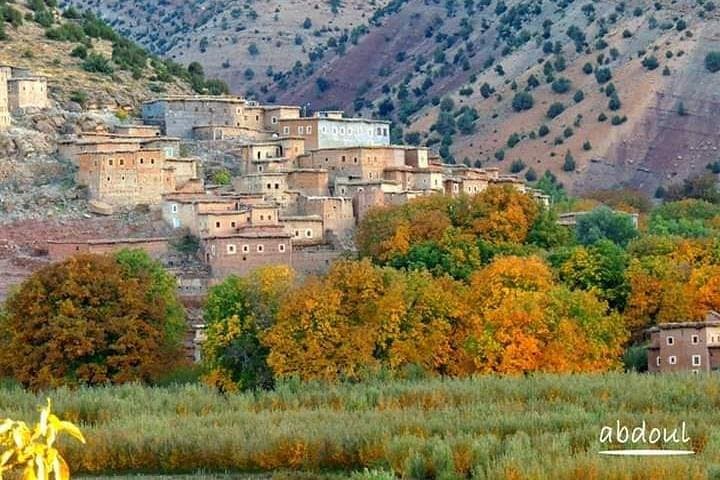

You step off the minibus in Imlil as a cold wind runs the ridgelines of the High Atlas. Stone houses crouch against the valley walls; muleteers sort packs and guides check crampons. The trail climbs immediately, switching through olive terraces, scree slopes and the thin, stubbled grass that marks higher elevations.
You step off the minibus in Imlil as a cold wind runs the ridgelines of the High Atlas. Stone houses crouch against the valley walls; muleteers sort packs and guides check crampons. The trail climbs immediately, switching through olive terraces, scree slopes and the thin, stubbled grass that marks higher elevations.
Mount Toubkal (4,167 m) is North Africa’s highest peak and a classic high‑altitude trek rather than a technical climb. The massif formed during tectonic uplift, its jagged ridges carved by glacial and seasonal snow action. Local Berber communities have used these passes for generations; muleteers still move gear and tents between villages and the mountain huts. On a clear summit morning you can see the red roofs of Marrakech to the north and the pale sweep of Sahara foothills to the south.
The standard 3‑day itinerary covers roughly 25–35 km with about 2,300–2,500 m total elevation gain depending on start point (Imlil ~1,740 m). Terrain varies: firm rocky trails, loose scree, easy scrambling near the summit and snowfields in winter. From November–April expect crampons and an ice axe on steeper sections; summer routes allow camping and long daylight approaches.
Practical essentials: train for sustained uphill hiking and steep descents, allow time to acclimatize, layer for alpine sun and wind, and hire an experienced Berber guide who manages mules and route choices. Start pre-dawn on summit day, bring a headlamp, and plan your descent with plenty of daylight—weather can change fast and the mountain commands respect.