THE ADVENTURE COLLECTIVE® · Independent discovery and booking for outdoor travel

Drive up Doi Suthep to a gilded chedi and stroll royal gardens on a half-day tour from Chiang Mai. Learn the temple’s origin story, opt for the naga-serpent staircase or cable car, and time your visit for cooler light and fewer crowds.
Drive up Doi Suthep to a gilded chedi and stroll royal gardens on a half-day tour from Chiang Mai. Learn the temple’s origin story, opt for the naga-serpent staircase or cable car, and time your visit for cooler light and fewer crowds.
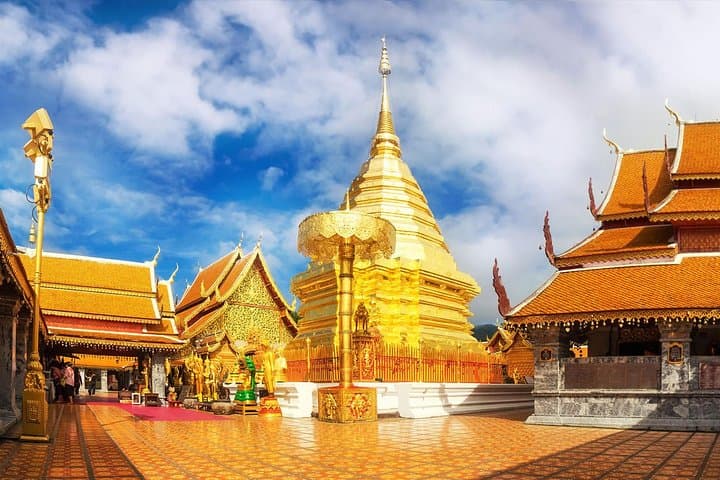
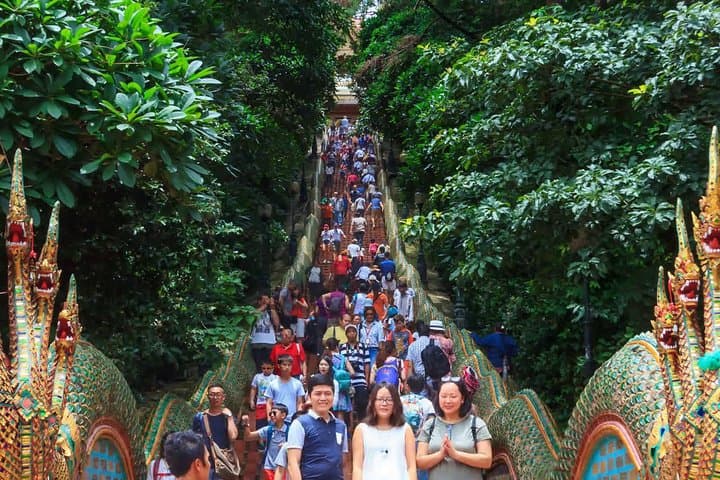
You climb the mountain road as the city shrinks behind you, jungle closing in like a dark green curtain. At the parking area, the naga-serpent staircase coils downhill—306 steps that test legs and attention—while an alternate cable car hums silently, lifting quieter travelers to the golden spire.
Verified experiences and guided adventures in the surrounding area.
Operated by Sunleisure World · Chiang Mai, Chiang Mai Province
You climb the mountain road as the city shrinks behind you, jungle closing in like a dark green curtain. At the parking area, the naga-serpent staircase coils downhill—306 steps that test legs and attention—while an alternate cable car hums silently, lifting quieter travelers to the golden spire.
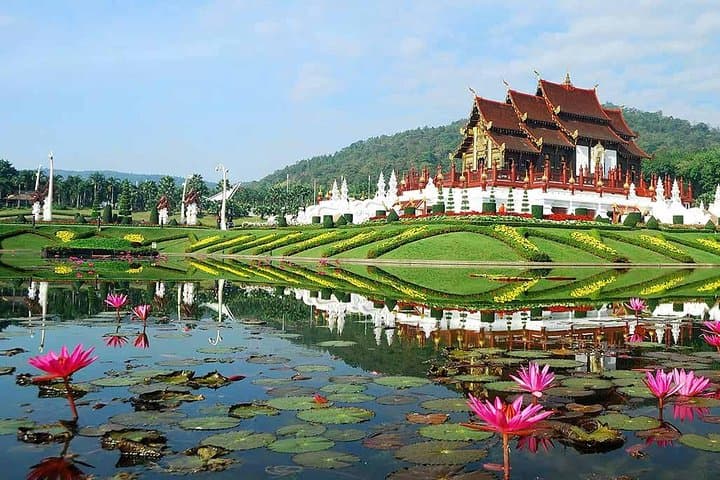
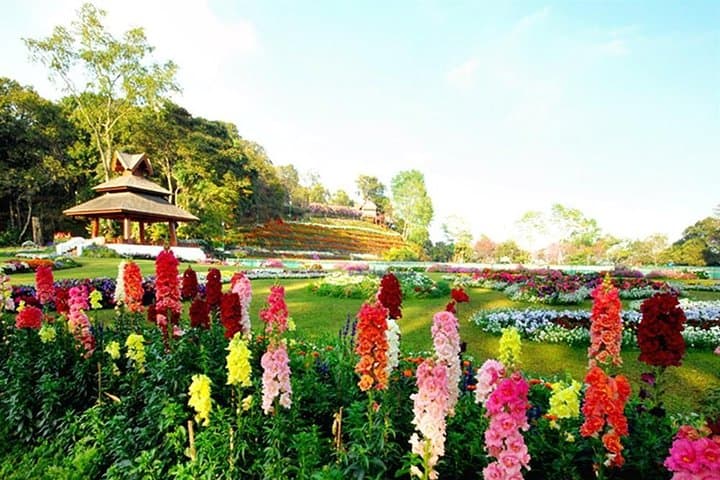
Wat Phra That Doi Suthep sits about 1,069 meters above sea level in the Doi Suthep–Pui Range. Founded in the 14th century, the temple combines Lanna-style chedi architecture, lacquered reliefs, and a shrine said to house a relic of the Buddha brought by a fabled white elephant. Higher on the same ridge, Phu Ping Palace (built in the early 1960s) presents manicured gardens showcasing tropical and temperate plantings that flower year-round.
Geology here is folded foothills and forest—layers of older metamorphic rock and soil that feed springs downslope—so trails can be shaded, moist, and pleasantly cool compared with the Chiang Mai plain. Cultural rhythms are visible: morning chanting, saffron robes, and visitors leaving small offerings at shrines.
Practical guidance: allow roughly four hours for hotel pickup, temple time, walking the stairs or taking the cable car, and a garden stroll at Phu Ping. Dress modestly—shoulders and knees covered—and carry water, sunscreen, and a light layer for breezy ridge conditions. Go early to avoid mid-day crowds and heat; expect steps, short uphill walks, and respectful silence inside shrines. The mountain breathes incense and wind in equal measure—pay attention to signs, avoid feeding monkeys, and you’ll get the clearest views and best light for photos.
easy.
3–4 hours.
Suitable for most fitness levels; you should be able to climb a few hundred steps or stand for short walks.
Wat Doi Suthep typically charges a small admission fee for foreign visitors; Phu Ping Palace gardens also charge an entry fee—bring cash or check current rates online.
Access is possible by vehicle to the lower plaza and via cable car, but some areas have steps and uneven surfaces; assistance may be required.
You can visit independently, but a guided tour provides historical context and easier logistics like transport and pickup from Chiang Mai hotels.
Early morning or late afternoon offers cooler temperatures, softer light for photos, and fewer crowds, especially during high season.
The temple was established in the late 14th century and is tied to a local legend of a white elephant carrying a Buddha relic; Phu Ping Palace was completed in the early 1960s as a royal winter residence.
Doi Suthep–Pui is part of a protected national park—stay on paths, avoid littering, and do not pick flowers in the palace gardens to help preserve fragile habitats.
Sunleisure World operates guided outdoor trips and adventures with an emphasis on safety, stewardship, and memorable experiences.
You climb the mountain road as the city shrinks behind you, jungle closing in like a dark green curtain. At the parking area, the naga-serpent staircase coils downhill—306 steps that test legs and attention—while an alternate cable car hums silently, lifting quieter travelers to the golden spire.
You climb the mountain road as the city shrinks behind you, jungle closing in like a dark green curtain. At the parking area, the naga-serpent staircase coils downhill—306 steps that test legs and attention—while an alternate cable car hums silently, lifting quieter travelers to the golden spire.
Wat Phra That Doi Suthep sits about 1,069 meters above sea level in the Doi Suthep–Pui Range. Founded in the 14th century, the temple combines Lanna-style chedi architecture, lacquered reliefs, and a shrine said to house a relic of the Buddha brought by a fabled white elephant. Higher on the same ridge, Phu Ping Palace (built in the early 1960s) presents manicured gardens showcasing tropical and temperate plantings that flower year-round.
Geology here is folded foothills and forest—layers of older metamorphic rock and soil that feed springs downslope—so trails can be shaded, moist, and pleasantly cool compared with the Chiang Mai plain. Cultural rhythms are visible: morning chanting, saffron robes, and visitors leaving small offerings at shrines.
Practical guidance: allow roughly four hours for hotel pickup, temple time, walking the stairs or taking the cable car, and a garden stroll at Phu Ping. Dress modestly—shoulders and knees covered—and carry water, sunscreen, and a light layer for breezy ridge conditions. Go early to avoid mid-day crowds and heat; expect steps, short uphill walks, and respectful silence inside shrines. The mountain breathes incense and wind in equal measure—pay attention to signs, avoid feeding monkeys, and you’ll get the clearest views and best light for photos.