THE ADVENTURE COLLECTIVE® · Independent discovery and booking for outdoor travel

Climb into a traditional rickshaw and glide through Asakusa’s historic streets, riverfront parks and temple approaches with a local driver-guide. This easy, customizable ride reveals Edo‑era stories, shrine quirks and excellent photo viewpoints along the Sumida.
Climb into a traditional rickshaw and glide through Asakusa’s historic streets, riverfront parks and temple approaches with a local driver-guide. This easy, customizable ride reveals Edo‑era stories, shrine quirks and excellent photo viewpoints along the Sumida.
The rickshaw creaks forward and the city reshapes itself: narrow lanes of wooden shopfronts and lacquered signs slide by, the Sumida River glints and dares you to look away, and the Skytree rises like a modern pagoda across the water.
Verified experiences and guided adventures in the surrounding area.
Operated by Ebisuya · Tokyo, Tokyo
The rickshaw creaks forward and the city reshapes itself: narrow lanes of wooden shopfronts and lacquered signs slide by, the Sumida River glints and dares you to look away, and the Skytree rises like a modern pagoda across the water.
This ride puts you where Edo-era Tokyo still breathes. Asakusa’s Sensoji Temple dates back to the 7th century and the surrounding streets were once the city’s entertainment and craftsmanship quarter. Geologically the area sits on low alluvial plains fed by the Sumida—flat streets, easy grades and a riverfront that has guided Tokyo’s growth for centuries.
Culturally the tour balances Shinto and Buddhist landmarks, local shrines with specific charms (manekineko and radish motifs dot a few altars), and a living retail scene: traditional confectioners, kimono fabric sellers, and small theatres that survived war and reconstruction.
Expect a customizable, low-effort excursion: a single-rickshaw covers intimate alleys and park viewpoints while guides narrate stories of merchants, festivals and the quirks of Asakusa life. Because rickshaws can’t enter temple inner grounds, stops are staged at viewing points and shrine gateways for photos and short walks.
Practical notes: book early-morning or late-afternoon slots to avoid crowds and to catch softer light on the river. Each rickshaw fits two adults but is narrow—larger passengers should reserve separate rickshaws in advance. Bring small change for shrine offerings and local vendors, wear comfortable shoes for short strolls, and carry a light layer—river breezes pick up quickly.
This is a relaxed, richly contextual way to see Tokyo: evocative, accessible, and easy to tailor to your interests.
easy.
30–180 minutes.
Suitable for all fitness levels; involves short walks on flat terrain.
No—rickshaws are not permitted inside Sensoji temple grounds or on Nakamise street; guides stop nearby for photos and short walks into these areas.
Most rickshaws carry up to two adults (or two adults plus up to two children under 5 on laps); each seat is narrow, so larger passengers should book separate rickshaws.
Yes—English and Japanese-speaking drivers are available subject to availability; specify language when booking to increase the chance of an English guide.
Full refund if cancelled at least 24 hours before departure; tours may be cancelled for bad weather and will follow provider policies.
Asakusa was a major entertainment district in Edo-era Tokyo; Sensoji is the area’s oldest temple, established in the 7th century and rebuilt repeatedly since.
Stick to paved paths and park walkways, support small local shops rather than large chains, and avoid feeding wildlife; respectful tourism helps preserve the character of riverside parks and shrines.
Ebisuya operates guided outdoor trips and adventures with an emphasis on safety, stewardship, and memorable experiences.
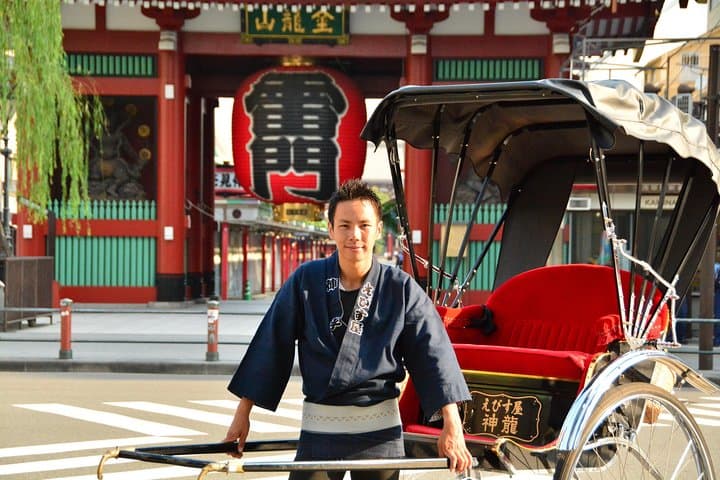
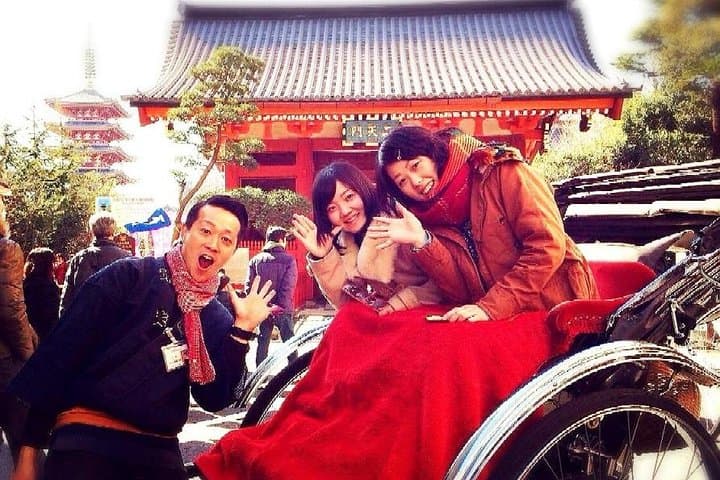
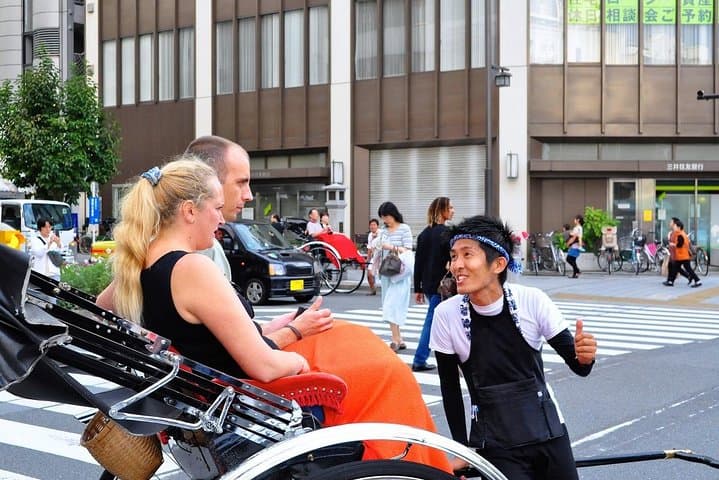
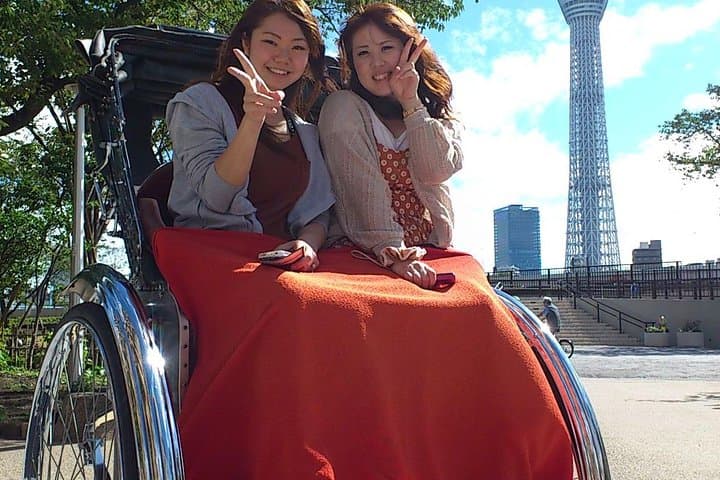
The rickshaw creaks forward and the city reshapes itself: narrow lanes of wooden shopfronts and lacquered signs slide by, the Sumida River glints and dares you to look away, and the Skytree rises like a modern pagoda across the water.
The rickshaw creaks forward and the city reshapes itself: narrow lanes of wooden shopfronts and lacquered signs slide by, the Sumida River glints and dares you to look away, and the Skytree rises like a modern pagoda across the water.
This ride puts you where Edo-era Tokyo still breathes. Asakusa’s Sensoji Temple dates back to the 7th century and the surrounding streets were once the city’s entertainment and craftsmanship quarter. Geologically the area sits on low alluvial plains fed by the Sumida—flat streets, easy grades and a riverfront that has guided Tokyo’s growth for centuries.
Culturally the tour balances Shinto and Buddhist landmarks, local shrines with specific charms (manekineko and radish motifs dot a few altars), and a living retail scene: traditional confectioners, kimono fabric sellers, and small theatres that survived war and reconstruction.
Expect a customizable, low-effort excursion: a single-rickshaw covers intimate alleys and park viewpoints while guides narrate stories of merchants, festivals and the quirks of Asakusa life. Because rickshaws can’t enter temple inner grounds, stops are staged at viewing points and shrine gateways for photos and short walks.
Practical notes: book early-morning or late-afternoon slots to avoid crowds and to catch softer light on the river. Each rickshaw fits two adults but is narrow—larger passengers should reserve separate rickshaws in advance. Bring small change for shrine offerings and local vendors, wear comfortable shoes for short strolls, and carry a light layer—river breezes pick up quickly.
This is a relaxed, richly contextual way to see Tokyo: evocative, accessible, and easy to tailor to your interests.