THE ADVENTURE COLLECTIVE® · Independent discovery and booking for outdoor travel

A full-day loop from Asahikawa through Biei that pairs the surreal blue of Shirogane Pond with Shirahige Waterfall and Asahiyama Zoo’s immersive exhibits. Practical, photo-focused, and accessible for most travelers.
A full-day loop from Asahikawa through Biei that pairs the surreal blue of Shirogane Pond with Shirahige Waterfall and Asahiyama Zoo’s immersive exhibits. Practical, photo-focused, and accessible for most travelers.
Morning light slices across Hokkaido’s wind-scoured fields as the coach eases toward Biei; frost still clings to the grasses and a lone spruce—the so-called Christmas Tree—stands sharp against the sky. The day tour strings together distinct landscapes: the milky, mineral-blue of Shirogane Blue Pond, the thin white veils of Shirahige Waterfall, and the surprisingly intimate animal displays of Asahiyama Zoo in Asahikawa.
Verified experiences and guided adventures in the surrounding area.
Operated by TREVOPEDIA · Asahikawa, Hokkaido
Morning light slices across Hokkaido’s wind-scoured fields as the coach eases toward Biei; frost still clings to the grasses and a lone spruce—the so-called Christmas Tree—stands sharp against the sky. The day tour strings together distinct landscapes: the milky, mineral-blue of Shirogane Blue Pond, the thin white veils of Shirahige Waterfall, and the surprisingly intimate animal displays of Asahiyama Zoo in Asahikawa.
Biei’s rolling farmlands owe their shapes to volcanic soils and glacial rearrangement; engineers created the Blue Pond decades ago to control erosion after eruptions of nearby Mount Tokachi, and minerals in the water scatter light into that iconic blue. Shirahige’s “white beard” ribbons seep from cliff fractures into the Biei River, a reminder of the groundwater fed by Hokkaido’s cold, snow-rich winters. Asahiyama Zoo pioneered viewing enclosures—glass tunnels and underwater domes—designed to reveal animal behavior rather than isolate it, reflecting Japan’s modern zoo philosophy focused on education.
Expect a relaxed pace: photo stops are short, the zoo visit allows close viewing but not private interactions, and transfers between sites are included. Practical points: bring weatherproof layers and sturdy shoes—rural roads can be wet or icy depending on season—carry local cash for small purchases, and aim for mid-morning light at the pond for the truest color. If visiting winter markets or snow fields nearby, allow extra time; animals at Asahiyama are often most active in cooler weather. With basic planning, this compact loop delivers photographic landscapes and accessible wildlife encounters across Hokkaido’s north. Book early for peak-season availability, flexibility.
easy.
8–9 hours.
Suitable for anyone with basic mobility; mostly short walks and standing for viewing.
The full-day tour runs about 8–9 hours including transfers and site stops, per the operator’s schedule.
Yes—entrance to Asahiyama Zoo and round-trip transfers are included with the booking.
Transport and many viewing areas are wheelchair accessible, but some outdoor paths at the pond or waterfall may be uneven—check with the operator for specifics.
Direct feeding or touching is generally not permitted; the zoo focuses on observation via glass tunnels and viewing domes.
The Blue Pond formed as part of post-volcanic erosion control efforts; its color comes from suspended minerals and light scattering rather than algae.
Asahiyama Zoo emphasizes education and behavior-focused exhibits; visitors are asked to stay on paths and avoid feeding wildlife to limit ecosystem disturbance.
TREVOPEDIA operates guided outdoor trips and adventures with an emphasis on safety, stewardship, and memorable experiences.

Morning light slices across Hokkaido’s wind-scoured fields as the coach eases toward Biei; frost still clings to the grasses and a lone spruce—the so-called Christmas Tree—stands sharp against the sky. The day tour strings together distinct landscapes: the milky, mineral-blue of Shirogane Blue Pond, the thin white veils of Shirahige Waterfall, and the surprisingly intimate animal displays of Asahiyama Zoo in Asahikawa.
Morning light slices across Hokkaido’s wind-scoured fields as the coach eases toward Biei; frost still clings to the grasses and a lone spruce—the so-called Christmas Tree—stands sharp against the sky. The day tour strings together distinct landscapes: the milky, mineral-blue of Shirogane Blue Pond, the thin white veils of Shirahige Waterfall, and the surprisingly intimate animal displays of Asahiyama Zoo in Asahikawa.
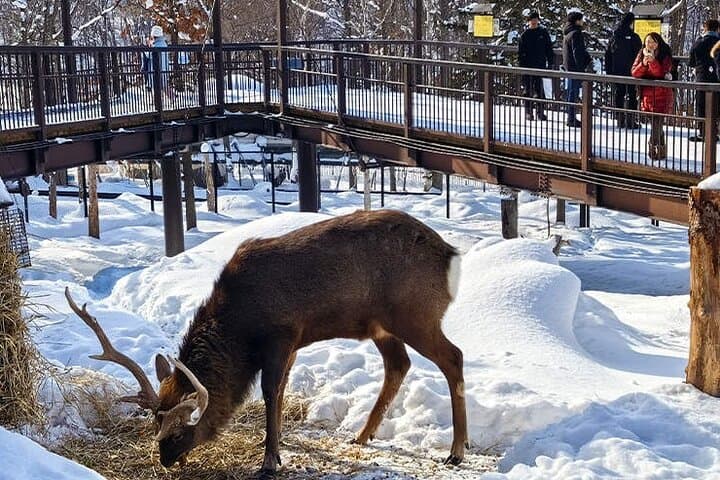
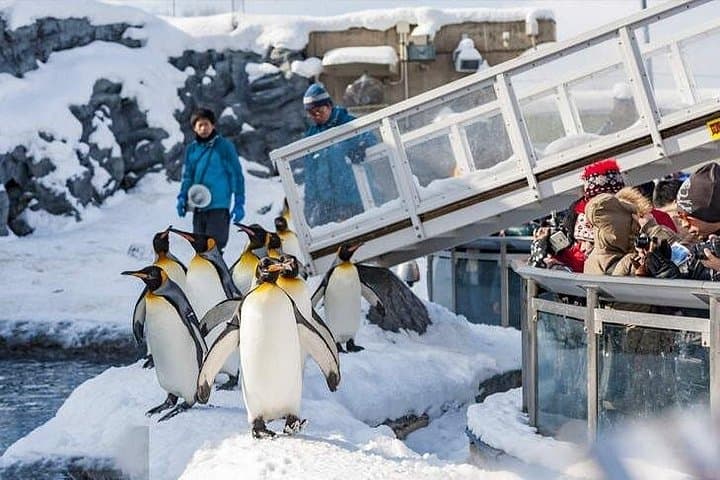
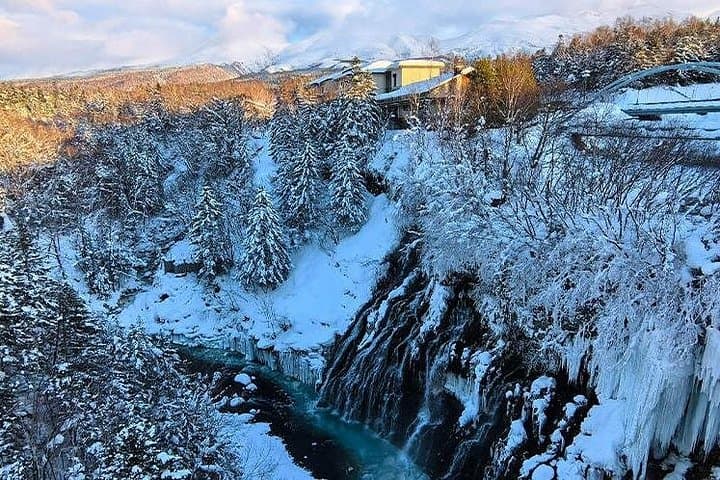
Biei’s rolling farmlands owe their shapes to volcanic soils and glacial rearrangement; engineers created the Blue Pond decades ago to control erosion after eruptions of nearby Mount Tokachi, and minerals in the water scatter light into that iconic blue. Shirahige’s “white beard” ribbons seep from cliff fractures into the Biei River, a reminder of the groundwater fed by Hokkaido’s cold, snow-rich winters. Asahiyama Zoo pioneered viewing enclosures—glass tunnels and underwater domes—designed to reveal animal behavior rather than isolate it, reflecting Japan’s modern zoo philosophy focused on education.
Expect a relaxed pace: photo stops are short, the zoo visit allows close viewing but not private interactions, and transfers between sites are included. Practical points: bring weatherproof layers and sturdy shoes—rural roads can be wet or icy depending on season—carry local cash for small purchases, and aim for mid-morning light at the pond for the truest color. If visiting winter markets or snow fields nearby, allow extra time; animals at Asahiyama are often most active in cooler weather. With basic planning, this compact loop delivers photographic landscapes and accessible wildlife encounters across Hokkaido’s north. Book early for peak-season availability, flexibility.