THE ADVENTURE COLLECTIVE® · Independent discovery and booking for outdoor travel

A single day in Arusha National Park packs game drives, short guided walks and optional canoe outings across lakes framed by Mount Meru. Expect close birding, roaming giraffes and varied terrain—ideal for travelers who want an active safari without overnight logistics.
A single day in Arusha National Park packs game drives, short guided walks and optional canoe outings across lakes framed by Mount Meru. Expect close birding, roaming giraffes and varied terrain—ideal for travelers who want an active safari without overnight logistics.
A low, humid wind moves off Momella's lakes as the convoy threads a rutted track into open acacia country—lanky giraffes lift their heads and a guide scans the horizon through a telephoto lens. The day begins in Arusha town with a short drive across farmland, then opens into a patchwork of forest, volcanic slopes and shimmering shallow lakes where hippo noses and waterfowl insist on attention.
Verified experiences and guided adventures in the surrounding area.
Operated by Livingstone Safari Tanzania · Arusha, Arusha Region
A low, humid wind moves off Momella's lakes as the convoy threads a rutted track into open acacia country—lanky giraffes lift their heads and a guide scans the horizon through a telephoto lens. The day begins in Arusha town with a short drive across farmland, then opens into a patchwork of forest, volcanic slopes and shimmering shallow lakes where hippo noses and waterfowl insist on attention.
Arusha National Park protects Mount Meru, Momella Lakes and montane forest; it was set aside in the 1960s to conserve this unusual blend of highland and wetland habitats. Geologically the park sits on old volcanic flows and ash with steep gullies feeding the lakes; culturally the area has long been home to Meru and Maasai communities who still graze and farm around the park boundary.
Visitors can expect a morning game drive (jeeps), a picnic lunch by the lakes, and an optional guided walking safari or canoe on Momella—walking sections are short (1–5 km) with gentle elevation change except near the Meru foothills. Terrain alternates grassy plains, shaded forest trails and muddy shoreline; wear closed-toe shoes and a light waterproof layer for wind off the water.
Practical timing: early starts yield the best sightings and cooler temperatures; mid-afternoon is calmer for birding. Guides handle park permits and safety—follow their instructions, keep distance from animals, and bring binoculars, sun protection and water. This day trip balances vehicle viewing with active, on-foot exploration for travelers who want wildlife without a multi-day commitment.
easy.
6–10 hours.
Suitable for people who can handle several hours of light activity, including short walks on uneven ground.
Most day tours include park entrance fees and permits—confirm with the operator before booking; guides typically handle on-site payments.
Yes—walking sections are short and guided, but operators set age limits; check with the tour provider if traveling with young children or those with limited mobility.
Expect giraffe, zebra, buffalo, various antelope, hippo in the lakes and an abundance of waterbirds; sightings vary by season and time of day.
Photography gear is welcome; drones are prohibited within the park and require special permission from Tanzanian authorities.
Arusha National Park was established in the 1960s to protect a compact mix of montane forest, volcanic slopes and shallow lakes in northern Tanzania.
Park fees and guided regulations support habitat protection; visitors should stay on recommended routes and avoid feeding or approaching wildlife to minimize human impact.
Livingstone Safari Tanzania operates guided outdoor trips and adventures with an emphasis on safety, stewardship, and memorable experiences.
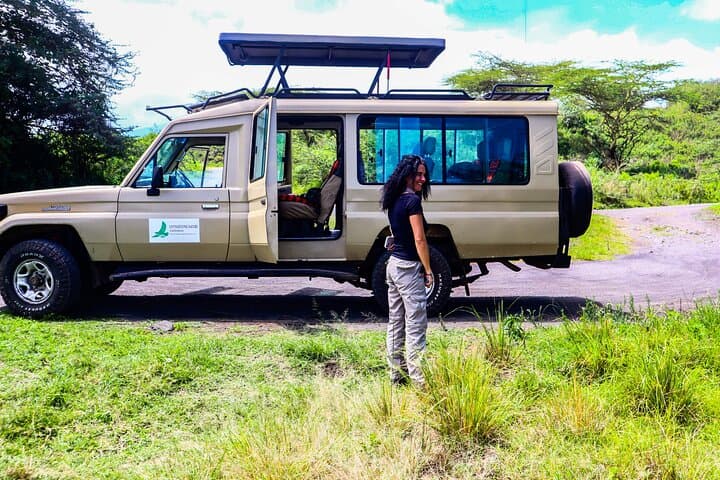


A low, humid wind moves off Momella's lakes as the convoy threads a rutted track into open acacia country—lanky giraffes lift their heads and a guide scans the horizon through a telephoto lens. The day begins in Arusha town with a short drive across farmland, then opens into a patchwork of forest, volcanic slopes and shimmering shallow lakes where hippo noses and waterfowl insist on attention.
A low, humid wind moves off Momella's lakes as the convoy threads a rutted track into open acacia country—lanky giraffes lift their heads and a guide scans the horizon through a telephoto lens. The day begins in Arusha town with a short drive across farmland, then opens into a patchwork of forest, volcanic slopes and shimmering shallow lakes where hippo noses and waterfowl insist on attention.
Arusha National Park protects Mount Meru, Momella Lakes and montane forest; it was set aside in the 1960s to conserve this unusual blend of highland and wetland habitats. Geologically the park sits on old volcanic flows and ash with steep gullies feeding the lakes; culturally the area has long been home to Meru and Maasai communities who still graze and farm around the park boundary.
Visitors can expect a morning game drive (jeeps), a picnic lunch by the lakes, and an optional guided walking safari or canoe on Momella—walking sections are short (1–5 km) with gentle elevation change except near the Meru foothills. Terrain alternates grassy plains, shaded forest trails and muddy shoreline; wear closed-toe shoes and a light waterproof layer for wind off the water.
Practical timing: early starts yield the best sightings and cooler temperatures; mid-afternoon is calmer for birding. Guides handle park permits and safety—follow their instructions, keep distance from animals, and bring binoculars, sun protection and water. This day trip balances vehicle viewing with active, on-foot exploration for travelers who want wildlife without a multi-day commitment.