THE ADVENTURE COLLECTIVE® · Independent discovery and booking for outdoor travel

Explore Aruba’s rugged north coast in climate-controlled 4x4s, stopping at hidden beaches and natural pools on a private 3–4 hour tour. Expect limestone cliffs, rutted tracks, and short shore-side walks—perfect for travelers seeking comfort with a sense of off-road discovery.
Explore Aruba’s rugged north coast in climate-controlled 4x4s, stopping at hidden beaches and natural pools on a private 3–4 hour tour. Expect limestone cliffs, rutted tracks, and short shore-side walks—perfect for travelers seeking comfort with a sense of off-road discovery.
The engine purrs, air conditioning a welcome constant, as a line of premium Broncos and Gladiators slips off the paved road and onto powdery tracks toward Aruba’s rugged north coast.
Verified experiences and guided adventures in the surrounding area.
Operated by Aruba Jeep Adventures · Oranjestad, Aruba
The engine purrs, air conditioning a welcome constant, as a line of premium Broncos and Gladiators slips off the paved road and onto powdery tracks toward Aruba’s rugged north coast.
Wind rattles through scrub and low divi-divi; the sea sits like a wide, restless blue beyond the limestone cliffs. Stops include shelled beaches, roadside viewpoints and the island’s natural pools where waves and coral have carved sheltered basins—places that feel discovered rather than staged.
Geology here is exposed coral limestone and volcanic outcrops that shaped Aruba’s jagged shoreline. The island’s human story runs from Caquetío Arawak settlement to Dutch colonial rule; relics like the Bushiribana gold mill speak to 19th-century mining drives and coastal trade that reshaped local life. Contemporary Aruba blends Papiamento culture, Caribbean flavors and tourism shaped around respect for fragile coastal systems.
Practically, expect a 3–4 hour private excursion aboard air-conditioned 4x4s with room for small groups. Terrain ranges from paved roads to rutted dirt, short climbs and beach access—no advanced driving skills required for guests, but brief walk-and-climb moments are common at viewpoints and pools. Guides handle navigation, but bring sun protection, a sturdy pair of shoes for rocky shorelines, a refillable water bottle, and a camera with a secure strap.
Timing matters: morning trips avoid the hottest sun and offer calmer seas; late afternoon light flatters photos but can bring stronger wind. Respect local wildlife and coastal vegetation: stay on mapped tracks, and let the pools keep their salt-scrubbed hush for the next group.
moderate.
3–4 hours.
Suitable for travelers with basic mobility; involves short walks and brief climbs on uneven terrain.
The private tour lasts about 3 to 4 hours, depending on stops and traffic—plan for a half-day outing.
Yes—tours use premium A/C-equipped 4x4 vehicles like Ford Broncos and Jeep Gladiators for comfort.
Infants are allowed but must sit on an adult’s lap; infant seats can sometimes be provided—confirm at booking.
No—professional guides drive; guests just need to be able to step in/out and handle short walks on uneven ground.
Aruba’s north coast bears traces of Caquetío Arawak settlement and later Dutch colonial activity; 19th-century gold mill ruins at Bushiribana are a visible reminder of early industry.
Coastal scrub and coral formations are fragile—stick to designated tracks, avoid trampling vegetation, and don’t remove shells or coral to preserve habitats.
Aruba Jeep Adventures operates guided outdoor trips and adventures with an emphasis on safety, stewardship, and memorable experiences.
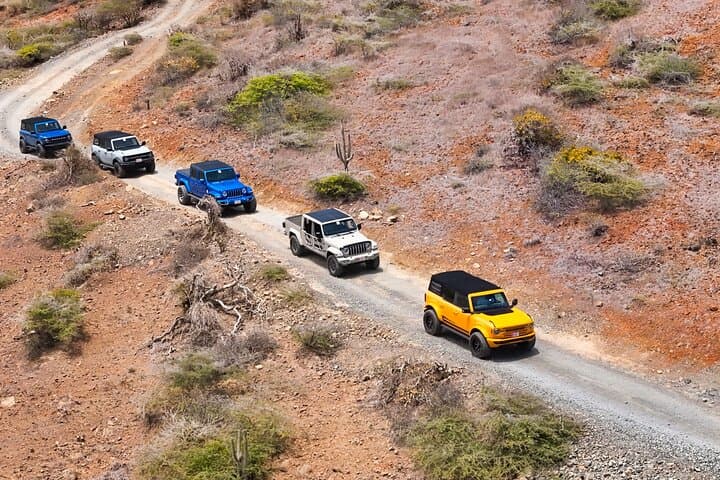
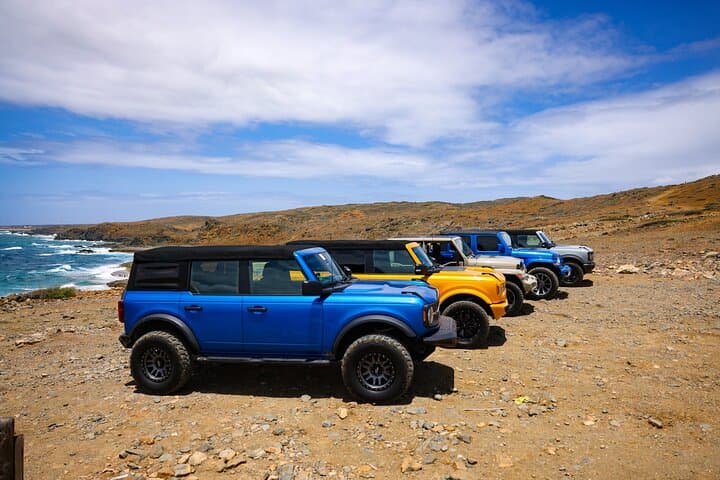
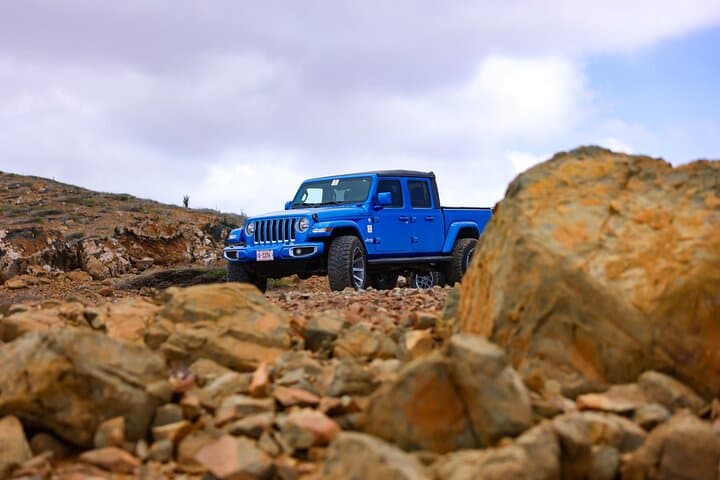
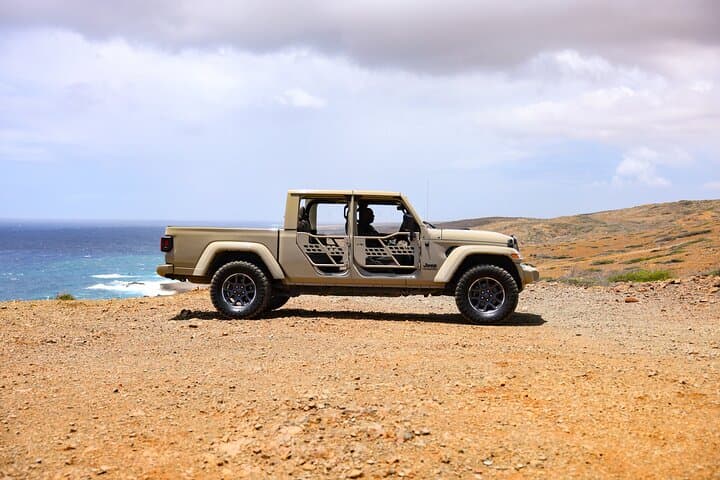
The engine purrs, air conditioning a welcome constant, as a line of premium Broncos and Gladiators slips off the paved road and onto powdery tracks toward Aruba’s rugged north coast.
The engine purrs, air conditioning a welcome constant, as a line of premium Broncos and Gladiators slips off the paved road and onto powdery tracks toward Aruba’s rugged north coast.
Wind rattles through scrub and low divi-divi; the sea sits like a wide, restless blue beyond the limestone cliffs. Stops include shelled beaches, roadside viewpoints and the island’s natural pools where waves and coral have carved sheltered basins—places that feel discovered rather than staged.
Geology here is exposed coral limestone and volcanic outcrops that shaped Aruba’s jagged shoreline. The island’s human story runs from Caquetío Arawak settlement to Dutch colonial rule; relics like the Bushiribana gold mill speak to 19th-century mining drives and coastal trade that reshaped local life. Contemporary Aruba blends Papiamento culture, Caribbean flavors and tourism shaped around respect for fragile coastal systems.
Practically, expect a 3–4 hour private excursion aboard air-conditioned 4x4s with room for small groups. Terrain ranges from paved roads to rutted dirt, short climbs and beach access—no advanced driving skills required for guests, but brief walk-and-climb moments are common at viewpoints and pools. Guides handle navigation, but bring sun protection, a sturdy pair of shoes for rocky shorelines, a refillable water bottle, and a camera with a secure strap.
Timing matters: morning trips avoid the hottest sun and offer calmer seas; late afternoon light flatters photos but can bring stronger wind. Respect local wildlife and coastal vegetation: stay on mapped tracks, and let the pools keep their salt-scrubbed hush for the next group.