THE ADVENTURE COLLECTIVE® · Independent discovery and booking for outdoor travel

Meet towering ostriches and curious emus on a guided farm tour, then sit down for a home-cooked Aruban lunch. This accessible, 1–2 hour visit blends hands-on animal encounters with local food and coastal views.
Meet towering ostriches and curious emus on a guided farm tour, then sit down for a home-cooked Aruban lunch. This accessible, 1–2 hour visit blends hands-on animal encounters with local food and coastal views.
You step through a low gate into sun-baked scrub and the restless, wind-sculpted divi-divi trees—Aruba’s dry savanna opens and the birds are already moving. Massive ostriches pace with quick, deliberate steps; curious emus tilt their heads and approach for a close inspection. The Savanna Lodge bar hums quietly nearby, the smell of grilled local fare drifting over the compound.
Verified experiences and guided adventures in the surrounding area.
Operated by Aruba Ostrich Farm · Oranjestad, Aruba
You step through a low gate into sun-baked scrub and the restless, wind-sculpted divi-divi trees—Aruba’s dry savanna opens and the birds are already moving. Massive ostriches pace with quick, deliberate steps; curious emus tilt their heads and approach for a close inspection. The Savanna Lodge bar hums quietly nearby, the smell of grilled local fare drifting over the compound.
The farm keeps more than 80 birds: African ostriches and their Australian cousins, emus. The island’s coral limestone base and arid climate shape the landscape you’ll see—cactus-studded grounds and coastal wind that gives sharp clarity to distant sea views. The tour covers natural history (speed, defense behaviors, breeding) and local agricultural ties: ostrich farming is a niche attraction that complements Aruba’s tourism and crafts economy—visit the on-site art shop for Zimbabwean and local items.
Practically, the guided visit runs about 60–90 minutes and includes time to hand-feed the birds and relax over a home-cooked lunch with a local beer or fruit smoothie. The experience is fully accessible and family-friendly, but expect enthusiastic birds—keep food handling steady and fingers tucked. Wear closed-toe shoes to protect against uneven ground and the occasional peck, and bring sun protection and water—shade is available, but the sun on Aruba is strong year-round. Combine the visit with a drive along the northern coast or a stop at nearby beaches for a balanced day of wildlife encounters and seaside time.
easy.
1–2 hours.
Suitable for all fitness levels; mostly flat walking and standing.
Tours typically last 60–90 minutes, with lunch included; total time on-site can be up to two hours.
Yes—children can join and may hand-feed birds; special child tickets (ages 3–7) are available on-site.
Yes—the site reports wheelchair-accessible surfaces and facilities.
Yes—lunch is included and features locally inspired home-cooked dishes plus a beer, soft drink, or smoothie.
The farm presents a modern agricultural attraction that highlights non-native ratites (ostriches and emus) and supports local tourism and craft trade.
Operations emphasize responsible interaction—feed under guidance and avoid disturbing nesting areas; support for local crafts helps diversify community income.
Aruba Ostrich Farm operates guided outdoor trips and adventures with an emphasis on safety, stewardship, and memorable experiences.
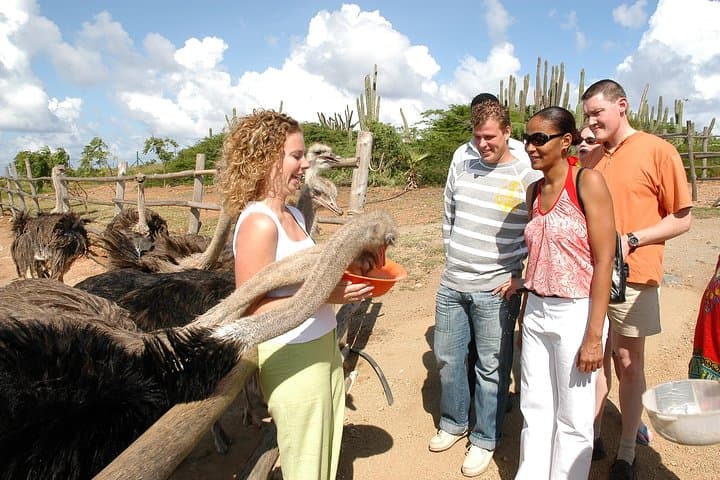
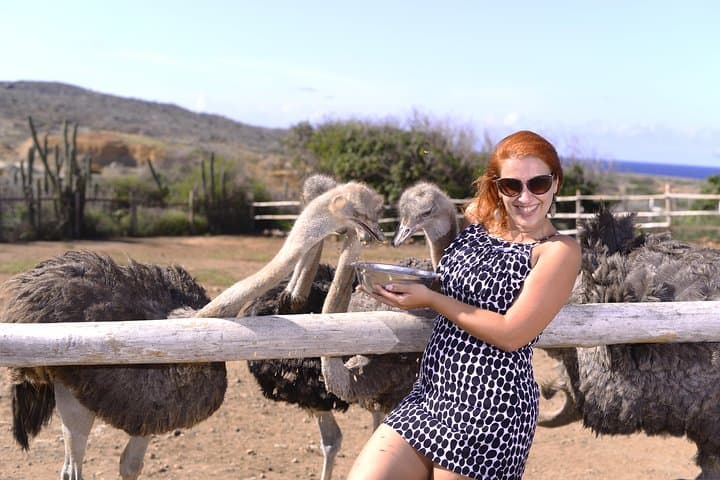
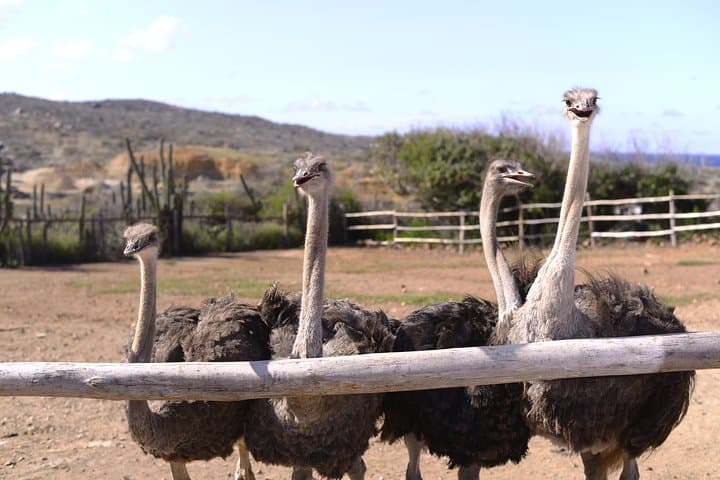
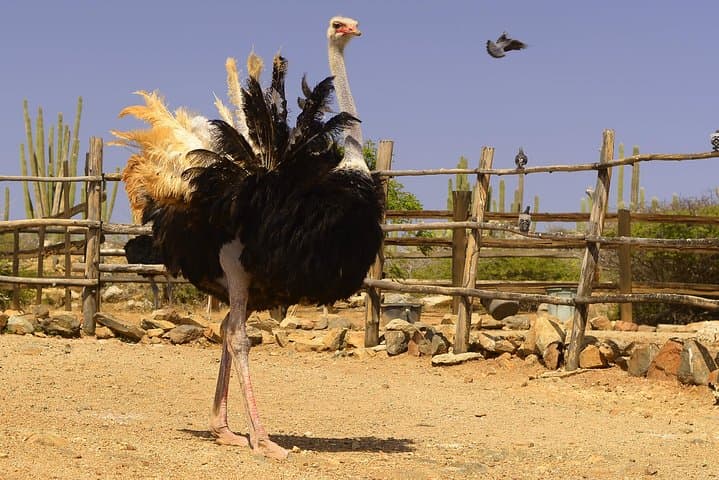
You step through a low gate into sun-baked scrub and the restless, wind-sculpted divi-divi trees—Aruba’s dry savanna opens and the birds are already moving. Massive ostriches pace with quick, deliberate steps; curious emus tilt their heads and approach for a close inspection. The Savanna Lodge bar hums quietly nearby, the smell of grilled local fare drifting over the compound.
You step through a low gate into sun-baked scrub and the restless, wind-sculpted divi-divi trees—Aruba’s dry savanna opens and the birds are already moving. Massive ostriches pace with quick, deliberate steps; curious emus tilt their heads and approach for a close inspection. The Savanna Lodge bar hums quietly nearby, the smell of grilled local fare drifting over the compound.
The farm keeps more than 80 birds: African ostriches and their Australian cousins, emus. The island’s coral limestone base and arid climate shape the landscape you’ll see—cactus-studded grounds and coastal wind that gives sharp clarity to distant sea views. The tour covers natural history (speed, defense behaviors, breeding) and local agricultural ties: ostrich farming is a niche attraction that complements Aruba’s tourism and crafts economy—visit the on-site art shop for Zimbabwean and local items.
Practically, the guided visit runs about 60–90 minutes and includes time to hand-feed the birds and relax over a home-cooked lunch with a local beer or fruit smoothie. The experience is fully accessible and family-friendly, but expect enthusiastic birds—keep food handling steady and fingers tucked. Wear closed-toe shoes to protect against uneven ground and the occasional peck, and bring sun protection and water—shade is available, but the sun on Aruba is strong year-round. Combine the visit with a drive along the northern coast or a stop at nearby beaches for a balanced day of wildlife encounters and seaside time.