THE ADVENTURE COLLECTIVE® · Independent discovery and booking for outdoor travel

Explore Aruba’s reefs and shipwrecks after dark on a guided night dive. Certified divers can expect shallow profiles (25–50 ft) and a 40-minute bottom time led by an instructor.
Explore Aruba’s reefs and shipwrecks after dark on a guided night dive. Certified divers can expect shallow profiles (25–50 ft) and a 40-minute bottom time led by an instructor.
The boat slips from the harbor and the island’s silhouette drops behind you. Once the sun goes down the reef changes its schedule — daytime fish slow, crustaceans emerge, and the wrecks take on a new personality beneath your beam. On this guided night dive off Aruba you move quietly through warm, phosphorescent water, your light slicing into caverns and coral gardens where creatures you didn’t see by day now patrol.
Verified experiences and guided adventures in the surrounding area.
Operated by Red Sail Sports - Aruba · Oranjestad, Aruba
The boat slips from the harbor and the island’s silhouette drops behind you. Once the sun goes down the reef changes its schedule — daytime fish slow, crustaceans emerge, and the wrecks take on a new personality beneath your beam. On this guided night dive off Aruba you move quietly through warm, phosphorescent water, your light slicing into caverns and coral gardens where creatures you didn’t see by day now patrol.
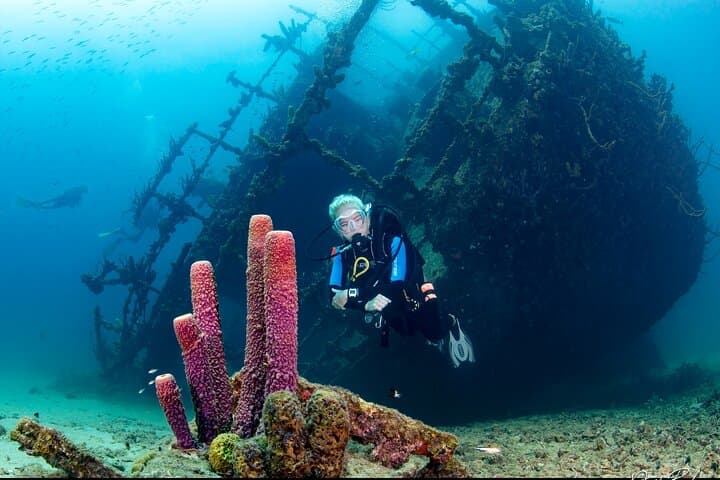
Aruba’s coast is volcanic rock overlain by coral growth; shipwrecks like the famous SS Antilla are part history museum, part reef foundation. The island’s Dutch-Caribbean culture grew around maritime trade, leaving a scattering of wrecks that act as artificial reefs. Local operators run short, focused one-tank night dives (typically 25–50 ft / 8–15 m, bottom time ~40 minutes) from small boats, relying on buddy teams and certified instructors.
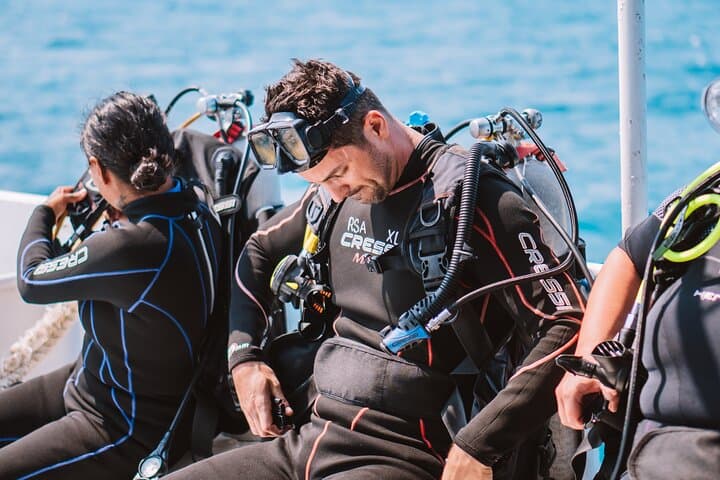
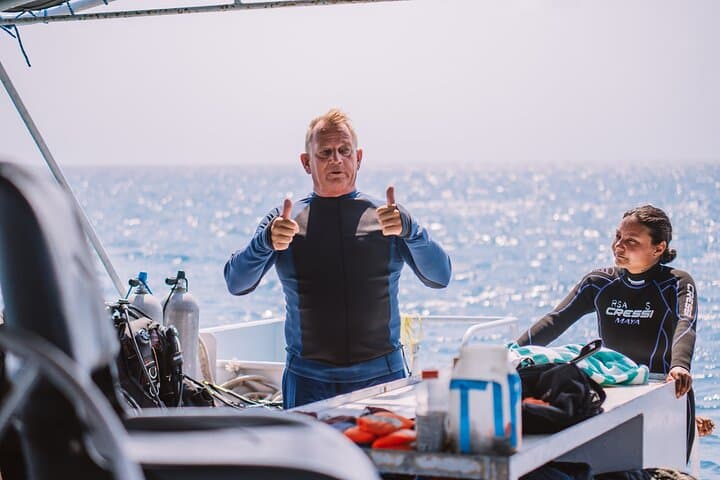
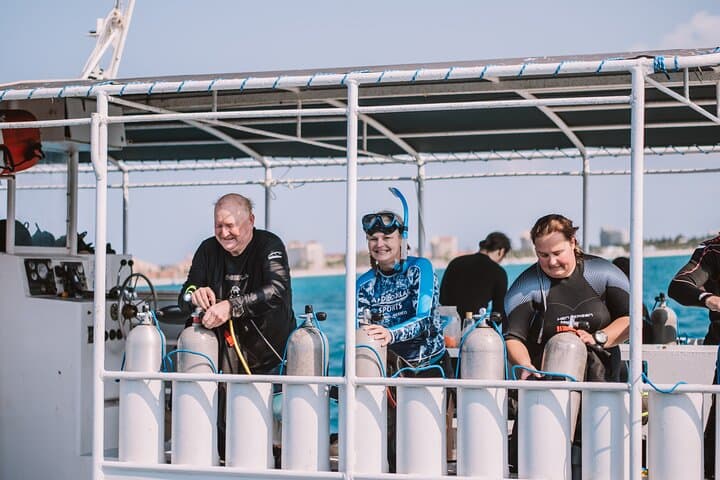
Expect a pre-dive briefing, weight belts, lights and buddy checks, then a controlled entry and slow, low-effort navigation. Visibility is usually good in Aruba—often 30+ feet—though trade winds and swell can affect conditions. Practical notes: be rested, hydrated and avoid alcohol; you cannot dive within 24 hours of flying; and carry certification and logbook. A thin wetsuit or rashguard is often enough for comfort in 26–29°C water.
Night diving is intimate: watch for lobster under ledges, octopus in crevices, and sleeping parrotfish. Respect the reef—no touching, no florescent lights that wash out critters—and the dive returns you to shore with a deeper sense of this island’s nocturnal life.
moderate.
1 hour (60 minutes).
Moderate — be able to swim unassisted, climb ladders or stairs, and manage basic dive gear
Yes — only certified divers (PADI, SSI, NAUI, SDI, PDIC, YMCA, CMAS accepted) may participate; bring your certification card and logbook.
Typical profiles are 25–50 feet (8–15 m) with approximately 40 minutes of bottom time on a single tank under the buddy system.
For safety, operators do not allow dives within 24 hours of arrival or within 24 hours prior to departure by air.
Nocturnal creatures like octopus, lobsters and sleeping reef fish are common; stay quiet and use your light carefully to avoid startling animals.
Aruba’s coastline hosts several wrecks, including the scuttled WWII freighter SS Antilla, which now serves as one of the island’s largest artificial reefs.
Operators emphasize 'look but don't touch' practices; use reef-safe sunscreen and avoid disturbing sessile life to help protect coral and nocturnal species.
Red Sail Sports - Aruba operates guided outdoor trips and adventures with an emphasis on safety, stewardship, and memorable experiences.
The boat slips from the harbor and the island’s silhouette drops behind you. Once the sun goes down the reef changes its schedule — daytime fish slow, crustaceans emerge, and the wrecks take on a new personality beneath your beam. On this guided night dive off Aruba you move quietly through warm, phosphorescent water, your light slicing into caverns and coral gardens where creatures you didn’t see by day now patrol.
The boat slips from the harbor and the island’s silhouette drops behind you. Once the sun goes down the reef changes its schedule — daytime fish slow, crustaceans emerge, and the wrecks take on a new personality beneath your beam. On this guided night dive off Aruba you move quietly through warm, phosphorescent water, your light slicing into caverns and coral gardens where creatures you didn’t see by day now patrol.
Aruba’s coast is volcanic rock overlain by coral growth; shipwrecks like the famous SS Antilla are part history museum, part reef foundation. The island’s Dutch-Caribbean culture grew around maritime trade, leaving a scattering of wrecks that act as artificial reefs. Local operators run short, focused one-tank night dives (typically 25–50 ft / 8–15 m, bottom time ~40 minutes) from small boats, relying on buddy teams and certified instructors.
Expect a pre-dive briefing, weight belts, lights and buddy checks, then a controlled entry and slow, low-effort navigation. Visibility is usually good in Aruba—often 30+ feet—though trade winds and swell can affect conditions. Practical notes: be rested, hydrated and avoid alcohol; you cannot dive within 24 hours of flying; and carry certification and logbook. A thin wetsuit or rashguard is often enough for comfort in 26–29°C water.
Night diving is intimate: watch for lobster under ledges, octopus in crevices, and sleeping parrotfish. Respect the reef—no touching, no florescent lights that wash out critters—and the dive returns you to shore with a deeper sense of this island’s nocturnal life.