THE ADVENTURE COLLECTIVE® · Independent discovery and booking for outdoor travel

Leave the resort strip and ride into Arikok National Park by jeep to climb Ayo’s boulders, explore ancient Arawak caves and swim in Aruba’s famous Natural Pool. This 4–6 hour off-road tour blends geology, history and coastal snorkeling for a compact taste of the island’s rugged east coast.
Leave the resort strip and ride into Arikok National Park by jeep to climb Ayo’s boulders, explore ancient Arawak caves and swim in Aruba’s famous Natural Pool. This 4–6 hour off-road tour blends geology, history and coastal snorkeling for a compact taste of the island’s rugged east coast.
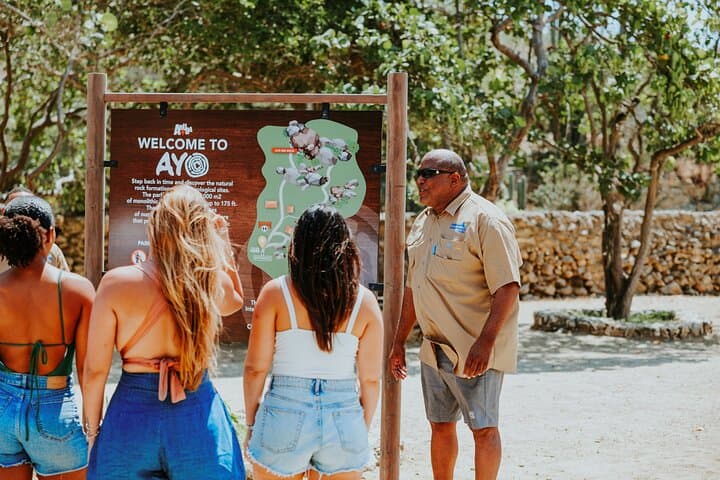
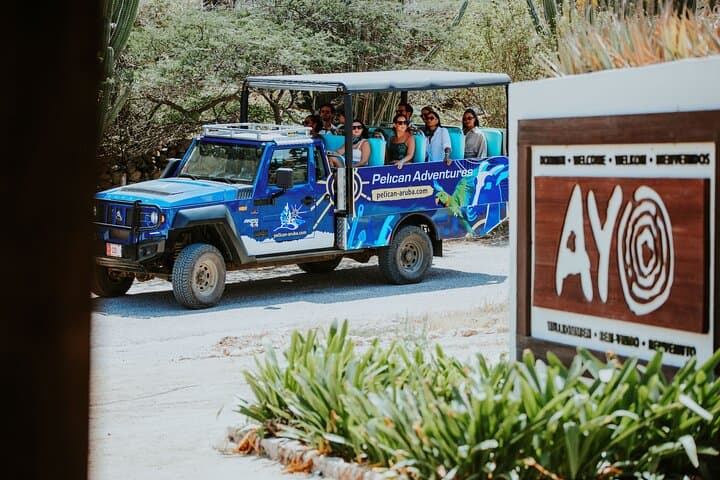
The jeep grinds over limestone and scrub, throwing up a fine cloud of dust as the Atlantic wind tugs at your hat. In the space of an hour the coastline changes from manicured resort bays to wild, wind-sculpted rock—spires of granite and boulders stacked like ancient cairns. Guides from Pelican Adventures steer through Arikok National Park with a casual authority, dropping you at the foot of Ayo’s giant boulders where lichen-streaked steps lead to small platforms with wide views over turquoise sea.
Verified experiences and guided adventures in the surrounding area.
Operated by Pelican Aruba · Oranjestad, Aruba
The jeep grinds over limestone and scrub, throwing up a fine cloud of dust as the Atlantic wind tugs at your hat. In the space of an hour the coastline changes from manicured resort bays to wild, wind-sculpted rock—spires of granite and boulders stacked like ancient cairns. Guides from Pelican Adventures steer through Arikok National Park with a casual authority, dropping you at the foot of Ayo’s giant boulders where lichen-streaked steps lead to small platforms with wide views over turquoise sea.
This half-day safari stitches together several of Aruba’s raw geological chapters. The rounded Ayo formations are remnants of volcanic intrusions and centuries of salt-laden wind. Nearby cave systems—Fontein and Quadirikiri—hold sunlight-lit chambers and walls etched with Arawak petroglyphs, human marks that outlasted colonization and mining booms. Past the caves, a narrow coastal road threads by dunes and modern wind farms, an unmistakable sign of Aruba’s push toward renewable energy.
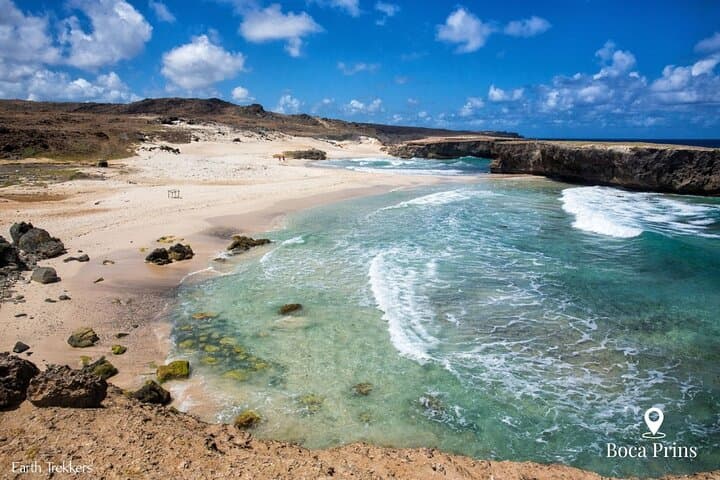
The tour’s crescendo is Conchi, the Natural Pool. Hammered out of the volcanic headland and partially sealed by reef and rock, the pool is a calm, glassy bowl when the sea is quiet. Waves crash on the outer lip and, on a good day, you can step off the rocks into clear water and snorkel among small reef fish while basalt walls hold the swell at bay.
Practicalities: the outing runs roughly 4–6 hours and includes multiple short walks over uneven rock—expect light scrambling at Ayo and slippery surfaces near cave entrances. Guides supply bottled water, snorkeling gear and snacks; pick-up from most hotels in Oranjestad is standard. It’s accessible for most fitness levels, but travelers with spine, heart or pregnancy restrictions should skip the rocky sections. Weather and swell dictate whether the Natural Pool is safe to enter—on windy days the guides will keep you onshore.
Timing and tips: morning departures usually find calmer seas and thinner crowds at viewpoints; midday brings stronger trade winds that sculpt dramatic surf but can make the pool rough. Wear sturdy closed-toe shoes for the off-road approach, bring reef-safe sunscreen, and carry a small dry bag for valuables.
This tour is at once a geology lesson, a brush with pre-Columbian human traces, and a hands-on encounter with Aruba’s coastal energy—wind, wave and rock. For anyone wanting a quicker, more physical glimpse of the island beyond the resorts, the jeep tour delivers a compact, memorable slice of Aruba’s wild side.
moderate.
4–6 hours.
Reasonable mobility for short hikes and light scrambling; basic swimming ability recommended for snorkeling at the Natural Pool
Expect roughly 4–6 hours including hotel pickup, multiple stops, short walks and time at the Natural Pool.
If sea conditions are calm, guests with basic swimming ability can enter; guides will advise and provide snorkeling gear.
Yes — the off-road section is bumpy and involves driving over limestone tracks; motion sensitivity should be considered.
Children can visit most cave chambers but must be supervised on uneven floors and near cliff edges; check age or mobility limits with the operator.
Wear sturdy shoes for rocks and caves, swimwear under clothes for quick changes, and sun protection for exposed coastal stops.
Yes, the tour offers hotel pickup across Oranjestad and nearby resort areas—confirm exact pickup point at booking.
The caves visited feature Arawak petroglyphs carved before European contact; later centuries brought gold-mining ruins that dot the park.
Arikok National Park manages access to sensitive sites; visitors should practice leave-no-trace and use reef-safe products to protect corals.
Pelican Aruba operates guided outdoor trips and adventures with an emphasis on safety, stewardship, and memorable experiences.

The jeep grinds over limestone and scrub, throwing up a fine cloud of dust as the Atlantic wind tugs at your hat. In the space of an hour the coastline changes from manicured resort bays to wild, wind-sculpted rock—spires of granite and boulders stacked like ancient cairns. Guides from Pelican Adventures steer through Arikok National Park with a casual authority, dropping you at the foot of Ayo’s giant boulders where lichen-streaked steps lead to small platforms with wide views over turquoise sea.
The jeep grinds over limestone and scrub, throwing up a fine cloud of dust as the Atlantic wind tugs at your hat. In the space of an hour the coastline changes from manicured resort bays to wild, wind-sculpted rock—spires of granite and boulders stacked like ancient cairns. Guides from Pelican Adventures steer through Arikok National Park with a casual authority, dropping you at the foot of Ayo’s giant boulders where lichen-streaked steps lead to small platforms with wide views over turquoise sea.
This half-day safari stitches together several of Aruba’s raw geological chapters. The rounded Ayo formations are remnants of volcanic intrusions and centuries of salt-laden wind. Nearby cave systems—Fontein and Quadirikiri—hold sunlight-lit chambers and walls etched with Arawak petroglyphs, human marks that outlasted colonization and mining booms. Past the caves, a narrow coastal road threads by dunes and modern wind farms, an unmistakable sign of Aruba’s push toward renewable energy.
The tour’s crescendo is Conchi, the Natural Pool. Hammered out of the volcanic headland and partially sealed by reef and rock, the pool is a calm, glassy bowl when the sea is quiet. Waves crash on the outer lip and, on a good day, you can step off the rocks into clear water and snorkel among small reef fish while basalt walls hold the swell at bay.
Practicalities: the outing runs roughly 4–6 hours and includes multiple short walks over uneven rock—expect light scrambling at Ayo and slippery surfaces near cave entrances. Guides supply bottled water, snorkeling gear and snacks; pick-up from most hotels in Oranjestad is standard. It’s accessible for most fitness levels, but travelers with spine, heart or pregnancy restrictions should skip the rocky sections. Weather and swell dictate whether the Natural Pool is safe to enter—on windy days the guides will keep you onshore.
Timing and tips: morning departures usually find calmer seas and thinner crowds at viewpoints; midday brings stronger trade winds that sculpt dramatic surf but can make the pool rough. Wear sturdy closed-toe shoes for the off-road approach, bring reef-safe sunscreen, and carry a small dry bag for valuables.
This tour is at once a geology lesson, a brush with pre-Columbian human traces, and a hands-on encounter with Aruba’s coastal energy—wind, wave and rock. For anyone wanting a quicker, more physical glimpse of the island beyond the resorts, the jeep tour delivers a compact, memorable slice of Aruba’s wild side.