THE ADVENTURE COLLECTIVE® · Independent discovery and booking for outdoor travel

See Aruba’s landmarks without the planning: an air-conditioned loop that pairs the Aloe Museum and Casibari rock formations with coastal panoramas at the California Lighthouse. Ideal for a cruise stop or a quick island primer.
See Aruba’s landmarks without the planning: an air-conditioned loop that pairs the Aloe Museum and Casibari rock formations with coastal panoramas at the California Lighthouse. Ideal for a cruise stop or a quick island primer.
A low, salt-scented wind guides the bus out of Oranjestad and across an island that refuses to sit still: twitching cacti, bleached limestone, and scrub that leans toward the sea. Windows frame a changing coastline—turquoise surf on the west, wind-swept coves to the north—while a guide’s voice pieces together the island’s story between stops. This is not a sprint of postcards; it’s three and a half hours of compact scenes that map Aruba’s natural history and human layers.
Verified experiences and guided adventures in the surrounding area.
Operated by El Tours & Transfers · Oranjestad, Aruba
A low, salt-scented wind guides the bus out of Oranjestad and across an island that refuses to sit still: twitching cacti, bleached limestone, and scrub that leans toward the sea. Windows frame a changing coastline—turquoise surf on the west, wind-swept coves to the north—while a guide’s voice pieces together the island’s story between stops. This is not a sprint of postcards; it’s three and a half hours of compact scenes that map Aruba’s natural history and human layers.
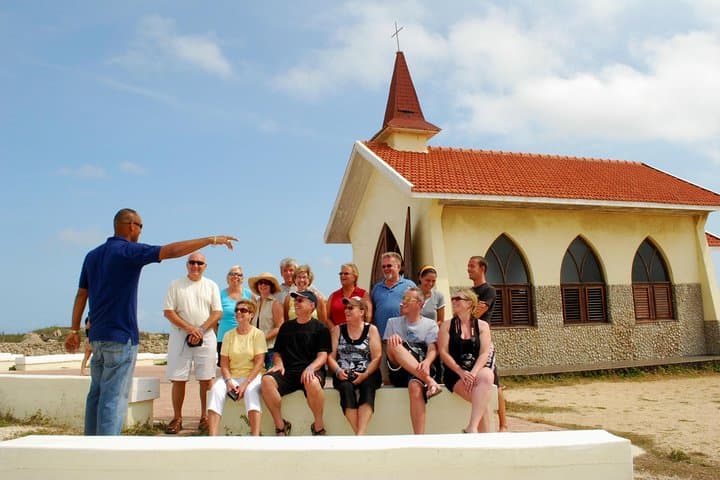
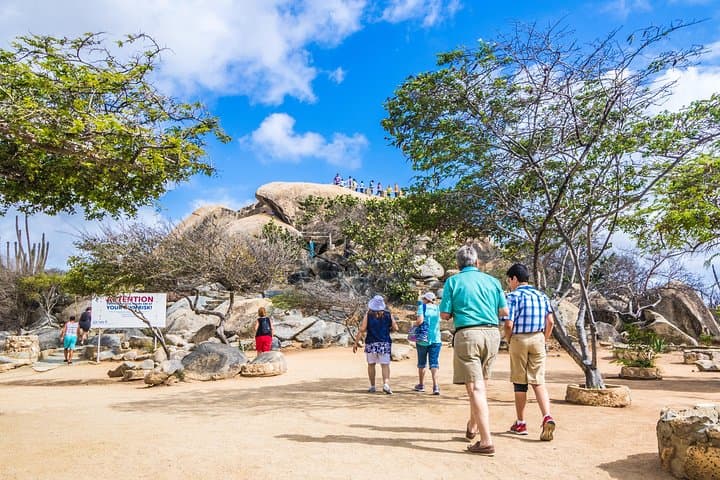
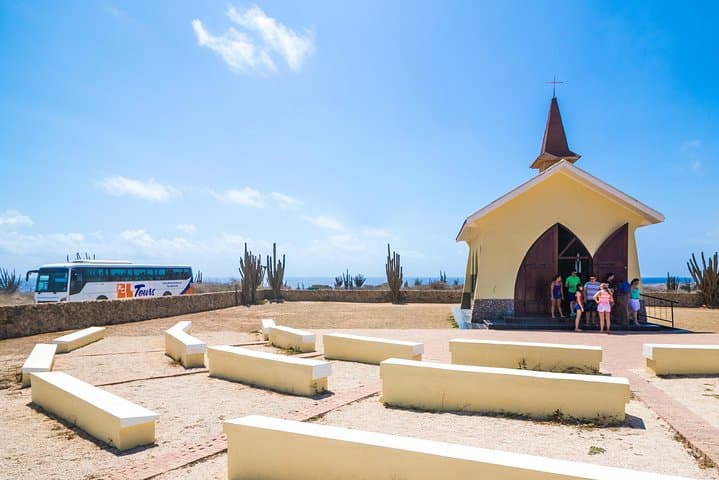
Start with the Aloe Museum, where a cool factory floor and a line of amber bottles narrate 160 years of local enterprise. Aloe became Aruba’s botanical export after Dutch and Spanish colonial shifts pushed farmers toward resilient crops; the museum explains how arid soil turned into an industry and a cultural identifier. From there the bus climbs inland to the Casibari rock formations—quartz diorite boulders that rise like the island’s geological punctuation marks—offering short walks and wide views. The chapel along the white-cross road, rebuilt in 1952 atop earlier 18th-century foundations, holds the quieter side of island life: devotion etched into limestone and low hills.
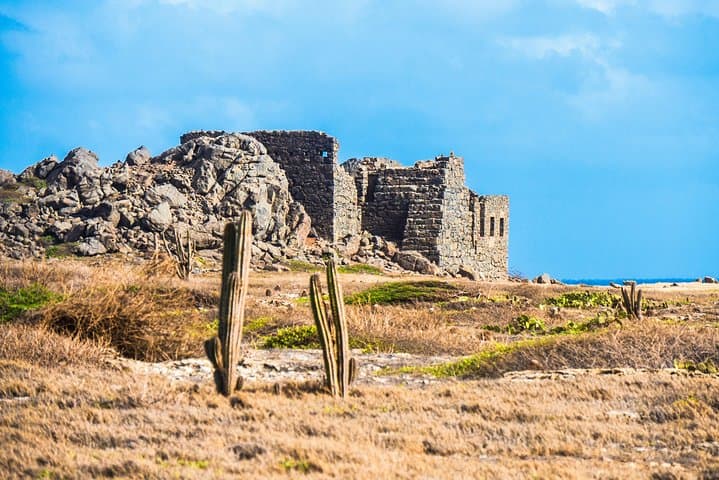
On the northern coast, rusted concrete and foundations give away a short-lived gold epoch. Aruba’s 19th-century gold operations built roads and piers; success was limited, but the remnants remain as human scars against a wind that erases edges fast. The tour ends at the California Lighthouse on the northwest tip—high ground where the sea dares you to stand still and watch the long horizon.
Practical guidance: the tour moves at an easy pace but includes short walks at each stop—bring closed-toe shoes if you plan to climb the rock paths or scramble around Casibari. Pickup is available island-wide from hotels and cruise terminals; reconfirm with the operator one day before departure. Bottled water is provided, but a reusable bottle and sun protection keep you comfortable on exposed viewpoints. Expect bright sun and wind—layers that block sun and break the breeze work better than a single heavy jacket. Restroom stops are at major attractions but not during transit stretches, so plan accordingly.
This sightseeing loop is ideal for travelers who want a compact primer on Aruba’s landscape and history without committing to multi-day exploration. It balances accessible access to iconic viewpoints with concise context—good orientation for independent adventures that follow.
easy.
3–3.5 hours.
Suitable for all fitness levels; participants should be able to walk short uneven trails and climb a few steps.
Yes—pick up and drop-off are available at the cruise terminal; provide ship name and docking times at booking.
The tour lasts approximately 210 minutes (3.5 hours) including stops at listed attractions.
Yes; infants may sit on laps and infant seats are available on request—children must be accompanied by an adult.
Entrance fees are generally not included; the itinerary lists stops and local admission policies may vary—check with the operator before arrival.
The tour is rated easy, but some sites require short walks and steps; contact the operator to discuss accessibility and pickup logistics.
Full refunds are available if you cancel at least 24 hours before departure; in bad weather or if minimum numbers aren’t met, the operator may cancel.
Aloe cultivation shaped Aruba’s economy for over 160 years, and 19th-century gold prospecting briefly changed coastal infrastructure before failing to be profitable.
Aruba’s coastal scrub and salt flats are fragile; stick to marked paths, avoid disturbing wildlife, and use reef-safe sunscreen to protect nearshore ecosystems.
El Tours & Transfers operates guided outdoor trips and adventures with an emphasis on safety, stewardship, and memorable experiences.
A low, salt-scented wind guides the bus out of Oranjestad and across an island that refuses to sit still: twitching cacti, bleached limestone, and scrub that leans toward the sea. Windows frame a changing coastline—turquoise surf on the west, wind-swept coves to the north—while a guide’s voice pieces together the island’s story between stops. This is not a sprint of postcards; it’s three and a half hours of compact scenes that map Aruba’s natural history and human layers.
A low, salt-scented wind guides the bus out of Oranjestad and across an island that refuses to sit still: twitching cacti, bleached limestone, and scrub that leans toward the sea. Windows frame a changing coastline—turquoise surf on the west, wind-swept coves to the north—while a guide’s voice pieces together the island’s story between stops. This is not a sprint of postcards; it’s three and a half hours of compact scenes that map Aruba’s natural history and human layers.
Start with the Aloe Museum, where a cool factory floor and a line of amber bottles narrate 160 years of local enterprise. Aloe became Aruba’s botanical export after Dutch and Spanish colonial shifts pushed farmers toward resilient crops; the museum explains how arid soil turned into an industry and a cultural identifier. From there the bus climbs inland to the Casibari rock formations—quartz diorite boulders that rise like the island’s geological punctuation marks—offering short walks and wide views. The chapel along the white-cross road, rebuilt in 1952 atop earlier 18th-century foundations, holds the quieter side of island life: devotion etched into limestone and low hills.
On the northern coast, rusted concrete and foundations give away a short-lived gold epoch. Aruba’s 19th-century gold operations built roads and piers; success was limited, but the remnants remain as human scars against a wind that erases edges fast. The tour ends at the California Lighthouse on the northwest tip—high ground where the sea dares you to stand still and watch the long horizon.
Practical guidance: the tour moves at an easy pace but includes short walks at each stop—bring closed-toe shoes if you plan to climb the rock paths or scramble around Casibari. Pickup is available island-wide from hotels and cruise terminals; reconfirm with the operator one day before departure. Bottled water is provided, but a reusable bottle and sun protection keep you comfortable on exposed viewpoints. Expect bright sun and wind—layers that block sun and break the breeze work better than a single heavy jacket. Restroom stops are at major attractions but not during transit stretches, so plan accordingly.
This sightseeing loop is ideal for travelers who want a compact primer on Aruba’s landscape and history without committing to multi-day exploration. It balances accessible access to iconic viewpoints with concise context—good orientation for independent adventures that follow.