THE ADVENTURE COLLECTIVE® · Independent discovery and booking for outdoor travel

Board a small dive boat off Aruba for certified dives across reef gardens and the famed Antilla wreck. Expect clear water, abundant marine life, and deeper sites that reward experienced divers.
Board a small dive boat off Aruba for certified dives across reef gardens and the famed Antilla wreck. Expect clear water, abundant marine life, and deeper sites that reward experienced divers.
The engine quiets and the Caribbean pulls you forward — turquoise water stretching flat to the horizon, a warm breeze teasing salt into your hair. On a small dive boat off Aruba, the captain counts gear as the shoreline slips away: low cliffs, scattered coral heads, and the promise of a 1940s wreck waiting below. You kit up, clip tanks, and back-roll into water that ranges from shallow garden reefs at 20 feet to dramatic drop-offs near 140 feet.
Verified experiences and guided adventures in the surrounding area.
Operated by Aruba Watersports Center · Oranjestad, Aruba
The engine quiets and the Caribbean pulls you forward — turquoise water stretching flat to the horizon, a warm breeze teasing salt into your hair. On a small dive boat off Aruba, the captain counts gear as the shoreline slips away: low cliffs, scattered coral heads, and the promise of a 1940s wreck waiting below. You kit up, clip tanks, and back-roll into water that ranges from shallow garden reefs at 20 feet to dramatic drop-offs near 140 feet.
Aruba’s reefs grew on limestone formed by ancient sea-level shifts; channels and banks today hide reef gardens and the famous WWII freighter, the Antilla, which lies broken and colonized by coral. The island’s Dutch-Caribbean culture grew around maritime trade, and modern dive operations reflect that history — small-boat launches, local captains, and an emphasis on reef stewardship.
Expect clear visibility, steady currents in some channels, and abundant life: hawksbill and green turtles cruising, colorful snapper, morays tucked into crevices, and eagle rays patrolling open sand. Certified dives are off-boat with a back-roll entry; advanced dive sites can require deeper-air management and buoyancy control.
Practicalities: bring your certification card, check weight and gear fit during briefings, and watch your depth/time limits — many sites are deep. Hydrate and sunscreen before boarding; reef-safe sunscreen is preferred. If you’re seeking the Antilla or drifts along fore-reef slopes, opt for a guide familiar with local currents. For certified divers the trip is straightforward but demands attention: the ocean here is inviting, but it also asks you to dive smart.
challenging.
3 hours.
Good cardiovascular fitness and comfort swimming in open water; ability to carry and secure scuba gear and perform surface swims.
Yes — this listing requires certified divers; you must present a valid certification card at check-in.
Sites range roughly 20–140 feet; pick sites aligned with your certification and experience level and follow guide limits.
Basic scuba gear is available if you select that option, but many divers prefer bringing personal masks and computers for fit and familiarity.
Operators typically cancel for safety in bad weather; full refunds apply if canceled at least 24 hours before departure or for unsafe conditions.
The Antilla, scuttled during WWII, became an artificial reef that illustrates Aruba’s maritime links to transatlantic shipping and wartime history.
Aruba enforces reef protection measures and promotes reef-safe sunscreens and no-touch policies; divers are asked to maintain neutral buoyancy to avoid damaging corals.
Aruba Watersports Center operates guided outdoor trips and adventures with an emphasis on safety, stewardship, and memorable experiences.


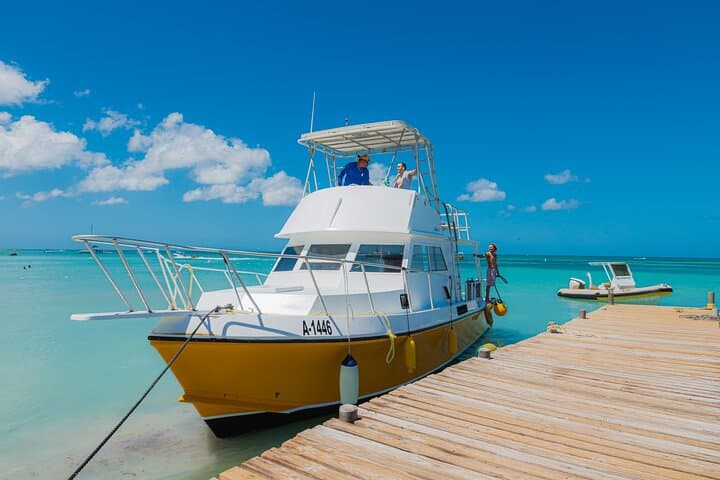

The engine quiets and the Caribbean pulls you forward — turquoise water stretching flat to the horizon, a warm breeze teasing salt into your hair. On a small dive boat off Aruba, the captain counts gear as the shoreline slips away: low cliffs, scattered coral heads, and the promise of a 1940s wreck waiting below. You kit up, clip tanks, and back-roll into water that ranges from shallow garden reefs at 20 feet to dramatic drop-offs near 140 feet.
The engine quiets and the Caribbean pulls you forward — turquoise water stretching flat to the horizon, a warm breeze teasing salt into your hair. On a small dive boat off Aruba, the captain counts gear as the shoreline slips away: low cliffs, scattered coral heads, and the promise of a 1940s wreck waiting below. You kit up, clip tanks, and back-roll into water that ranges from shallow garden reefs at 20 feet to dramatic drop-offs near 140 feet.
Aruba’s reefs grew on limestone formed by ancient sea-level shifts; channels and banks today hide reef gardens and the famous WWII freighter, the Antilla, which lies broken and colonized by coral. The island’s Dutch-Caribbean culture grew around maritime trade, and modern dive operations reflect that history — small-boat launches, local captains, and an emphasis on reef stewardship.
Expect clear visibility, steady currents in some channels, and abundant life: hawksbill and green turtles cruising, colorful snapper, morays tucked into crevices, and eagle rays patrolling open sand. Certified dives are off-boat with a back-roll entry; advanced dive sites can require deeper-air management and buoyancy control.
Practicalities: bring your certification card, check weight and gear fit during briefings, and watch your depth/time limits — many sites are deep. Hydrate and sunscreen before boarding; reef-safe sunscreen is preferred. If you’re seeking the Antilla or drifts along fore-reef slopes, opt for a guide familiar with local currents. For certified divers the trip is straightforward but demands attention: the ocean here is inviting, but it also asks you to dive smart.