THE ADVENTURE COLLECTIVE® · Independent discovery and booking for outdoor travel

A half-day catamaran and forest walk on Nahuel Huapi brings you to Victoria Island and the rare Arrayanes stand. Expect short guided trails, pale cinnamon trunks, and lake crossings from Puerto Anchorena.
A half-day catamaran and forest walk on Nahuel Huapi brings you to Victoria Island and the rare Arrayanes stand. Expect short guided trails, pale cinnamon trunks, and lake crossings from Puerto Anchorena.
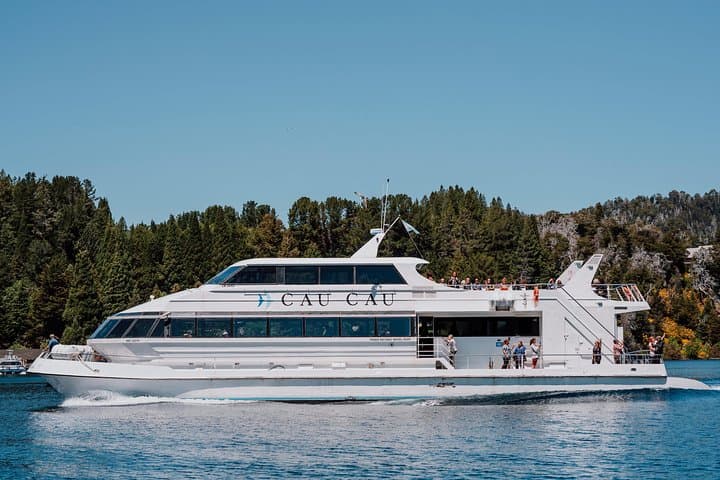
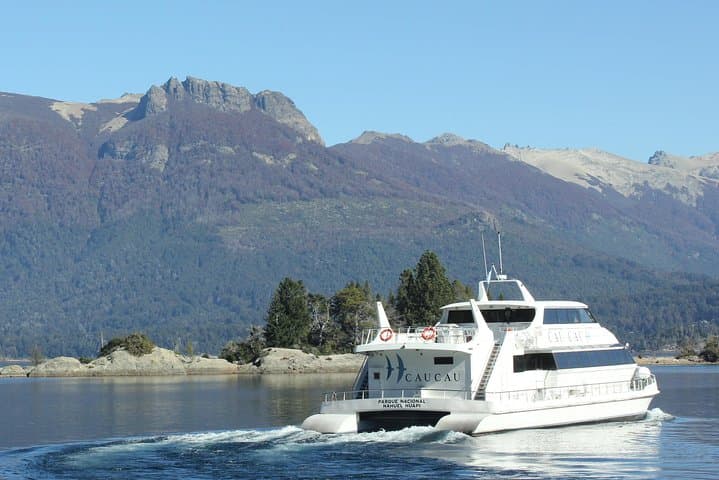
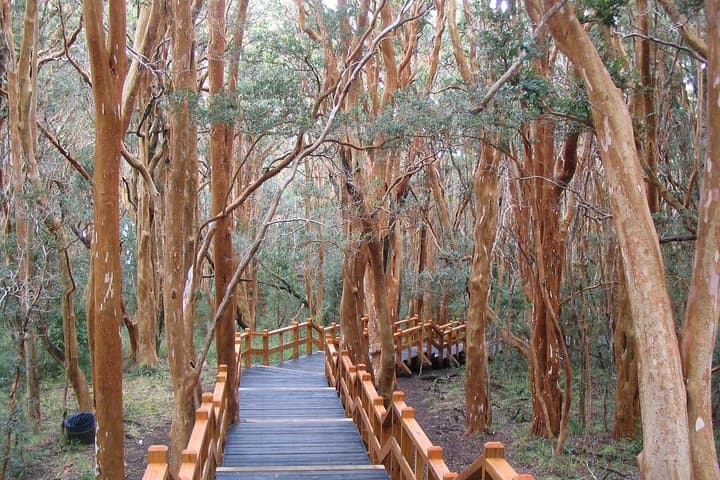
Under a cold blue sky on Nahuel Huapi, a catamaran slips from Puerto Anchorena and the lake takes the lead — its surface pushing you toward an island cloaked in cinnamon-colored bark. Disembarkation on Victoria Island is abrupt: water gives way to a network of shaded trails where the Arrayanes (Myrceugenella apiculata) stand with twisted trunks and pale, flaking bark that seems to glow in the dappled light.
Verified experiences and guided adventures in the surrounding area.
Operated by Natural Travel · San Carlos de Bariloche, Río Negro
Under a cold blue sky on Nahuel Huapi, a catamaran slips from Puerto Anchorena and the lake takes the lead — its surface pushing you toward an island cloaked in cinnamon-colored bark. Disembarkation on Victoria Island is abrupt: water gives way to a network of shaded trails where the Arrayanes (Myrceugenella apiculata) stand with twisted trunks and pale, flaking bark that seems to glow in the dappled light.
The trees here are both ancient and local history. Indigenous peoples used arrayán fruit for chicha and remedies; later the site was set aside as part of Los Arrayanes National Park to protect the only significant stand left in the world. Geologically, Nahuel Huapi is a glacial basin lined by volcanic and metamorphic ranges, and the island’s soils reflect millennia of lake action and Andean weather.
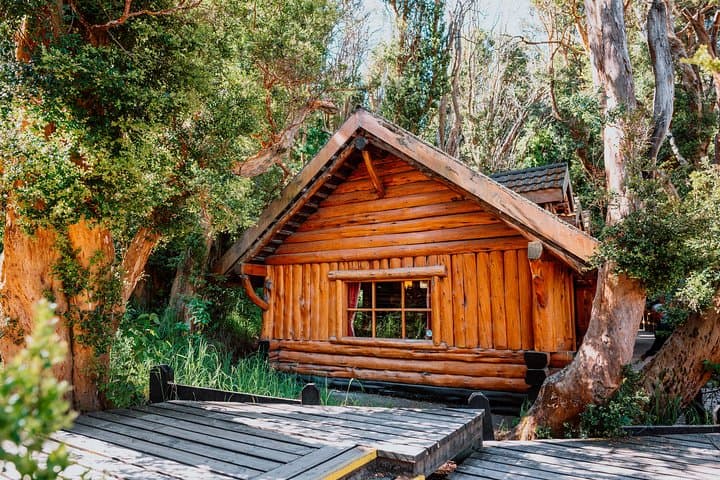
Culturally the route links Bariloche’s lakefront communities with the park’s conservation ethic: limited visitor numbers, marked paths, and quiet coves such as Playa del Toro that reward a short diversion. Expect well-maintained forest tracks, gentle grades, and sections of boardwalk; the itinerary commonly combines a 50–90 minute guided forest walk with lake crossings by catamaran.
Practical guidance: bring layered waterproofs and sturdy shoes for damp roots, pack water and snacks, and time your visit for morning light when the bark’s color is richest and the boat ride is calmer. Respect signage — this is a protected ecosystem — and factor in a 6–7 hour outing if your booking includes transport from Bariloche and return by catamaran.
easy.
6–7 hours.
Suitable for people in regular walking condition; trails are short with gentle grades but involve boarding a boat and walking uneven forest paths.
Crossing times vary by departure point but typically take 30–60 minutes each way depending on route and stops.
The itinerary notes stroller access on some paths, but expect steps and boardwalks; infants are usually required to sit on an adult’s lap on the boat.
Access to Los Arrayanes and Victoria Island is managed; most commercial tours include national park admission and a guide as part of the ticket.
Birds such as cormorants or black-necked swans are common along the shore; inland sightings include small mammals and various forest birds.
Arrayanes were used by local indigenous communities for food and medicine; the stand here is protected within Nahuel Huapi to conserve these rare trees and associated fauna.
Los Arrayanes National Park enforces trail limits and visitor guidelines to protect fragile soils and prevent spread of invasive species; follow leave-no-trace practices and stay on marked routes.
Natural Travel operates guided outdoor trips and adventures with an emphasis on safety, stewardship, and memorable experiences.
Under a cold blue sky on Nahuel Huapi, a catamaran slips from Puerto Anchorena and the lake takes the lead — its surface pushing you toward an island cloaked in cinnamon-colored bark. Disembarkation on Victoria Island is abrupt: water gives way to a network of shaded trails where the Arrayanes (Myrceugenella apiculata) stand with twisted trunks and pale, flaking bark that seems to glow in the dappled light.
Under a cold blue sky on Nahuel Huapi, a catamaran slips from Puerto Anchorena and the lake takes the lead — its surface pushing you toward an island cloaked in cinnamon-colored bark. Disembarkation on Victoria Island is abrupt: water gives way to a network of shaded trails where the Arrayanes (Myrceugenella apiculata) stand with twisted trunks and pale, flaking bark that seems to glow in the dappled light.
The trees here are both ancient and local history. Indigenous peoples used arrayán fruit for chicha and remedies; later the site was set aside as part of Los Arrayanes National Park to protect the only significant stand left in the world. Geologically, Nahuel Huapi is a glacial basin lined by volcanic and metamorphic ranges, and the island’s soils reflect millennia of lake action and Andean weather.
Culturally the route links Bariloche’s lakefront communities with the park’s conservation ethic: limited visitor numbers, marked paths, and quiet coves such as Playa del Toro that reward a short diversion. Expect well-maintained forest tracks, gentle grades, and sections of boardwalk; the itinerary commonly combines a 50–90 minute guided forest walk with lake crossings by catamaran.
Practical guidance: bring layered waterproofs and sturdy shoes for damp roots, pack water and snacks, and time your visit for morning light when the bark’s color is richest and the boat ride is calmer. Respect signage — this is a protected ecosystem — and factor in a 6–7 hour outing if your booking includes transport from Bariloche and return by catamaran.