THE ADVENTURE COLLECTIVE® · Independent discovery and booking for outdoor travel

Walk the sloping rows of Arlington National Cemetery with a guide who explains the history behind the JFK gravesite and the precise ritual of the Changing of the Guard. Expect two hours of walking, steep paths, and memorable ceremonial moments.
Walk the sloping rows of Arlington National Cemetery with a guide who explains the history behind the JFK gravesite and the precise ritual of the Changing of the Guard. Expect two hours of walking, steep paths, and memorable ceremonial moments.
You step through security and immediately the landscape tightens: rows of white markers slope toward the Potomac, flags snapping like a metronome above the amphitheater. The guide sets the pace, voice low and precise, and the cemetery begins to read like a map of American sacrifice and ceremony.
Verified experiences and guided adventures in the surrounding area.
Operated by Signature Tours of DC · Arlington, Virginia
You step through security and immediately the landscape tightens: rows of white markers slope toward the Potomac, flags snapping like a metronome above the amphitheater. The guide sets the pace, voice low and precise, and the cemetery begins to read like a map of American sacrifice and ceremony.
Founded on the Custis estate during the Civil War, Arlington quickly became both burial ground and public memory. Granite stones tell stories from the Civil War to the Space Shuttle tragedies; the JFK family grave and its Eternal Flame mark a private grief that became national ritual. Geologically the ridge above the river is a gentle escarpment of Piedmont soils; underfoot are lawns and original 19th-century plantings that have matured into open lawn and specimen trees that frame views back to the Capitol.
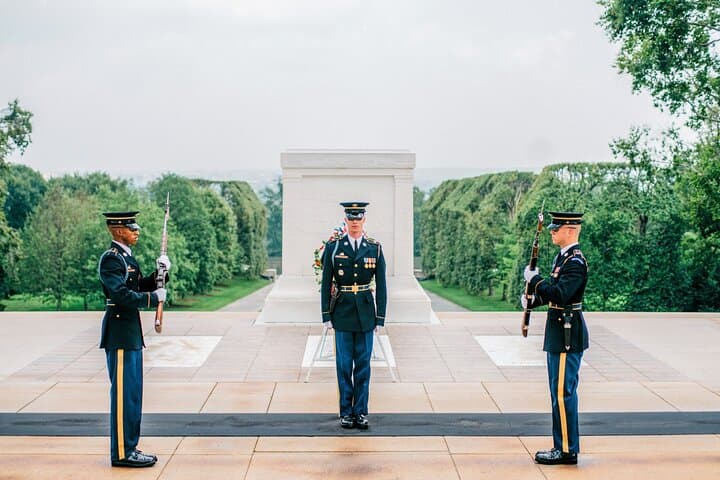
Culturally the cemetery is codified: a cadence of honor around the Tomb of the Unknown Soldier and the Changing of the Guard, a ceremony of exact steps and measured time. The grounds also contain quieter surprises — the grave of Audie Murphy, memorials to Columbia and Challenger — that reward patient attention.
Practical guidance: arrive early and expect about two hours of walking and standing across varied slopes and paved paths. Bring photo ID for entry, wear sturdy footwear for the cemetery’s hills, and dress for the weather; summers are hot, winters brisk. Photography is allowed, but show restraint around gravesites and during guard ceremonies. The tour is a concise, literal walk through American memory — experiential, reflective, and exacting.
easy.
2–2.5 hours.
Moderate mobility and comfort with walking and standing on sloped terrain for up to two hours; not recommended for those with severe mobility limitations.
Yes. All guests 16 and older must present valid photo ID at cemetery security for admission.
Take the Metro to the Arlington Cemetery station and follow signs to the Visitor's Center; the guide meets inside near the statue in the glass case.
The Guard at the Tomb of the Unknown Soldier performs their ritual daily, but access to the amphitheater or viewing options can vary by schedule and operational constraints.
The tour involves slopes and significant walking; while strollers can be used, guests with limited mobility may find some sections challenging and should contact the operator in advance.
Arlington National Cemetery was established on the Custis estate during the Civil War and expanded as a national burial ground; its grounds are intertwined with 19th- and 20th-century American military history.
Visitors are asked to respect graves, avoid leaning on markers, and stay on paths where directed; cemetery staff manage lawns and plantings to protect historic sites and tree health.
Signature Tours of DC operates guided outdoor trips and adventures with an emphasis on safety, stewardship, and memorable experiences.
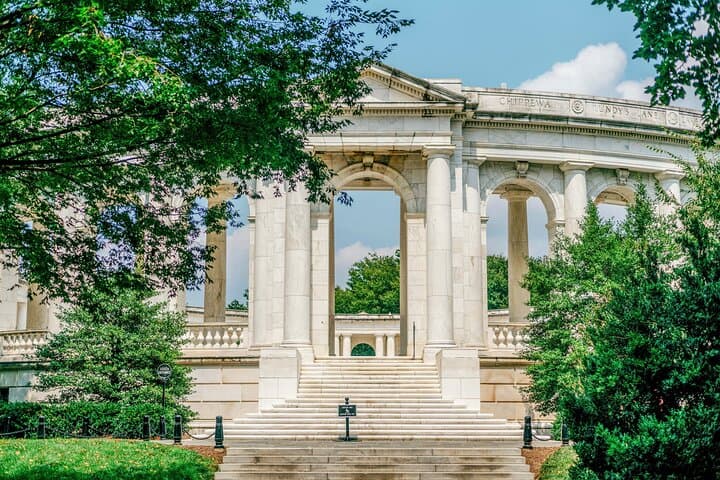
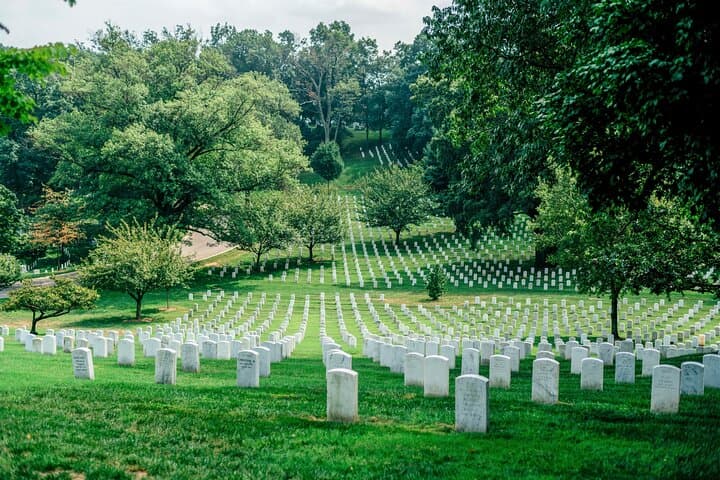

You step through security and immediately the landscape tightens: rows of white markers slope toward the Potomac, flags snapping like a metronome above the amphitheater. The guide sets the pace, voice low and precise, and the cemetery begins to read like a map of American sacrifice and ceremony.
You step through security and immediately the landscape tightens: rows of white markers slope toward the Potomac, flags snapping like a metronome above the amphitheater. The guide sets the pace, voice low and precise, and the cemetery begins to read like a map of American sacrifice and ceremony.
Founded on the Custis estate during the Civil War, Arlington quickly became both burial ground and public memory. Granite stones tell stories from the Civil War to the Space Shuttle tragedies; the JFK family grave and its Eternal Flame mark a private grief that became national ritual. Geologically the ridge above the river is a gentle escarpment of Piedmont soils; underfoot are lawns and original 19th-century plantings that have matured into open lawn and specimen trees that frame views back to the Capitol.
Culturally the cemetery is codified: a cadence of honor around the Tomb of the Unknown Soldier and the Changing of the Guard, a ceremony of exact steps and measured time. The grounds also contain quieter surprises — the grave of Audie Murphy, memorials to Columbia and Challenger — that reward patient attention.
Practical guidance: arrive early and expect about two hours of walking and standing across varied slopes and paved paths. Bring photo ID for entry, wear sturdy footwear for the cemetery’s hills, and dress for the weather; summers are hot, winters brisk. Photography is allowed, but show restraint around gravesites and during guard ceremonies. The tour is a concise, literal walk through American memory — experiential, reflective, and exacting.