THE ADVENTURE COLLECTIVE® · Independent discovery and booking for outdoor travel

Join a park ranger for a three-hour hike through Arikok National Park to see endemic wildlife, Arawak cave art, and the island’s volcanic and limestone formations. Ideal for fit hikers looking for a guided, interpretive experience away from Aruba’s beaches.
Join a park ranger for a three-hour hike through Arikok National Park to see endemic wildlife, Arawak cave art, and the island’s volcanic and limestone formations. Ideal for fit hikers looking for a guided, interpretive experience away from Aruba’s beaches.
You step from the van and the wind immediately has an opinion — a steady trade-wind that stirs the scrub and pushes you toward the trailhead. The visitors’ center at Arikok National Park, built with sustainable materials and informative exhibits, is the last civilized thing you see before the island’s raw geology takes over.
Verified experiences and guided adventures in the surrounding area.
Operated by El Tours & Transfers · Oranjestad, Aruba
You step from the van and the wind immediately has an opinion — a steady trade-wind that stirs the scrub and pushes you toward the trailhead. The visitors’ center at Arikok National Park, built with sustainable materials and informative exhibits, is the last civilized thing you see before the island’s raw geology takes over.
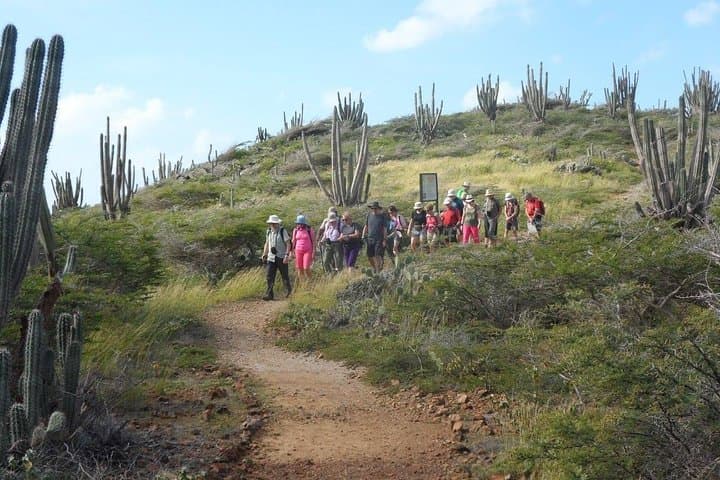
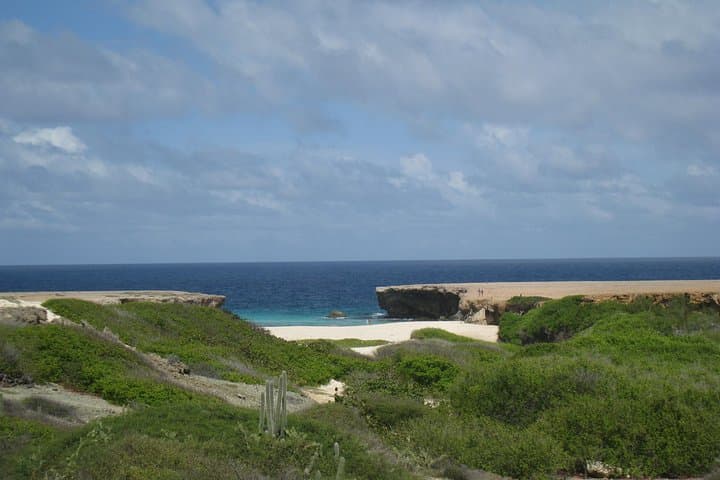
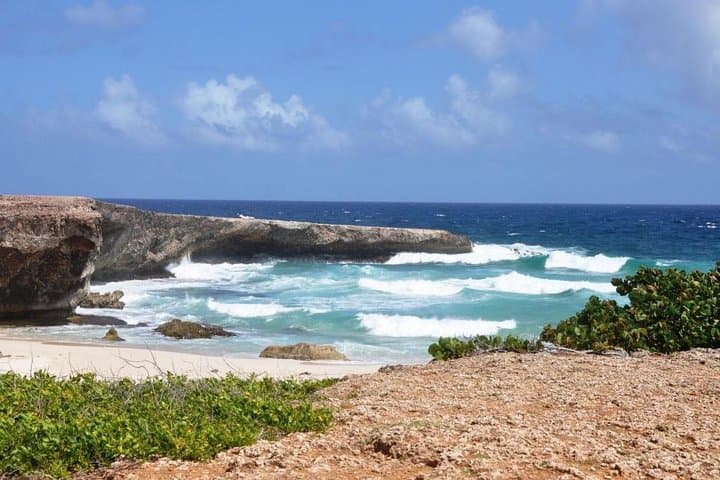
On a three-hour, ranger-led hike you move across terrain shaped by lava, quartz diorite and weathered limestone. Small caves hold Arawak petroglyphs and cool, dim air; rocky ridgelines open to bright, low scrub and the Atlantic beyond. Park rangers point out Aruba’s endemic species — the burrowing owl (shoco), the whiptail lizard (cododo) and the island’s rare rattlesnake — and explain how centuries of salt, sun and wind carved the landscape you’re walking.
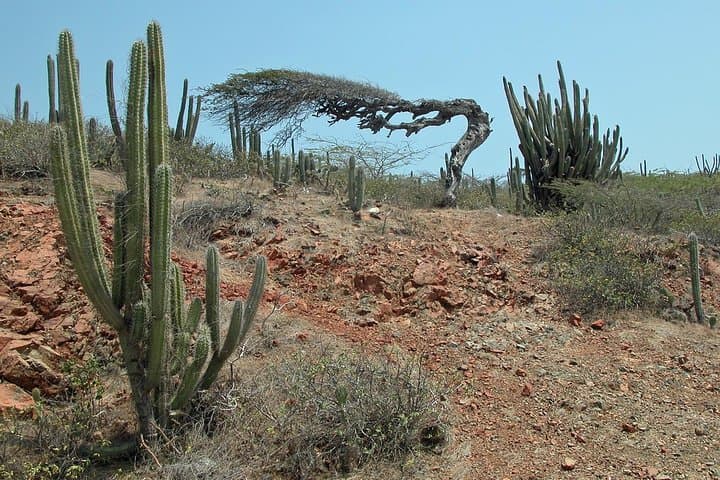
The park’s history is visible: stone walls from colonial-era ranching, indigenous rock art, and paths worn by livestock. Geologically, Arikok is an exposed collage of volcanic and sedimentary processes; ecologically, it supports drought-tolerant plants that look fragile until you learn how they hold the island together.
Practically, expect rocky, uneven trails with short scrambles and limited elevation change over roughly 4–6 km covered in three hours. Morning departures are cooler and offer better wildlife sightings; bottled water and park fees are included, and hotel pickup is standard — confirm pickup time 24 hours before. Wear sturdy shoes, sun protection and a small daypack; move at the ranger’s pace and you’ll leave with a clear sense of Aruba beyond the beaches.
moderate.
3 hours.
Suitable for hikers in good cardiovascular shape; requires comfort on uneven terrain and short scrambles.
The guided experience lasts about three hours over roughly 4–6 km with moderate effort — rocky, uneven trails and short scrambles but limited sustained elevation gain.
Round-trip hotel and cruise-ship pickup is included; contact the operator during office hours at least one day prior to reconfirm pickup location and time.
Yes — national park fees and bottled water are included in the tour price as noted in the itinerary.
Minimum age is 9; the tour is not recommended for pregnant travelers or those with serious heart, back, or spinal issues — participants should be physically fit.
Arikok preserves sites from pre-Columbian Arawak occupation and colonial-era ranching; the park protects both cultural artifacts and traditional stone walls.
The park balances tourism with protection of endemic species; stick to trails, use reef-safe sunscreen, and follow ranger instructions to reduce impact.
El Tours & Transfers operates guided outdoor trips and adventures with an emphasis on safety, stewardship, and memorable experiences.
You step from the van and the wind immediately has an opinion — a steady trade-wind that stirs the scrub and pushes you toward the trailhead. The visitors’ center at Arikok National Park, built with sustainable materials and informative exhibits, is the last civilized thing you see before the island’s raw geology takes over.
You step from the van and the wind immediately has an opinion — a steady trade-wind that stirs the scrub and pushes you toward the trailhead. The visitors’ center at Arikok National Park, built with sustainable materials and informative exhibits, is the last civilized thing you see before the island’s raw geology takes over.
On a three-hour, ranger-led hike you move across terrain shaped by lava, quartz diorite and weathered limestone. Small caves hold Arawak petroglyphs and cool, dim air; rocky ridgelines open to bright, low scrub and the Atlantic beyond. Park rangers point out Aruba’s endemic species — the burrowing owl (shoco), the whiptail lizard (cododo) and the island’s rare rattlesnake — and explain how centuries of salt, sun and wind carved the landscape you’re walking.
The park’s history is visible: stone walls from colonial-era ranching, indigenous rock art, and paths worn by livestock. Geologically, Arikok is an exposed collage of volcanic and sedimentary processes; ecologically, it supports drought-tolerant plants that look fragile until you learn how they hold the island together.
Practically, expect rocky, uneven trails with short scrambles and limited elevation change over roughly 4–6 km covered in three hours. Morning departures are cooler and offer better wildlife sightings; bottled water and park fees are included, and hotel pickup is standard — confirm pickup time 24 hours before. Wear sturdy shoes, sun protection and a small daypack; move at the ranger’s pace and you’ll leave with a clear sense of Aruba beyond the beaches.