THE ADVENTURE COLLECTIVE® · Independent discovery and booking for outdoor travel

Stand at the rim where water throws itself into the abyss and trace the falls from three angles on the Argentinian side of Iguazú. This full-day walk combines the thunder of Devil’s Throat with panoramic and riverside circuits, wildlife sightings, and optional boat rides.
Stand at the rim where water throws itself into the abyss and trace the falls from three angles on the Argentinian side of Iguazú. This full-day walk combines the thunder of Devil’s Throat with panoramic and riverside circuits, wildlife sightings, and optional boat rides.
A low, constant roar guides you from the visitor center onto the wooden walkways — a living map edged with spray. The ecological train drops you at Garganta del Diablo (Devil’s Throat), where water hurls itself off the plateau and the mist dares you to step closer. Walkways fan out from that anchor point, offering shifting perspectives: a frontal thunderhead, a high-angled panorama, and intimate cascades framed by tropical forest.
Verified experiences and guided adventures in the surrounding area.
Operated by Guia Marcelinho · Puerto Iguazú, Misiones
A low, constant roar guides you from the visitor center onto the wooden walkways — a living map edged with spray. The ecological train drops you at Garganta del Diablo (Devil’s Throat), where water hurls itself off the plateau and the mist dares you to step closer. Walkways fan out from that anchor point, offering shifting perspectives: a frontal thunderhead, a high-angled panorama, and intimate cascades framed by tropical forest.
Iguazú sits on a basalt plateau created by ancient volcanic flows and tectonic warping; the falls themselves are a geological incision where the river meets harder lava layers. The park has long been important to Guaraní peoples; towns like Puerto Iguazú grew around trade and tourism in the 20th century. Wildlife is bold — coatis and capuchin monkeys often skirt the paths, and toucans flash between canopy breaks.
Practically, the standard day walks cover about 6–8 km of boardwalks and stairs across three circuits: Devil’s Throat (train + short flat walk), the Upper Circuit (~2+ km, panoramic), and the Lower Circuit (~3 km, closer views and steps). Trails are well maintained but can be wet and slippery; leave time for the optional boat ride if you want a drenched, frontline view. Bring layered rain protection, sturdy shoes, water, and your passport if crossing from Brazil. Aim for early departure to avoid midday heat and larger crowds; rest areas and a food court inside the park offer reliable breaks. The visit balances spectacle with manageable hiking: it’s an immersive day that rewards curiosity and sensible preparation.
moderate.
6 hours.
Moderate fitness for walking 6–8 km over boardwalks and stairs; ability to manage short stair climbs and standing at viewpoints required.
If you are crossing an international border (for example from Brazil), carry a valid passport and check visa requirements in advance; the tour operator may assist with transfers but not border documentation.
This tour description lists admission included — confirm at booking; some optional activities like the boat ride require extra payment and prior reservation.
Many walkways and transport options are accessible with rest points, but some sections include stairs and uneven ramps; contact the operator in advance to discuss specific needs.
Yes — the boat ride is often available as an optional add-on with prior reservation; it gets you close to lower falls and will result in deliberate soaking and wet gear.
Iguazú Falls sit on land historically inhabited by Guaraní communities; the park was created in the early 20th century to protect the falls and surrounding Atlantic Forest.
Iguazú National Park is a UNESCO World Heritage site focused on preserving Atlantic Forest biodiversity and managing visitor impacts through defined trails, sanitation, and education programs.
Guia Marcelinho operates guided outdoor trips and adventures with an emphasis on safety, stewardship, and memorable experiences.
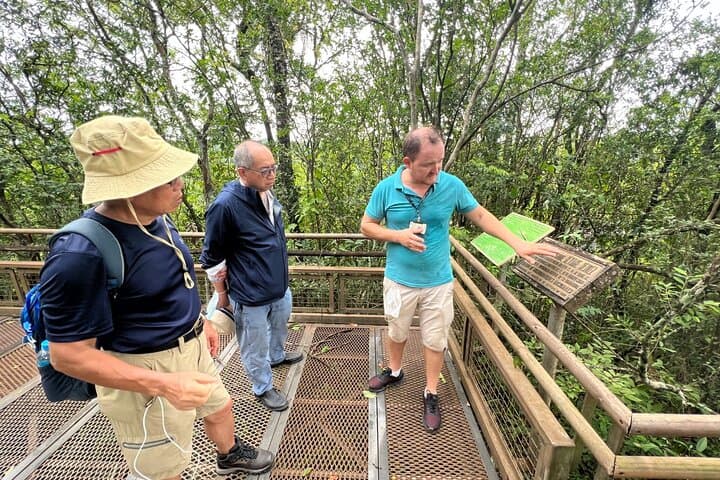
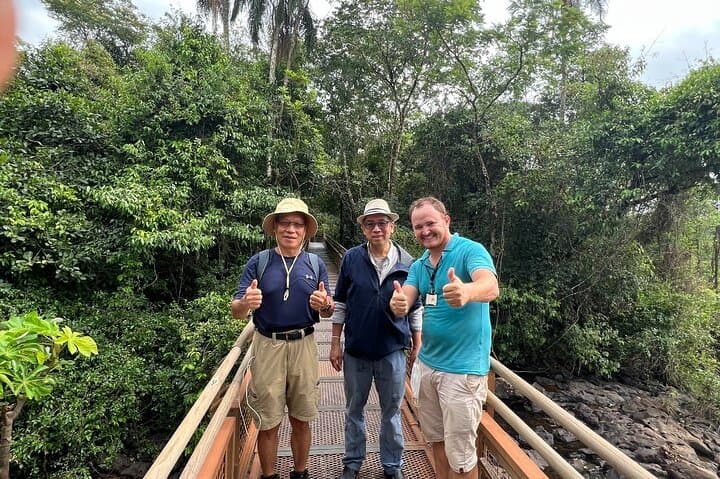
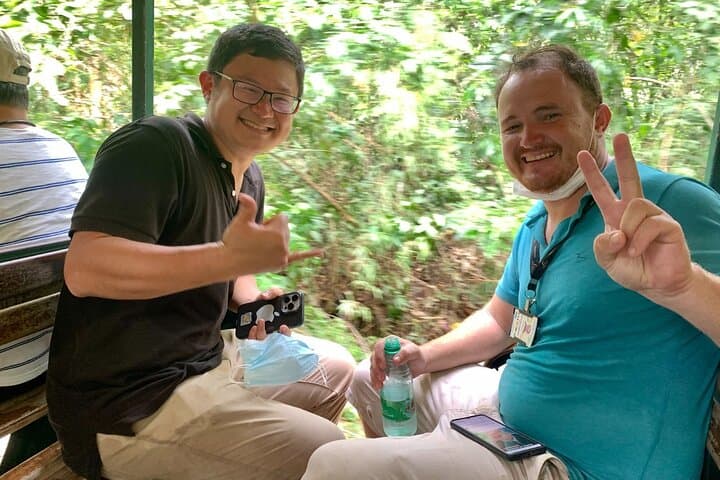
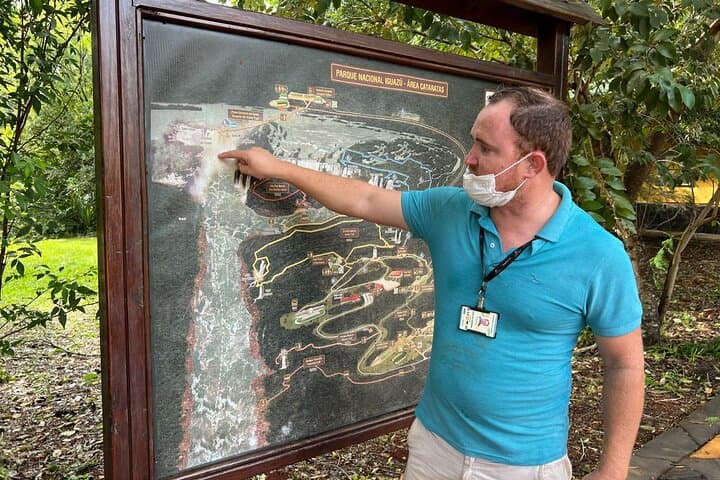
A low, constant roar guides you from the visitor center onto the wooden walkways — a living map edged with spray. The ecological train drops you at Garganta del Diablo (Devil’s Throat), where water hurls itself off the plateau and the mist dares you to step closer. Walkways fan out from that anchor point, offering shifting perspectives: a frontal thunderhead, a high-angled panorama, and intimate cascades framed by tropical forest.
A low, constant roar guides you from the visitor center onto the wooden walkways — a living map edged with spray. The ecological train drops you at Garganta del Diablo (Devil’s Throat), where water hurls itself off the plateau and the mist dares you to step closer. Walkways fan out from that anchor point, offering shifting perspectives: a frontal thunderhead, a high-angled panorama, and intimate cascades framed by tropical forest.
Iguazú sits on a basalt plateau created by ancient volcanic flows and tectonic warping; the falls themselves are a geological incision where the river meets harder lava layers. The park has long been important to Guaraní peoples; towns like Puerto Iguazú grew around trade and tourism in the 20th century. Wildlife is bold — coatis and capuchin monkeys often skirt the paths, and toucans flash between canopy breaks.
Practically, the standard day walks cover about 6–8 km of boardwalks and stairs across three circuits: Devil’s Throat (train + short flat walk), the Upper Circuit (~2+ km, panoramic), and the Lower Circuit (~3 km, closer views and steps). Trails are well maintained but can be wet and slippery; leave time for the optional boat ride if you want a drenched, frontline view. Bring layered rain protection, sturdy shoes, water, and your passport if crossing from Brazil. Aim for early departure to avoid midday heat and larger crowds; rest areas and a food court inside the park offer reliable breaks. The visit balances spectacle with manageable hiking: it’s an immersive day that rewards curiosity and sensible preparation.