THE ADVENTURE COLLECTIVE® · Independent discovery and booking for outdoor travel

Watch goats perch in argan trees and lose yourself in Souk El Had’s bustling stalls on a concise Agadir day tour. This half-day mix of nature and market culture is easy to navigate and rich in local color.
Watch goats perch in argan trees and lose yourself in Souk El Had’s bustling stalls on a concise Agadir day tour. This half-day mix of nature and market culture is easy to navigate and rich in local color.
A dry wind pushes salt and dust across the plain as the van pulls off the coastal road into low, gnarled argan groves. Goats balance on curved branches, chewing leaves like impatient travelers refusing to get down; their odd silhouettes against the blue make for an instant image — curious, a little absurd, and entirely Moroccan.
Verified experiences and guided adventures in the surrounding area.
Operated by Benjoudtours · Agadir, Souss-Massa
A dry wind pushes salt and dust across the plain as the van pulls off the coastal road into low, gnarled argan groves. Goats balance on curved branches, chewing leaves like impatient travelers refusing to get down; their odd silhouettes against the blue make for an instant image — curious, a little absurd, and entirely Moroccan.
The argan tree (Argania spinosa) is native to southwestern Morocco, a slow-growing species adapted to rocky, semi-arid soils of the Souss-Massa plain and lower Anti-Atlas foothills. Historically, local Amazigh communities have pressed its nuts into prized argan oil — a culinary and cosmetic staple — and the region’s markets grew up as distribution hubs. Souk El Had in Agadir is the modern continuation: a bustling, labyrinthine market built after the 1960 earthquake rebuilt the city’s commerce around a single, vast Sunday market.
Expect an easy half-day that pairs light countryside views with market navigation. Walk soft dirt tracks between trees, watch local herders and cooperative workers, then descend into narrow souk alleys filled with spices, textiles, and pottery. Practical notes: wear sturdy walking shoes for uneven ground, carry sun protection and 1–1.5 liters of water, and bring small bills for market purchases and cooperative donations.
Plan to visit cooperatives where women explain traditional argan pressing; avoid touching animals or feeding them. Go mid-morning for better light and cooler temperatures; the market livens toward late morning and early afternoon. This trip is short on exertion but rich in texture — you’ll leave with sharper senses for scent, color, and the small economic threads that tie trees to town.
easy.
3–4 hours.
Suitable for most fitness levels; involves short, easy walks and standing in market areas
The excursion lasts roughly 3.5 hours (about 210 minutes), combining time in argan groves with a guided visit to Souk El Had.
You can observe them at close range, but feeding or handling animals is discouraged — stay respectful and keep a safe distance.
Reputable cooperatives sell locally produced argan oil; look for small cooperative labels and ask about cold-pressing and purity.
Yes; the tour is family-friendly, though infants should sit on laps during transfers and supervision is needed around animals and busy market areas.
Argan trees are endemic to southwestern Morocco and have sustained Amazigh communities for centuries; Souk El Had became Agadir’s main market hub after the 1960 earthquake reshaped the city’s urban layout.
Argan ecosystems are fragile; support certified cooperatives, avoid disturbing trees or animals, and minimize plastic waste to reduce impact.
Benjoudtours operates guided outdoor trips and adventures with an emphasis on safety, stewardship, and memorable experiences.
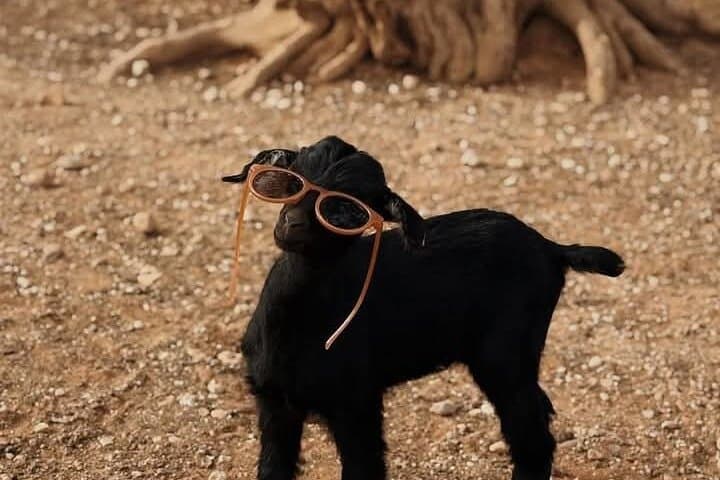
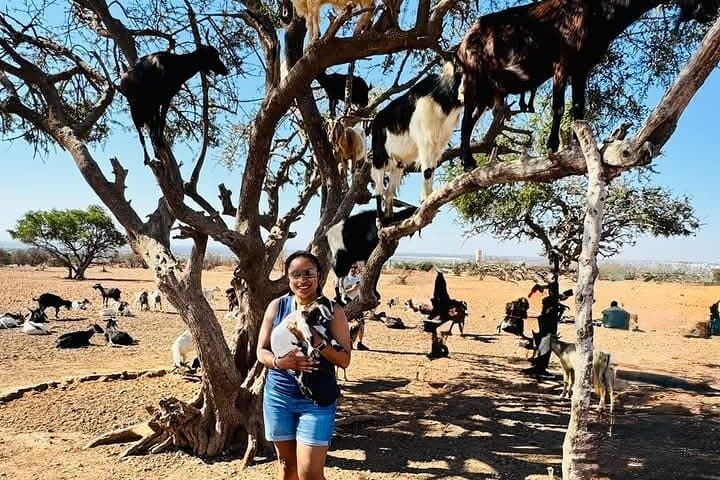
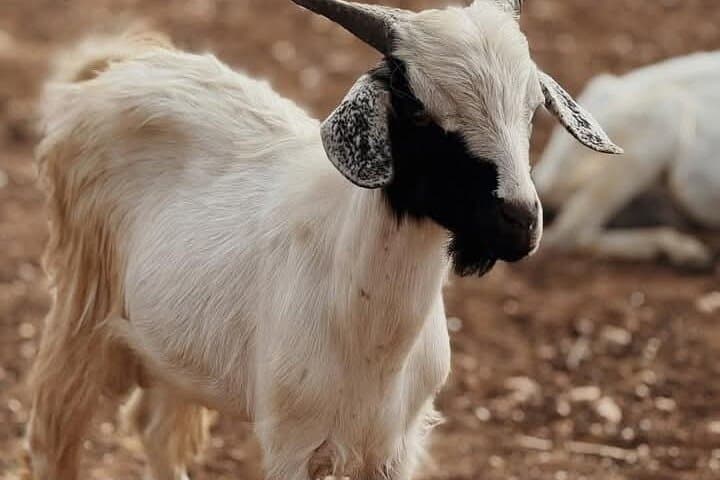
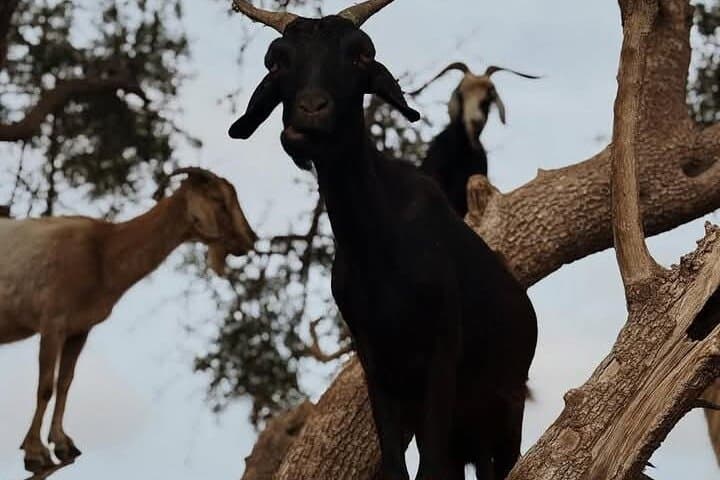
A dry wind pushes salt and dust across the plain as the van pulls off the coastal road into low, gnarled argan groves. Goats balance on curved branches, chewing leaves like impatient travelers refusing to get down; their odd silhouettes against the blue make for an instant image — curious, a little absurd, and entirely Moroccan.
A dry wind pushes salt and dust across the plain as the van pulls off the coastal road into low, gnarled argan groves. Goats balance on curved branches, chewing leaves like impatient travelers refusing to get down; their odd silhouettes against the blue make for an instant image — curious, a little absurd, and entirely Moroccan.
The argan tree (Argania spinosa) is native to southwestern Morocco, a slow-growing species adapted to rocky, semi-arid soils of the Souss-Massa plain and lower Anti-Atlas foothills. Historically, local Amazigh communities have pressed its nuts into prized argan oil — a culinary and cosmetic staple — and the region’s markets grew up as distribution hubs. Souk El Had in Agadir is the modern continuation: a bustling, labyrinthine market built after the 1960 earthquake rebuilt the city’s commerce around a single, vast Sunday market.
Expect an easy half-day that pairs light countryside views with market navigation. Walk soft dirt tracks between trees, watch local herders and cooperative workers, then descend into narrow souk alleys filled with spices, textiles, and pottery. Practical notes: wear sturdy walking shoes for uneven ground, carry sun protection and 1–1.5 liters of water, and bring small bills for market purchases and cooperative donations.
Plan to visit cooperatives where women explain traditional argan pressing; avoid touching animals or feeding them. Go mid-morning for better light and cooler temperatures; the market livens toward late morning and early afternoon. This trip is short on exertion but rich in texture — you’ll leave with sharper senses for scent, color, and the small economic threads that tie trees to town.