THE ADVENTURE COLLECTIVE® · Independent discovery and booking for outdoor travel

See goats perched in argan trees just south of Agadir and visit a local Berber cooperative to watch traditional argan oil production. This short morning tour blends a rare wildlife sight with cultural insight and easy logistics.
See goats perched in argan trees just south of Agadir and visit a local Berber cooperative to watch traditional argan oil production. This short morning tour blends a rare wildlife sight with cultural insight and easy logistics.
Morning light flattens over scrub and low hills as the van pulls off the coastal road 15 km south of Agadir. Within minutes the landscape changes: low, gnarled argan trees dot ochre slopes and, improbably, small goats pick their way into branches, searching for fruit. The sight is immediate and theatrical — animals balancing on limbs while tourists and locals watch in quiet amazement.
Verified experiences and guided adventures in the surrounding area.
Operated by Sahara Sights Tours · Agadir, Souss-Massa
Morning light flattens over scrub and low hills as the van pulls off the coastal road 15 km south of Agadir. Within minutes the landscape changes: low, gnarled argan trees dot ochre slopes and, improbably, small goats pick their way into branches, searching for fruit. The sight is immediate and theatrical — animals balancing on limbs while tourists and locals watch in quiet amazement.
The argan zone is part of Morocco’s southwestern arganeraie, a UNESCO-recognized cultural landscape shaped by Berber communities for centuries. Geology here is young Atlantic-influenced sediment and sandstone; the shallow soils and aridity favor drought-resistant argan trees, which in turn support a unique rural economy. Visiting an argan oil cooperative connects the natural story to human craft: Berber women hand-press kernels into oil using time-honored techniques, and cooperatives double as social enterprises preserving knowledge and income.
Practically, this is a short, easy outing best booked in the cool morning. Expect a relaxed 2–3 hour loop: a scenic drive, 45–60 minutes at the goat-viewing area, then an hour at the cooperative with explanation and shopping time. Wear sturdy shoes for uneven ground, bring sun protection, and carry small cash for purchases. The experience is low-impact but supports conservation when you buy certified oil from local cooperatives. Photography is straightforward; keep a respectful distance from animals and cooperative workers. For travelers based in Agadir, it’s an accessible, visually striking introduction to southern Morocco’s ecology and rural culture.
easy.
2–3 hours.
Light walking on mostly flat but uneven terrain; suitable for most fitness levels and families.
The excursion runs about 2–3 hours, with a scenic drive, roughly 45–60 minutes at the argan grove, and around an hour at the cooperative.
Goats frequently climb argan trees to eat fruit, but sightings depend on season, forage availability, and time of day; mornings are most reliable.
Yes—most tours include hotel pickup and drop-off in Agadir; confirm your pickup point when booking.
Yes; the activity involves minimal walking and no technical demands, though uneven ground may challenge some mobility-impaired visitors.
Argan oil production is a centuries-old practice maintained by Amazigh (Berber) women; cooperatives today help preserve techniques and provide community income.
The arganeraie is a UNESCO biosphere reserve; buying from certified cooperatives supports sustainable harvesting and reforestation efforts to protect soil and livelihoods.
Sahara Sights Tours operates guided outdoor trips and adventures with an emphasis on safety, stewardship, and memorable experiences.
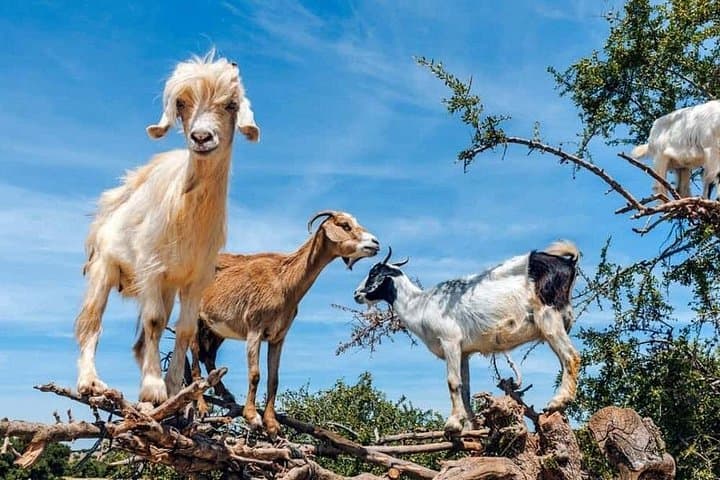
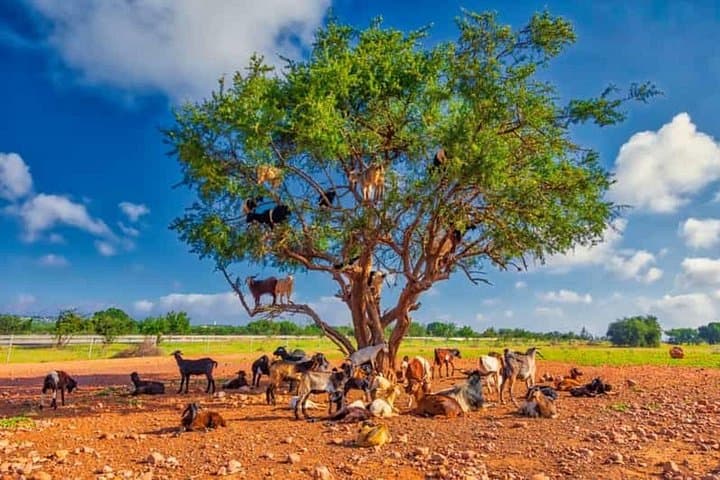
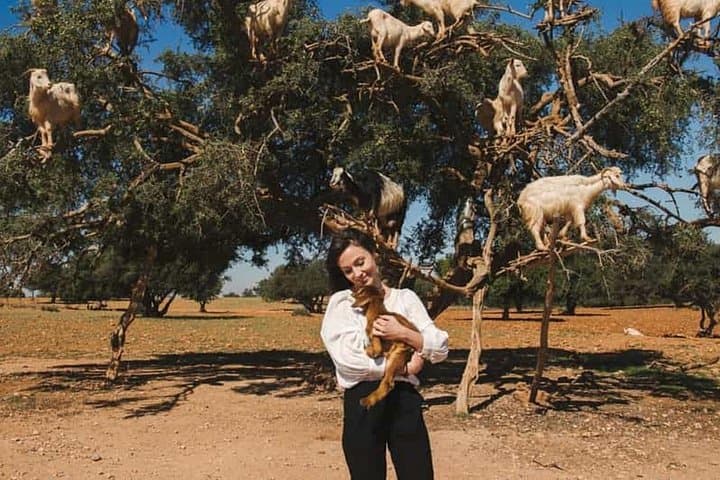
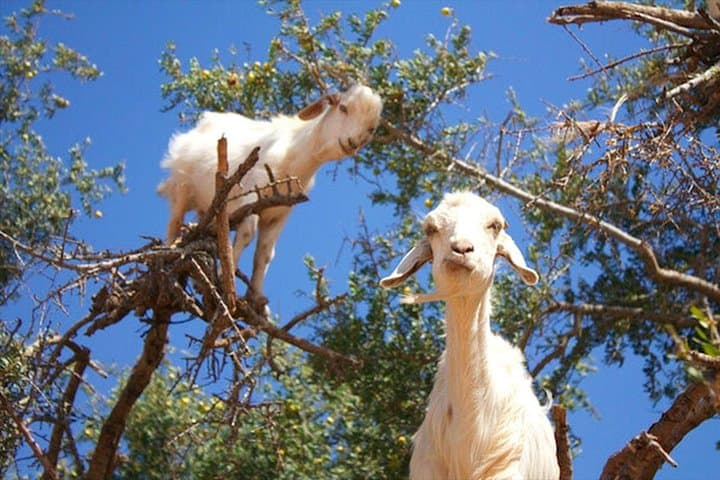
Morning light flattens over scrub and low hills as the van pulls off the coastal road 15 km south of Agadir. Within minutes the landscape changes: low, gnarled argan trees dot ochre slopes and, improbably, small goats pick their way into branches, searching for fruit. The sight is immediate and theatrical — animals balancing on limbs while tourists and locals watch in quiet amazement.
Morning light flattens over scrub and low hills as the van pulls off the coastal road 15 km south of Agadir. Within minutes the landscape changes: low, gnarled argan trees dot ochre slopes and, improbably, small goats pick their way into branches, searching for fruit. The sight is immediate and theatrical — animals balancing on limbs while tourists and locals watch in quiet amazement.
The argan zone is part of Morocco’s southwestern arganeraie, a UNESCO-recognized cultural landscape shaped by Berber communities for centuries. Geology here is young Atlantic-influenced sediment and sandstone; the shallow soils and aridity favor drought-resistant argan trees, which in turn support a unique rural economy. Visiting an argan oil cooperative connects the natural story to human craft: Berber women hand-press kernels into oil using time-honored techniques, and cooperatives double as social enterprises preserving knowledge and income.
Practically, this is a short, easy outing best booked in the cool morning. Expect a relaxed 2–3 hour loop: a scenic drive, 45–60 minutes at the goat-viewing area, then an hour at the cooperative with explanation and shopping time. Wear sturdy shoes for uneven ground, bring sun protection, and carry small cash for purchases. The experience is low-impact but supports conservation when you buy certified oil from local cooperatives. Photography is straightforward; keep a respectful distance from animals and cooperative workers. For travelers based in Agadir, it’s an accessible, visually striking introduction to southern Morocco’s ecology and rural culture.