THE ADVENTURE COLLECTIVE® · Independent discovery and booking for outdoor travel

A short, guided walk on volcanic stone brings you to the closest legal viewing point of Arenal Volcano and panoramic views of Lake Arenal. Add an optional soak in local hot springs afterward to extend the day.
A short, guided walk on volcanic stone brings you to the closest legal viewing point of Arenal Volcano and panoramic views of Lake Arenal. Add an optional soak in local hot springs afterward to extend the day.
You step off the minivan onto a bed of black volcanic stones and the volcano looms ahead—massive, patient, its flanks still raw from the 1968 eruption that reshaped this landscape. The trail is short but immediate: volcanic rock underfoot, rainforest pressing in, and Lake Arenal glinting to the west.
Verified experiences and guided adventures in the surrounding area.
Operated by Ecoterra Expeditions · La Fortuna, Alajuela
You step off the minivan onto a bed of black volcanic stones and the volcano looms ahead—massive, patient, its flanks still raw from the 1968 eruption that reshaped this landscape. The trail is short but immediate: volcanic rock underfoot, rainforest pressing in, and Lake Arenal glinting to the west.
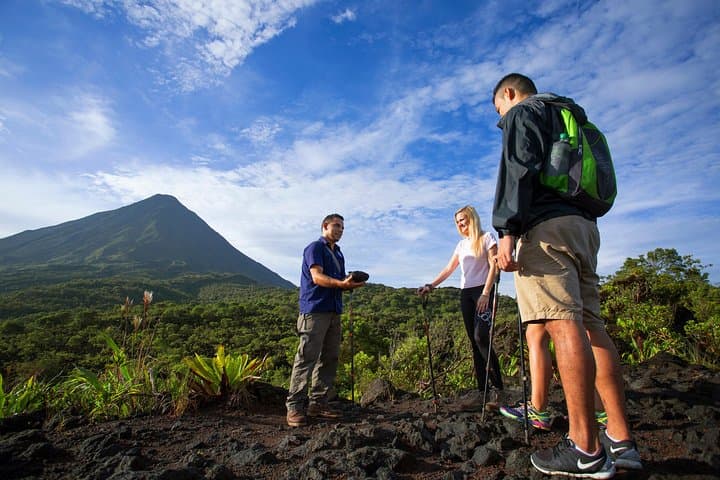
Geology here is readable: recent lava flows and ash layers make the soil rich and uneven, while the cone of Arenal records both explosive eruptions and quieter lava advances. The walk visits El Silencio Private Reserve and climbs roughly 1–1.5 km round-trip to the closest legal viewpoint of the volcano. Guides explain the 1968 event that transformed local towns and created new shorelines on Lake Arenal, and they point out plants that colonize fresh volcanic ground.
Culturally, the route threads past small cattle farms and ecotourism operations that sprang up after the volcano’s activity slowed; local guides often weave family stories and scientific context into the narration.
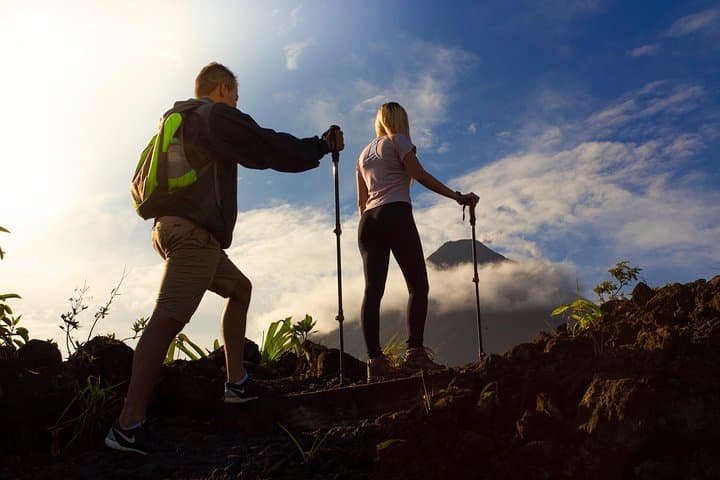
Practically, expect moderate footing with short, steeper sections and an estimated elevation gain around 100–150 m. The full excursion (including transfers, guide time, and snack) runs about 3–4 hours; morning and afternoon departures are common. Wildlife is opportunistic—toucan calls or a howler monkey can punctuate the silence—so move quietly and keep cameras ready.
If you opt for hot springs afterward, plan an extra three hours and cash for entry. Bring sturdy shoes, a lightweight rain shell (rain is frequent outside the dry season), insect repellent, and water. Stay on the permitted track, respect wildlife, and enjoy one of Costa Rica’s most accessible volcanic encounters.
moderate.
3–4 hours.
Moderate fitness recommended—able to handle short steep sections and uneven volcanic terrain for up to 1.5 km.
The guided walk to the viewpoint is about 1–1.5 km round-trip with short steep sections—rated moderate and usually completed within the 3–4 hour tour window including transfers.
Yes—there’s an optional hot springs visit for an additional cost that typically lasts about three hours; your guide can arrange pickups afterward.
Children may participate but must be accompanied by an adult; operators note it’s not recommended for those with spinal or serious heart conditions, and pregnant travelers are advised against joining.
Expect common rainforest species such as toucans, howler monkeys, and occasionally peccaries or small snakes; sightings depend on time of day and luck.
Arenal’s major eruption in 1968 radically altered local settlements and created new shoreline on Lake Arenal; the area has since shifted toward conservation and ecotourism.
Stay on marked trails, avoid feeding wildlife, and pack out trash—Arenal’s vegetation regenerates quickly but is vulnerable to trampling and invasive species.
Ecoterra Expeditions operates guided outdoor trips and adventures with an emphasis on safety, stewardship, and memorable experiences.
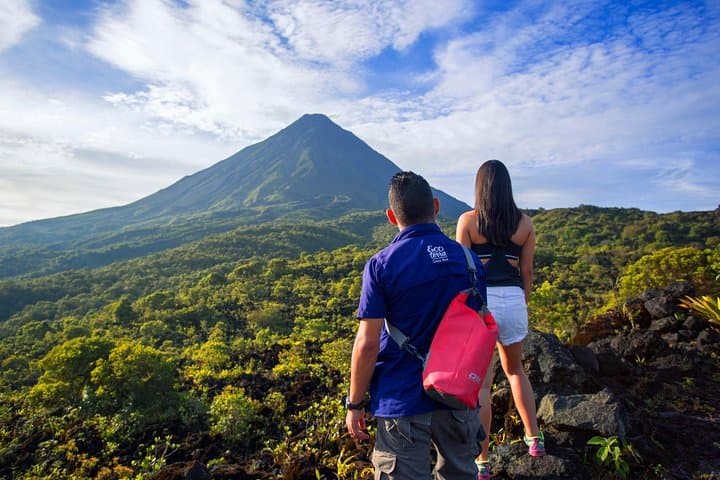
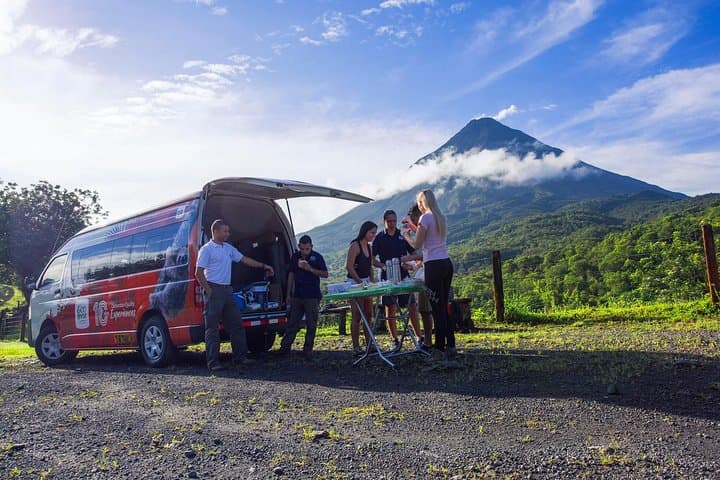
You step off the minivan onto a bed of black volcanic stones and the volcano looms ahead—massive, patient, its flanks still raw from the 1968 eruption that reshaped this landscape. The trail is short but immediate: volcanic rock underfoot, rainforest pressing in, and Lake Arenal glinting to the west.
You step off the minivan onto a bed of black volcanic stones and the volcano looms ahead—massive, patient, its flanks still raw from the 1968 eruption that reshaped this landscape. The trail is short but immediate: volcanic rock underfoot, rainforest pressing in, and Lake Arenal glinting to the west.
Geology here is readable: recent lava flows and ash layers make the soil rich and uneven, while the cone of Arenal records both explosive eruptions and quieter lava advances. The walk visits El Silencio Private Reserve and climbs roughly 1–1.5 km round-trip to the closest legal viewpoint of the volcano. Guides explain the 1968 event that transformed local towns and created new shorelines on Lake Arenal, and they point out plants that colonize fresh volcanic ground.
Culturally, the route threads past small cattle farms and ecotourism operations that sprang up after the volcano’s activity slowed; local guides often weave family stories and scientific context into the narration.
Practically, expect moderate footing with short, steeper sections and an estimated elevation gain around 100–150 m. The full excursion (including transfers, guide time, and snack) runs about 3–4 hours; morning and afternoon departures are common. Wildlife is opportunistic—toucan calls or a howler monkey can punctuate the silence—so move quietly and keep cameras ready.
If you opt for hot springs afterward, plan an extra three hours and cash for entry. Bring sturdy shoes, a lightweight rain shell (rain is frequent outside the dry season), insect repellent, and water. Stay on the permitted track, respect wildlife, and enjoy one of Costa Rica’s most accessible volcanic encounters.