THE ADVENTURE COLLECTIVE® · Independent discovery and booking for outdoor travel

Move over packed trails and into Lofoten’s winter hush on a guided snowshoe hike that’s built for first-timers and families. Expect low ridgelines, frozen ponds, local stories from your guide, and practical instruction on snow travel.
Move over packed trails and into Lofoten’s winter hush on a guided snowshoe hike that’s built for first-timers and families. Expect low ridgelines, frozen ponds, local stories from your guide, and practical instruction on snow travel.
Cold air bites at the face as the group steps off a snow-packed track, snowshoes whispering into a landscape that alternates between open, wind-swept ridges and sheltered, pine-dusted hollows. The guide sets the pace—steady, conversational—and the islands of Lofoten unfold in low winter light: fjords black against fresh snow, distant peaks rising like folded maps.
Verified experiences and guided adventures in the surrounding area.
Operated by Trad Adventures · Svolvær, Nordland
Cold air bites at the face as the group steps off a snow-packed track, snowshoes whispering into a landscape that alternates between open, wind-swept ridges and sheltered, pine-dusted hollows. The guide sets the pace—steady, conversational—and the islands of Lofoten unfold in low winter light: fjords black against fresh snow, distant peaks rising like folded maps.
Lofoten’s coastline has long supported fishing communities; cod fisheries and Viking-era routes shaped local settlements and the seasonal rhythms you see today. Geologically the islands are ancient gneiss and schist, carved by ice into fjords and rounded peaks; the winter accentuates that sculpted profile and leaves fewer visual distractions, so every ridge line and frozen lake reads clearly.
Culturally, small fishing hamlets—Reine, Henningsvær, Nusfjord—hold stories of hard winters and close-knit work. Guides often pause to describe how the sea and weather dictated local life: drying racks, rorbuer cabins and the practical ingenuity of Arctic living.
Practically, expect 3–4 hours on packed and soft snow with intermittent stops for views and short talks on snow testing and track identification. Snowshoes and poles are supplied; waterproof footwear, layered clothing and sunglasses are essential. Daylight is short in deep winter—plan for low sun and dress to move efficiently. The pace is gentle, suitable for beginners, but the environment is real Arctic winter: respect the wind, check cancellations in poor weather, and leave extra time for transfers between villages. By the end you’ll have walked a simple route that reveals how geology, history and the sea combine to shape Lofoten’s stark winter beauty.
easy.
3–4 hours.
Suitable for most people who can walk for several hours at a steady, moderate pace; light aerobic fitness recommended.
Yes—snowshoes and poles are provided as part of the tour, fitted on arrival.
No—this is designed for beginners and families; guides teach basic technique and pacing for all levels.
The tour is family-friendly and suitable for most active children and adults; participants should be able to walk for several hours with short breaks.
Trips may be canceled for severe weather; the operator typically offers a full refund if canceled at least 24 hours before departure or due to unsafe conditions.
Lofoten’s settlements grew around seasonal cod fisheries and Viking-era routes; the islands’ rorbuer (fishermen’s cabins) and drying racks illustrate a centuries-old coastal economy.
Stick to marked routes, avoid trampling fragile tundra vegetation, and pack out all waste—winter ecosystems recover slowly from disturbance.
Trad Adventures operates guided outdoor trips and adventures with an emphasis on safety, stewardship, and memorable experiences.
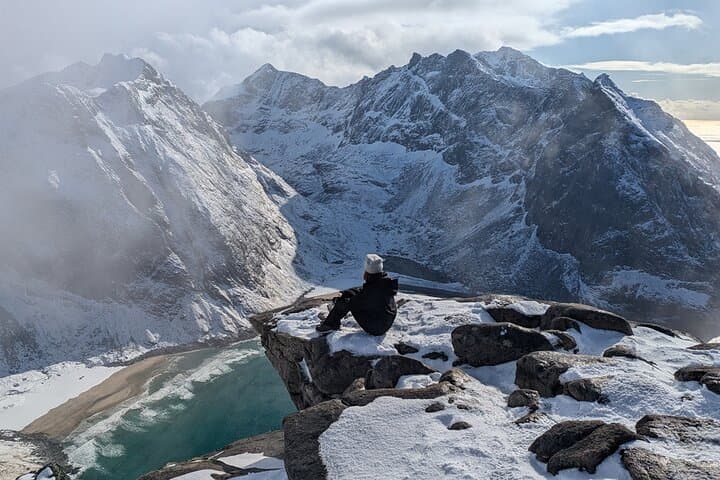
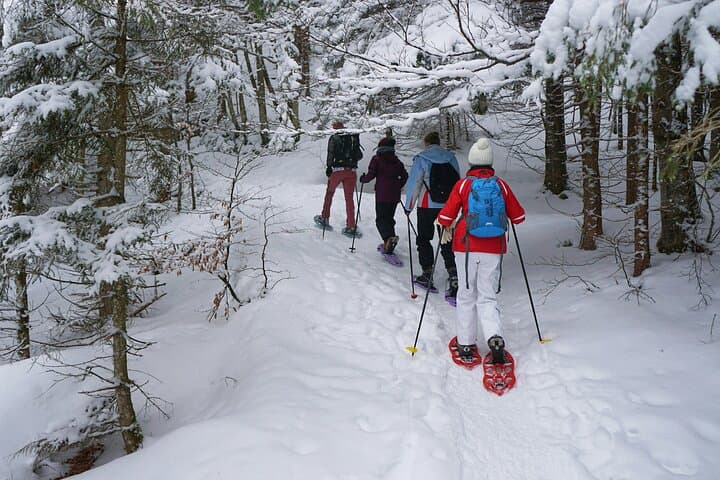
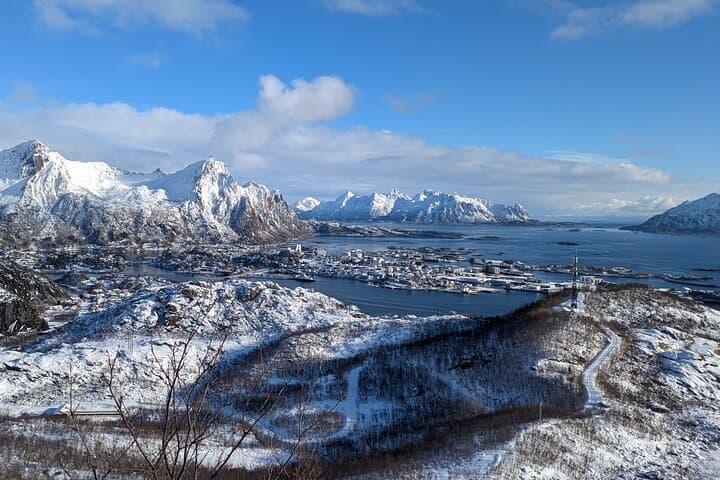
Cold air bites at the face as the group steps off a snow-packed track, snowshoes whispering into a landscape that alternates between open, wind-swept ridges and sheltered, pine-dusted hollows. The guide sets the pace—steady, conversational—and the islands of Lofoten unfold in low winter light: fjords black against fresh snow, distant peaks rising like folded maps.
Cold air bites at the face as the group steps off a snow-packed track, snowshoes whispering into a landscape that alternates between open, wind-swept ridges and sheltered, pine-dusted hollows. The guide sets the pace—steady, conversational—and the islands of Lofoten unfold in low winter light: fjords black against fresh snow, distant peaks rising like folded maps.
Lofoten’s coastline has long supported fishing communities; cod fisheries and Viking-era routes shaped local settlements and the seasonal rhythms you see today. Geologically the islands are ancient gneiss and schist, carved by ice into fjords and rounded peaks; the winter accentuates that sculpted profile and leaves fewer visual distractions, so every ridge line and frozen lake reads clearly.
Culturally, small fishing hamlets—Reine, Henningsvær, Nusfjord—hold stories of hard winters and close-knit work. Guides often pause to describe how the sea and weather dictated local life: drying racks, rorbuer cabins and the practical ingenuity of Arctic living.
Practically, expect 3–4 hours on packed and soft snow with intermittent stops for views and short talks on snow testing and track identification. Snowshoes and poles are supplied; waterproof footwear, layered clothing and sunglasses are essential. Daylight is short in deep winter—plan for low sun and dress to move efficiently. The pace is gentle, suitable for beginners, but the environment is real Arctic winter: respect the wind, check cancellations in poor weather, and leave extra time for transfers between villages. By the end you’ll have walked a simple route that reveals how geology, history and the sea combine to shape Lofoten’s stark winter beauty.