THE ADVENTURE COLLECTIVE® · Independent discovery and booking for outdoor travel

Spend three days learning archaeological recording, handling Roman finds, and exploring Hume Castle, Kelso Abbey and Abbotsford with professional archaeologists. Small groups mean hands-on skills and local insights.
Spend three days learning archaeological recording, handling Roman finds, and exploring Hume Castle, Kelso Abbey and Abbotsford with professional archaeologists. Small groups mean hands-on skills and local insights.
You meet at Tweedbank Railway Station as a mist lifts off the Tweed, then climb aboard for a short drive that threads past stone towers and river viaducts.
Verified experiences and guided adventures in the surrounding area.
Operated by HARP Archaeology · Galashiels, Scottish Borders
You meet at Tweedbank Railway Station as a mist lifts off the Tweed, then climb aboard for a short drive that threads past stone towers and river viaducts.
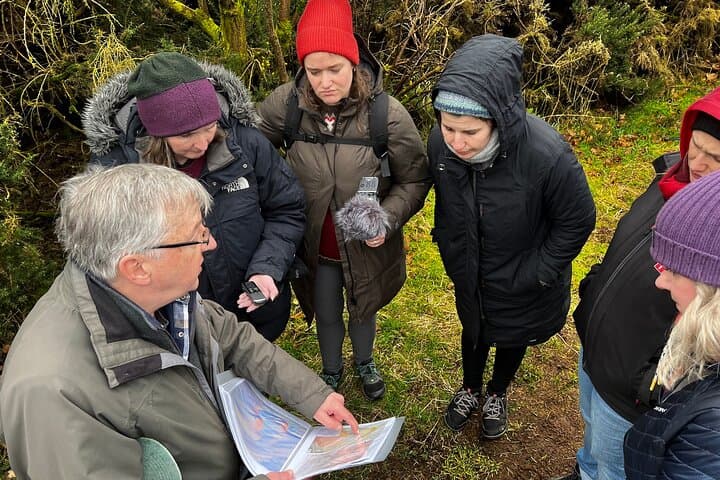
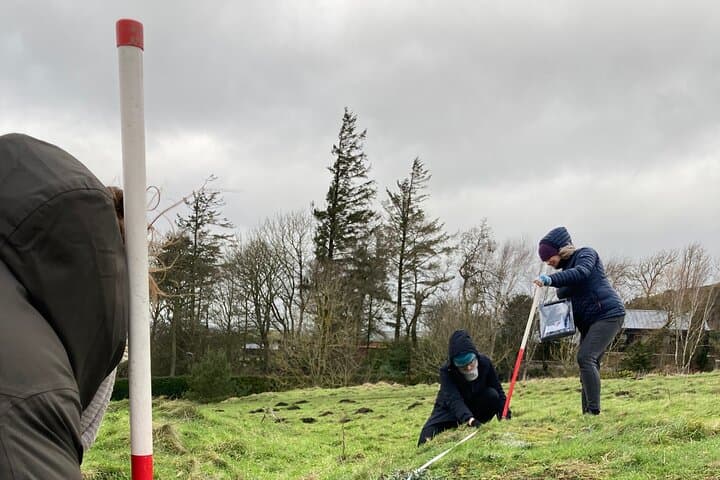
Over three days, the tour moves between Hume Castle, Smailholm Tower, Kelso Abbey, Abbotsford and the Trimontium Roman site, where archaeologists guide small groups through hands-on recording, landscape survey and artefact handling. The Borders’ rolling farmland alternates with exposed river terraces and shale outcrops; the ground keeps its stories close, and the guides show how to read the signs left in field boundaries and burial yards.
History arrives plainly: medieval reivers, the Rough Wooing of the 16th century, Sir Walter Scott’s estate at Abbotsford and the Roman road Dere Street all shaped the region’s farm patterns and defensive ruins. Geology is visible underfoot—sandstone scars, river gravels and compacted Roman road bedding—so you learn both to spot a feature and to document it in the field notebook.
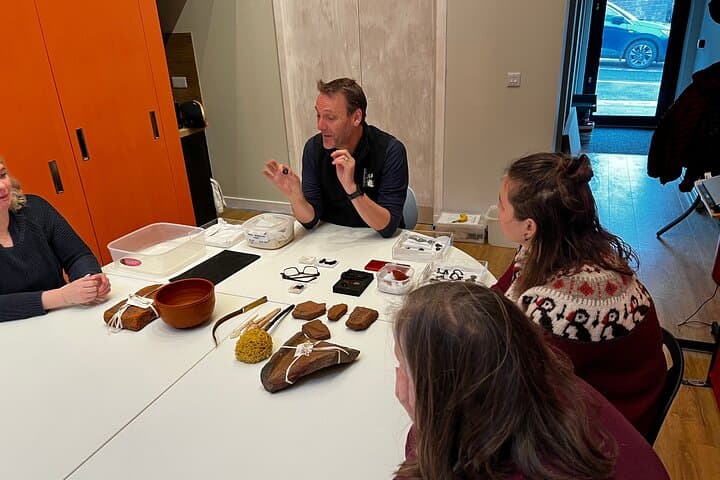
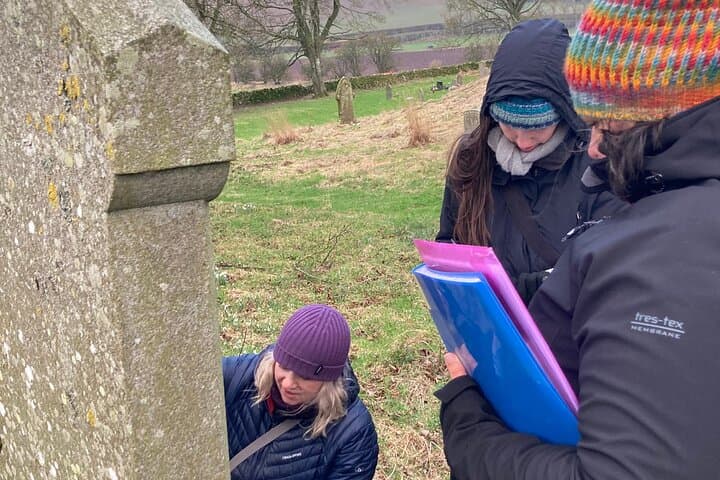
Expect practical skill sessions—photogrammetry basics, gravestone recording and a museum-handling demo—balanced with guided walks and local meals in Kelso and Melrose. Weather here changes fast; waterproofs and solid footwear matter as much as curiosity.
Plan for steady walking on uneven ground, short drives between sites, and active participation in recording tasks. Bring a camera, notebook and layered clothing; hydration and sensible shoes will keep you comfortable. By the end, you’ll have practical skills, photographs and a clearer sense of how landscape and history lock together in the Borders.
moderate.
3 days.
Participants should have moderate fitness—able to walk 3–6 miles over uneven terrain and stand for field tasks.
Groups are small—maximum six participants with up to two professional archaeologist guides, for hands-on learning and easy Q&A.
No—sessions are designed for beginners and cover basic recording skills, photography and artefact handling under supervision.
Expect short to moderate walks over uneven field and ruin terrain each day; a moderate fitness level is recommended.
Meals listed (breakfast, lunch, dinner) and three-star accommodation in a local hotel are included as described in the itinerary.
The Borders were shaped by Roman infrastructure, medieval border reivers and the 16th-century Rough Wooing; country houses like Abbotsford reflect the 19th-century revival of Scottish cultural identity.
Tours work with local Heritage Societies and trusts to support monitoring and education—visitors are asked to follow site guidelines to minimise erosion and disturbance.
HARP Archaeology operates guided outdoor trips and adventures with an emphasis on safety, stewardship, and memorable experiences.
You meet at Tweedbank Railway Station as a mist lifts off the Tweed, then climb aboard for a short drive that threads past stone towers and river viaducts.
You meet at Tweedbank Railway Station as a mist lifts off the Tweed, then climb aboard for a short drive that threads past stone towers and river viaducts.
Over three days, the tour moves between Hume Castle, Smailholm Tower, Kelso Abbey, Abbotsford and the Trimontium Roman site, where archaeologists guide small groups through hands-on recording, landscape survey and artefact handling. The Borders’ rolling farmland alternates with exposed river terraces and shale outcrops; the ground keeps its stories close, and the guides show how to read the signs left in field boundaries and burial yards.
History arrives plainly: medieval reivers, the Rough Wooing of the 16th century, Sir Walter Scott’s estate at Abbotsford and the Roman road Dere Street all shaped the region’s farm patterns and defensive ruins. Geology is visible underfoot—sandstone scars, river gravels and compacted Roman road bedding—so you learn both to spot a feature and to document it in the field notebook.
Expect practical skill sessions—photogrammetry basics, gravestone recording and a museum-handling demo—balanced with guided walks and local meals in Kelso and Melrose. Weather here changes fast; waterproofs and solid footwear matter as much as curiosity.
Plan for steady walking on uneven ground, short drives between sites, and active participation in recording tasks. Bring a camera, notebook and layered clothing; hydration and sensible shoes will keep you comfortable. By the end, you’ll have practical skills, photographs and a clearer sense of how landscape and history lock together in the Borders.