THE ADVENTURE COLLECTIVE® · Independent discovery and booking for outdoor travel

Join an expert archaeologist on a private day trip from London that links Neolithic timber circles, Stonehenge’s standing stones and nearly a millennium of history at Windsor Castle. Expect immersive context, short walks and practical guidance for a full-day cultural outing.
Join an expert archaeologist on a private day trip from London that links Neolithic timber circles, Stonehenge’s standing stones and nearly a millennium of history at Windsor Castle. Expect immersive context, short walks and practical guidance for a full-day cultural outing.
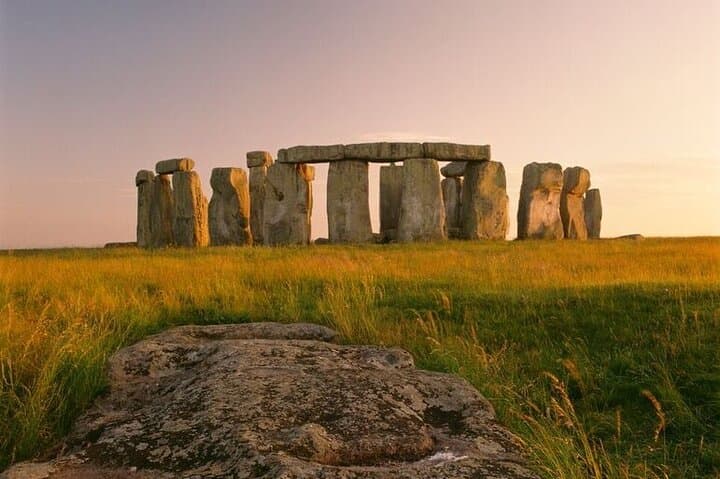
You step into a Mercedes V‑Class and leave London’s hum behind as chalk downs open to wide sky. The guide—an archaeologist—frames the landscape: low ridges, cropmarks and ancient banks that still direct how you move through Wiltshire. By the time you first glimpse the bluestone silhouette, the place has already begun to press on you—air and light rearranging around the stones.
Verified experiences and guided adventures in the surrounding area.
Operated by Archaeologist Guided Tours · Amesbury, Wiltshire
You step into a Mercedes V‑Class and leave London’s hum behind as chalk downs open to wide sky. The guide—an archaeologist—frames the landscape: low ridges, cropmarks and ancient banks that still direct how you move through Wiltshire. By the time you first glimpse the bluestone silhouette, the place has already begun to press on you—air and light rearranging around the stones.
This route moves between eras: Late Neolithic timber circles at Woodhenge and Durrington Walls, the reconstructed mystery of Stonehenge’s megaliths, then a jump to medieval power at Windsor Castle. Geologically, the sarsen stones are local Eocene sandstone set against chalk downland; soil and drainage here preserved barrows and postholes that archaeologists still read today. Culturally, the sites reflect ritual landscapes where movement, monumentality and seasonal cycles mattered to Bronze Age communities.
Practical guidance is straightforward. Expect about 10–11 hours total, with 1–1.5 hours driving each way from London depending on traffic. Bring a weatherproof layer and sturdy shoes: paths are uneven and exposed. Allow extra time to book or collect Stonehenge and Windsor admission—tickets and guided access vary seasonally. The tour is wheelchair-accessible with advance notice but includes walking at each site; ask about mobility support when you book.
Time your visit for morning or late afternoon light for photography, and leave large bags on the vehicle—sites limit what you can carry. Travel with curiosity: this is a trip about context as much as spectacle, where roads and fields still hold the echoes of procession, craft and memory.
easy.
10–11 hours.
Suitable for general fitness; requires short to moderate walks on uneven ground
The total experience is about 10–11 hours with roughly 1–1.5 hours driving each way from London depending on traffic.
Admission policies vary by booking—confirm with the operator and book entry slots separately if required for timed entry.
Children are welcome but must be accompanied by an adult; the tour can accommodate wheelchairs with advance notice though some site surfaces are uneven.
Morning or late afternoon light gives the most dramatic shadows on the stones; mid-day is harsher and often busier.
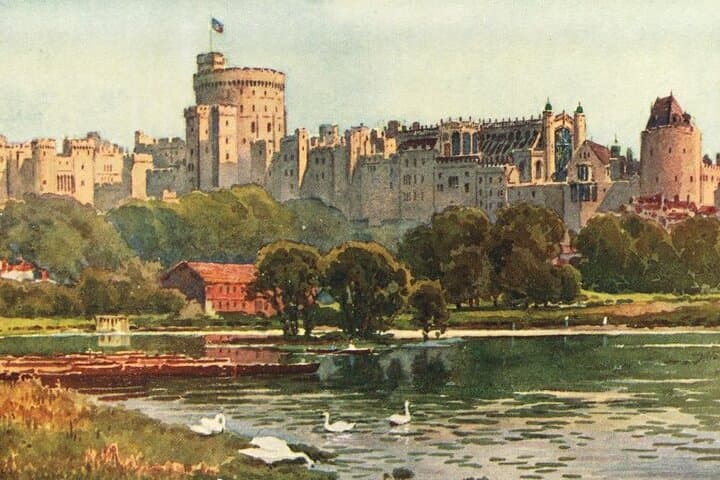
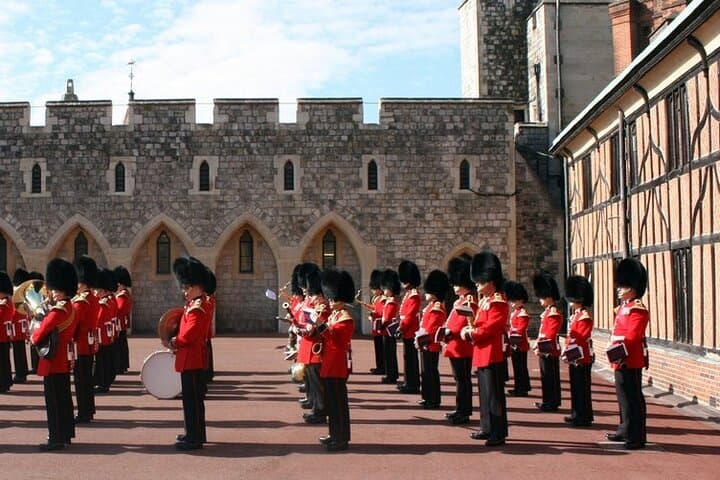
Stonehenge and the surrounding complex date to the late Neolithic and Bronze Age; Windsor Castle was founded after the Norman Conquest and has been a royal residence for nearly 1,000 years.
Visitor management at Stonehenge restricts close contact with the stones to protect fragile archaeology; follow marked paths and guidance to minimize erosion and disturbance.
Archaeologist Guided Tours operates guided outdoor trips and adventures with an emphasis on safety, stewardship, and memorable experiences.

You step into a Mercedes V‑Class and leave London’s hum behind as chalk downs open to wide sky. The guide—an archaeologist—frames the landscape: low ridges, cropmarks and ancient banks that still direct how you move through Wiltshire. By the time you first glimpse the bluestone silhouette, the place has already begun to press on you—air and light rearranging around the stones.
You step into a Mercedes V‑Class and leave London’s hum behind as chalk downs open to wide sky. The guide—an archaeologist—frames the landscape: low ridges, cropmarks and ancient banks that still direct how you move through Wiltshire. By the time you first glimpse the bluestone silhouette, the place has already begun to press on you—air and light rearranging around the stones.
This route moves between eras: Late Neolithic timber circles at Woodhenge and Durrington Walls, the reconstructed mystery of Stonehenge’s megaliths, then a jump to medieval power at Windsor Castle. Geologically, the sarsen stones are local Eocene sandstone set against chalk downland; soil and drainage here preserved barrows and postholes that archaeologists still read today. Culturally, the sites reflect ritual landscapes where movement, monumentality and seasonal cycles mattered to Bronze Age communities.
Practical guidance is straightforward. Expect about 10–11 hours total, with 1–1.5 hours driving each way from London depending on traffic. Bring a weatherproof layer and sturdy shoes: paths are uneven and exposed. Allow extra time to book or collect Stonehenge and Windsor admission—tickets and guided access vary seasonally. The tour is wheelchair-accessible with advance notice but includes walking at each site; ask about mobility support when you book.
Time your visit for morning or late afternoon light for photography, and leave large bags on the vehicle—sites limit what you can carry. Travel with curiosity: this is a trip about context as much as spectacle, where roads and fields still hold the echoes of procession, craft and memory.