THE ADVENTURE COLLECTIVE® · Independent discovery and booking for outdoor travel

Climb the Arc de Triomphe terrace for an unmatched 360° perspective of Paris, from the Eiffel Tower to the Champs-Élysées. This guide covers the monument’s history, what to expect on the visit, and practical tips to make the most of rooftop access.
Climb the Arc de Triomphe terrace for an unmatched 360° perspective of Paris, from the Eiffel Tower to the Champs-Élysées. This guide covers the monument’s history, what to expect on the visit, and practical tips to make the most of rooftop access.
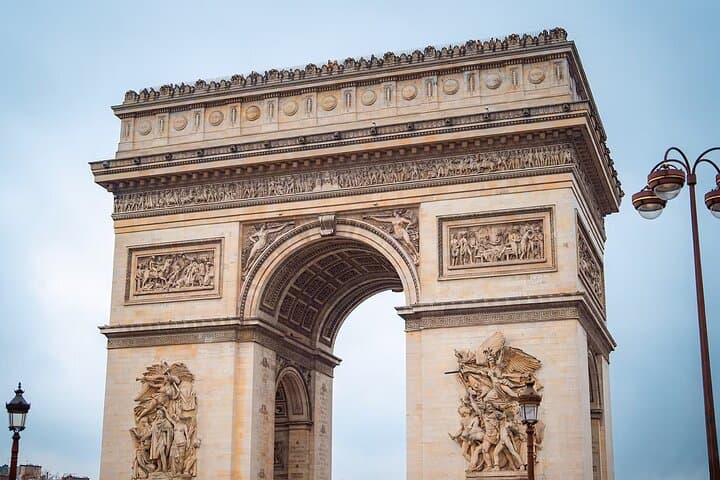
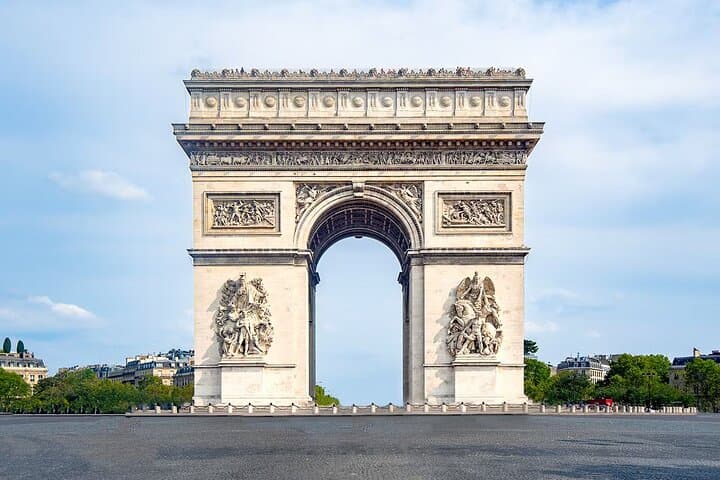
A wind off the Seine lifts the edges of your map as you step into Place Charles-de-Gaulle, the roundabout where twelve avenues radiate like spokes from the Arc de Triomphe. From the plaza the stone arch rises, heavy with carved campaigns and names, and the rooftop terrace gives a rare, elevated frame for Paris — the Eiffel Tower puncturing the skyline, the Champs-Élysées streaking away like a ribbon.
Verified experiences and guided adventures in the surrounding area.
Operated by Tour Mints Ltd · Paris, Île-de-France
A wind off the Seine lifts the edges of your map as you step into Place Charles-de-Gaulle, the roundabout where twelve avenues radiate like spokes from the Arc de Triomphe. From the plaza the stone arch rises, heavy with carved campaigns and names, and the rooftop terrace gives a rare, elevated frame for Paris — the Eiffel Tower puncturing the skyline, the Champs-Élysées streaking away like a ribbon.
Built after Napoleon’s victories and completed in 1836, the Arc stands on the city’s historic alignment that leads west to La Défense. Its stone is Parisian limestone laid atop the broad terraces of the Paris Basin; below the pavement the Tomb of the Unknown Soldier and its eternal flame mark modern memory and civic ritual. The site remains a working memorial and a stage for national ceremonies, and the rooftop is also a local favorite at dusk when city lights begin to assert themselves.
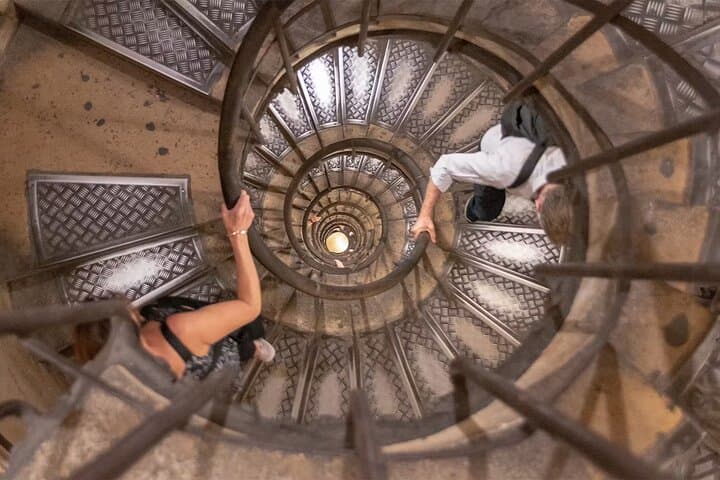
Practical guidance: tickets are time-specific and limited — book peak slots in advance. The visit combines indoor museum panels at the base with an outdoor terrace; there are stairs and an elevator but accessibility is limited in places. Expect crowds during mid-morning and late afternoon; early morning and late evening slots offer cleaner light for photos and shorter lines. Bring a compact bag (security checks at entry), wear comfortable shoes for stairways, and allow 45–90 minutes to move through exhibits and enjoy the panoramic terrace. Public transport is convenient; follow signage to the underpass entry to avoid vehicle traffic. Respect the memorial areas and the stonework — they’re part of what keeps the monument alive for future visitors.
easy.
1–5 hours.
Suitable for most fitness levels; basic mobility needed to climb stairs or use elevator where available.
Yes — tickets are issued for specific entry times and typically refundable up to 24 hours before the scheduled slot per the policy.
An elevator services part of the monument but some stair access may still be required; visitors with mobility needs should check accessibility details in advance.
Small daypacks are allowed but larger bags may be inspected; avoid oversized items to speed through security.
Plan 45–90 minutes to see the base exhibits and spend time on the terrace; longer if you arrive during busy periods.
Commissioned by Napoleon after the 1805 Battle of Austerlitz and completed in 1836, the Arc commemorates French military victories and lists generals and campaigns on its inner and outer surfaces.
Visitor impact is managed through timed tickets and signage; stick to marked paths and avoid touching fragile reliefs to help preserve the monument’s stonework.
Tour Mints Ltd operates guided outdoor trips and adventures with an emphasis on safety, stewardship, and memorable experiences.

A wind off the Seine lifts the edges of your map as you step into Place Charles-de-Gaulle, the roundabout where twelve avenues radiate like spokes from the Arc de Triomphe. From the plaza the stone arch rises, heavy with carved campaigns and names, and the rooftop terrace gives a rare, elevated frame for Paris — the Eiffel Tower puncturing the skyline, the Champs-Élysées streaking away like a ribbon.
A wind off the Seine lifts the edges of your map as you step into Place Charles-de-Gaulle, the roundabout where twelve avenues radiate like spokes from the Arc de Triomphe. From the plaza the stone arch rises, heavy with carved campaigns and names, and the rooftop terrace gives a rare, elevated frame for Paris — the Eiffel Tower puncturing the skyline, the Champs-Élysées streaking away like a ribbon.
Built after Napoleon’s victories and completed in 1836, the Arc stands on the city’s historic alignment that leads west to La Défense. Its stone is Parisian limestone laid atop the broad terraces of the Paris Basin; below the pavement the Tomb of the Unknown Soldier and its eternal flame mark modern memory and civic ritual. The site remains a working memorial and a stage for national ceremonies, and the rooftop is also a local favorite at dusk when city lights begin to assert themselves.
Practical guidance: tickets are time-specific and limited — book peak slots in advance. The visit combines indoor museum panels at the base with an outdoor terrace; there are stairs and an elevator but accessibility is limited in places. Expect crowds during mid-morning and late afternoon; early morning and late evening slots offer cleaner light for photos and shorter lines. Bring a compact bag (security checks at entry), wear comfortable shoes for stairways, and allow 45–90 minutes to move through exhibits and enjoy the panoramic terrace. Public transport is convenient; follow signage to the underpass entry to avoid vehicle traffic. Respect the memorial areas and the stonework — they’re part of what keeps the monument alive for future visitors.