THE ADVENTURE COLLECTIVE® · Independent discovery and booking for outdoor travel

Experience the Arava’s famously dark skies on a guided, telescope-led stargazing tour. With expert narration, Bedouin-style tea, and low light pollution, this two-hour desert outing teaches constellations, navigation by stars, and seasonal sky changes.
Experience the Arava’s famously dark skies on a guided, telescope-led stargazing tour. With expert narration, Bedouin-style tea, and low light pollution, this two-hour desert outing teaches constellations, navigation by stars, and seasonal sky changes.
The desert night opens like a blank page — cool air, a low horizon, and a scatter of lights that the Arava refuses to claim. Guides set up large telescopes while a kettle of Bedouin-style tea steams nearby; constellations rise familiarly as the group settles into the silence.
Verified experiences and guided adventures in the surrounding area.
Operated by Arava Star Watching · Eilat, Southern District
The desert night opens like a blank page — cool air, a low horizon, and a scatter of lights that the Arava refuses to claim. Guides set up large telescopes while a kettle of Bedouin-style tea steams nearby; constellations rise familiarly as the group settles into the silence.
This stretch of the southern Arava sits on ancient geology: flat salt pans, eroded sandstone, and the same copper-bearing rock that drew miners to Timna in antiquity. Bedouin stories and Greco-Roman star myths have long been spoken beneath this sky; modern guides weave those narratives with practical astronomy, showing how seasonal sky changes map onto navigation and oral history.
Expect to identify major constellations, locate north by stellar patterns, and peer at planets and star clusters through high-powered optics. The air is unusually crisp here — low humidity and minimal light pollution sharpen views, while sand and occasional wind remind you you’re outdoors.
Plan practicalities: tours typically last about two hours, are accessible to most fitness levels, and often run after sunset when temperatures drop quickly. Dress in warm layers, carry water, and bring a red-light headlamp to preserve night vision. Photography through telescopes usually requires adapters, so check with your operator. Small groups create a quieter experience; larger groups dilute telescope time.
Whether you come for mythology, science, or the simple thrill of seeing the Milky Way spill across the sky, the Arava delivers a clear, focused night that teaches how to read the heavens and find your place beneath them.
easy.
2 hours.
Suitable for most fitness levels; mostly standing on flat desert ground with short walks
Tours run about two hours, typically starting after sunset and ending once peak viewing is over or the group time concludes.
Yes — the activity is rated easy and infants can be in strollers; check operator policy for lap infants and telescope access.
Tours are often canceled for bad weather or high winds; operators commonly issue full refunds if canceled at least 24 hours in advance.
Some offerings are priced per private group — confirm pricing before booking; public-group tours are usually charged per person.
The southern Arava is marked by ancient copper mining at Timna and longstanding Bedouin travel routes; both influenced local place names and oral astronomy traditions.
Dark-sky conditions are fragile: minimize light use, pack out all waste, and follow guide instructions to protect nocturnal wildlife and archaeological sites.
Arava Star Watching operates guided outdoor trips and adventures with an emphasis on safety, stewardship, and memorable experiences.
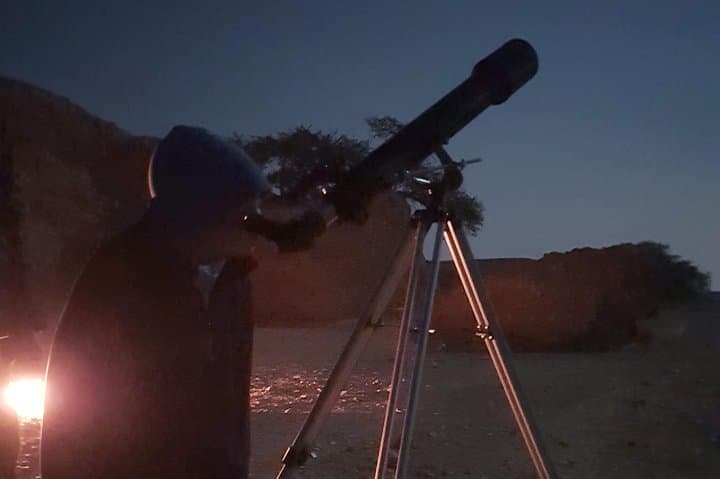
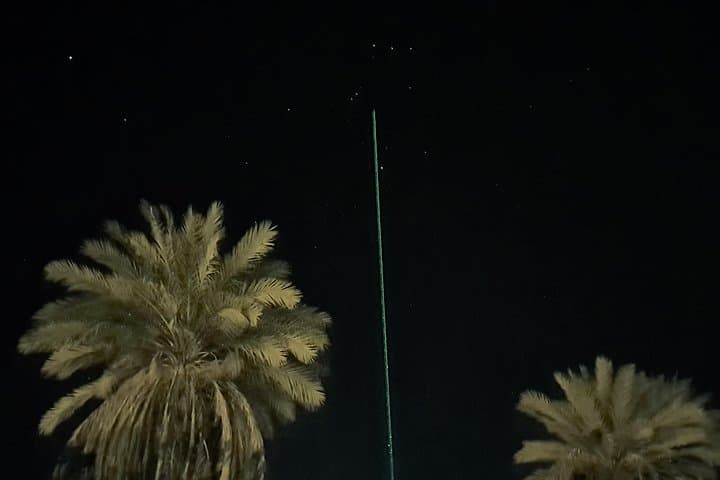
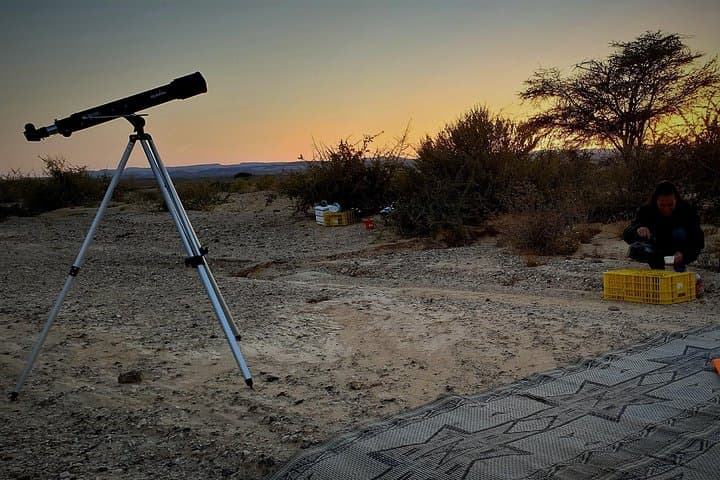
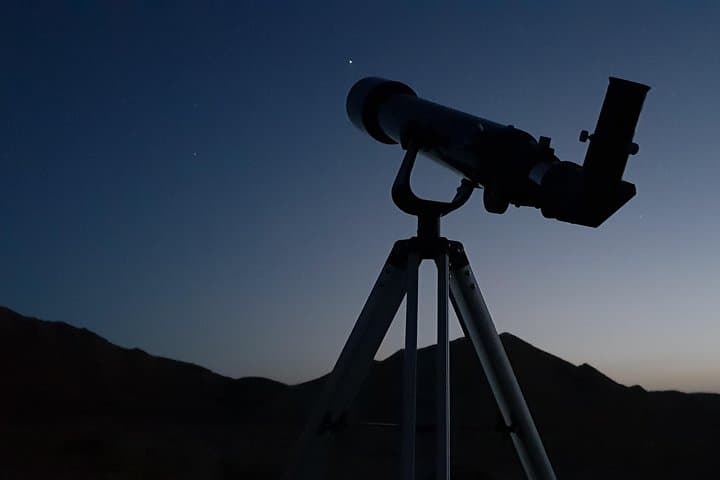
The desert night opens like a blank page — cool air, a low horizon, and a scatter of lights that the Arava refuses to claim. Guides set up large telescopes while a kettle of Bedouin-style tea steams nearby; constellations rise familiarly as the group settles into the silence.
The desert night opens like a blank page — cool air, a low horizon, and a scatter of lights that the Arava refuses to claim. Guides set up large telescopes while a kettle of Bedouin-style tea steams nearby; constellations rise familiarly as the group settles into the silence.
This stretch of the southern Arava sits on ancient geology: flat salt pans, eroded sandstone, and the same copper-bearing rock that drew miners to Timna in antiquity. Bedouin stories and Greco-Roman star myths have long been spoken beneath this sky; modern guides weave those narratives with practical astronomy, showing how seasonal sky changes map onto navigation and oral history.
Expect to identify major constellations, locate north by stellar patterns, and peer at planets and star clusters through high-powered optics. The air is unusually crisp here — low humidity and minimal light pollution sharpen views, while sand and occasional wind remind you you’re outdoors.
Plan practicalities: tours typically last about two hours, are accessible to most fitness levels, and often run after sunset when temperatures drop quickly. Dress in warm layers, carry water, and bring a red-light headlamp to preserve night vision. Photography through telescopes usually requires adapters, so check with your operator. Small groups create a quieter experience; larger groups dilute telescope time.
Whether you come for mythology, science, or the simple thrill of seeing the Milky Way spill across the sky, the Arava delivers a clear, focused night that teaches how to read the heavens and find your place beneath them.