THE ADVENTURE COLLECTIVE® · Independent discovery and booking for outdoor travel

Walk through Arashiyama’s swaying bamboo, visit a UNESCO Zen temple, and climb to Mount Iwatayama for close encounters with wild macaques. This four-hour guided tour pairs easy cultural stops with a moderately steep woodland walk and panoramic city views.
Walk through Arashiyama’s swaying bamboo, visit a UNESCO Zen temple, and climb to Mount Iwatayama for close encounters with wild macaques. This four-hour guided tour pairs easy cultural stops with a moderately steep woodland walk and panoramic city views.
A cool morning in Arashiyama begins with the river daring you forward—gray water slicing past stone, bridges arching like borrowed breaths of the city. The tour threads through the iconic Arashiyama Bamboo Grove where tall stalks bend and whisper; the sound is listed among Japan’s notable soundscapes and feels almost purposeful as you walk.
Verified experiences and guided adventures in the surrounding area.
Operated by MY Travel Consulting · Kyoto, Kyoto Prefecture
A cool morning in Arashiyama begins with the river daring you forward—gray water slicing past stone, bridges arching like borrowed breaths of the city. The tour threads through the iconic Arashiyama Bamboo Grove where tall stalks bend and whisper; the sound is listed among Japan’s notable soundscapes and feels almost purposeful as you walk.
Tenryū-ji Temple, established in 1339 and part of the Historic Monuments of Ancient Kyoto (UNESCO), anchors the district with classical Zen gardens and carved screens that map centuries of religious practice. Geologically, the area sits on the Katsura River floodplain with low ridgelines—Mount Iwatayama rises modestly above the valley, offering sweeping views after a short climb. Cultural life here is calm but deliberate: noodle shops, tea houses, and riverside promenades sustain the long tradition of pilgrim and pleasure-seeker alike.
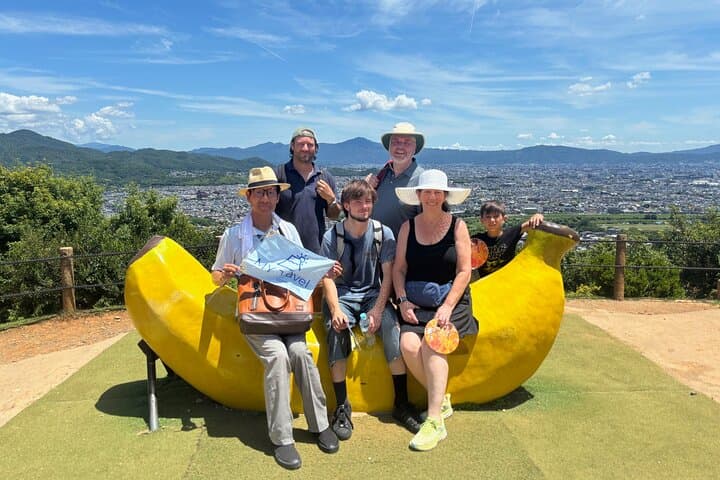
The tour culminates at Arashiyama Monkey Park Iwatayama, where over 100 wild Japanese macaques move with curious purpose across rocks and trails; the park perches at roughly 160 m elevation, reached by a 25–40 minute uphill walk from the river. Expect uneven stone steps, narrow trails, and clear viewpoints.
Practical guidance: go early to avoid crowds, wear grippy shoes for packed earth and steps, and carry local currency for incidental purchases. Hydrate and set aside roughly four hours including transfer time; the guided format typically covers admissions and public-transport fees. Keep a respectful distance from wildlife—these macaques are wild animals, not pets—follow guide instructions, and enjoy a compact slice of Kyoto that pairs natural energy with layered human history.
moderate.
4 hours.
Be in good walking shape—expect a moderate uphill walk of roughly 25–40 minutes with some stairs and uneven surfaces.
The approach is a moderate uphill walk of about 25–40 minutes with stone steps and narrow paths—suitable for most fit visitors but not recommended for those with serious mobility limits.
This guided tour typically includes admission fees and public-transport charges as listed, but confirm at booking for any changes.
Yes—families commonly join; strollers may be used in flatter areas but the uphill section involves steps and rough trail segments.
Early morning on weekdays is best; late afternoon can also be calmer but light for photos will be softer in the morning.
Arashiyama grew as a scenic retreat for Kyoto’s aristocracy in the Heian and Muromachi periods; Tenryū-ji was founded in 1339 and rebuilt and preserved as a major Zen temple and cultural site.
The area balances heavy tourism with protected temple gardens and signage—stay on paths, avoid littering, and follow guide rules to minimize impact on the macaques and fragile bamboo stands.
MY Travel Consulting operates guided outdoor trips and adventures with an emphasis on safety, stewardship, and memorable experiences.
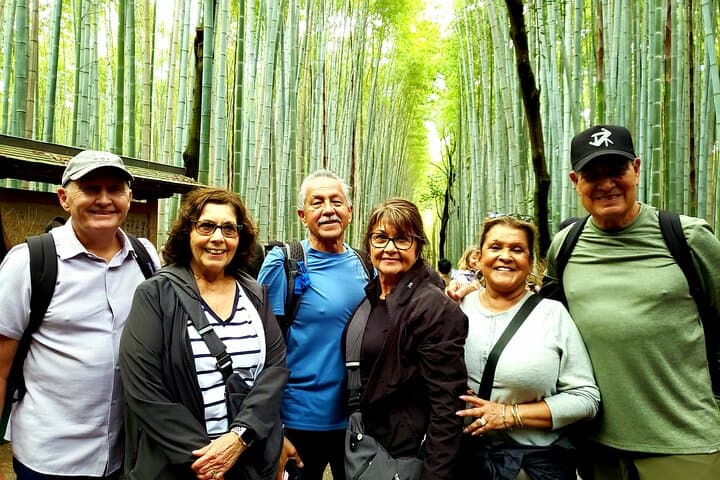
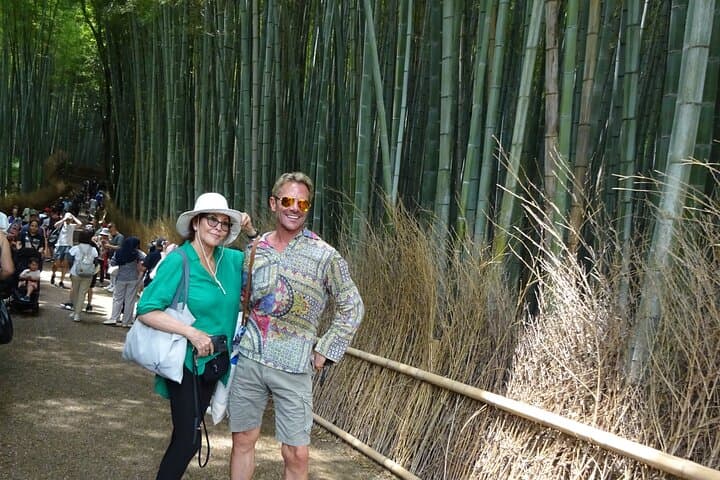
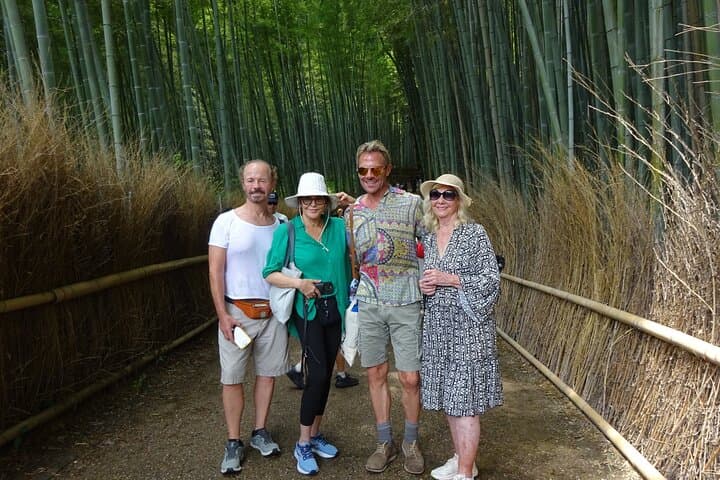
A cool morning in Arashiyama begins with the river daring you forward—gray water slicing past stone, bridges arching like borrowed breaths of the city. The tour threads through the iconic Arashiyama Bamboo Grove where tall stalks bend and whisper; the sound is listed among Japan’s notable soundscapes and feels almost purposeful as you walk.
A cool morning in Arashiyama begins with the river daring you forward—gray water slicing past stone, bridges arching like borrowed breaths of the city. The tour threads through the iconic Arashiyama Bamboo Grove where tall stalks bend and whisper; the sound is listed among Japan’s notable soundscapes and feels almost purposeful as you walk.
Tenryū-ji Temple, established in 1339 and part of the Historic Monuments of Ancient Kyoto (UNESCO), anchors the district with classical Zen gardens and carved screens that map centuries of religious practice. Geologically, the area sits on the Katsura River floodplain with low ridgelines—Mount Iwatayama rises modestly above the valley, offering sweeping views after a short climb. Cultural life here is calm but deliberate: noodle shops, tea houses, and riverside promenades sustain the long tradition of pilgrim and pleasure-seeker alike.
The tour culminates at Arashiyama Monkey Park Iwatayama, where over 100 wild Japanese macaques move with curious purpose across rocks and trails; the park perches at roughly 160 m elevation, reached by a 25–40 minute uphill walk from the river. Expect uneven stone steps, narrow trails, and clear viewpoints.
Practical guidance: go early to avoid crowds, wear grippy shoes for packed earth and steps, and carry local currency for incidental purchases. Hydrate and set aside roughly four hours including transfer time; the guided format typically covers admissions and public-transport fees. Keep a respectful distance from wildlife—these macaques are wild animals, not pets—follow guide instructions, and enjoy a compact slice of Kyoto that pairs natural energy with layered human history.