THE ADVENTURE COLLECTIVE® · Independent discovery and booking for outdoor travel

Step into Aranui Cave’s quiet chambers on a focused 1-hour guided walk through Waitomo’s delicate limestone formations. Learn the geology and Māori history while viewing stalactites and flowstone up close.
Step into Aranui Cave’s quiet chambers on a focused 1-hour guided walk through Waitomo’s delicate limestone formations. Learn the geology and Māori history while viewing stalactites and flowstone up close.
A cool hush meets you at the cave mouth as you step off the bush track into Aranui Cave — limestone walls lowering their voices, formations reaching down like patient hands. The guide leads a small group through a tight, dry cave whose quiet interior focuses attention on the sculpted stalactites, stalagmites and delicate flowstone curtains that have grown drip by drip over millennia.
Verified experiences and guided adventures in the surrounding area.
Operated by THL - Waitomo Caves Group · Waitomo, Waikato
A cool hush meets you at the cave mouth as you step off the bush track into Aranui Cave — limestone walls lowering their voices, formations reaching down like patient hands. The guide leads a small group through a tight, dry cave whose quiet interior focuses attention on the sculpted stalactites, stalagmites and delicate flowstone curtains that have grown drip by drip over millennia.
Aranui was rediscovered in 1910 by Ruruku Aranui and occupies a special place in local Māori stories. Geologically, the cave is a compact example of Waitomo’s karst landscape: former seabed limestone carved by chemistry rather than a running river, which is why it’s drier and hosts less cave life than neighboring systems. Culturally, the cave sits in the Ruakuri Scenic Reserve, and guides often explain both the geology and the Māori connection that gives the site its name and meaning.
The experience balances close-up viewing and interpretation — expect high chambers, narrow passages, and richly patterned formations illuminated by careful guide lighting. The entrance area supports a short 15-minute bush walk through native trap-lines and kauri fern pockets.
Practicalities: tours are short (about an hour), require comfortable, closed-toe shoes and a warm layer; stairs are part of the route so it’s not suitable for those with major mobility issues. Groups are intentionally small to protect fragile formations; touching is forbidden. Combine this stop with nearby Waitomo glowworm attractions or the Ruakuri Scenic Reserve walk for a fuller half-day in the karst country.
easy.
1–1.5 hours.
Suitable for most people who can manage short stair sections and uneven surfaces; not recommended for those with significant mobility issues.
The guided cave tour runs about 60 minutes, with an additional short guided bush walk of roughly 15 minutes at the reserve entrance.
Yes — guides use controlled lighting to highlight formations; you won’t need a torch during the main tour but it can help on the track to the entrance.
Children are welcome but must be accompanied by an adult; the route includes stairs and narrow sections that require supervision.
No — the route involves stairs and uneven surfaces and is not suitable for those who have difficulty navigating stairs.
Aranui Cave was opened to the public after Ruruku Aranui’s 1910 discovery and is regarded locally for its cultural significance to Māori and its delicate decorative formations.
The cave’s formations are fragile and slow-growing; tours limit group sizes and prohibit touching to protect geology and cultural values.
THL - Waitomo Caves Group operates guided outdoor trips and adventures with an emphasis on safety, stewardship, and memorable experiences.
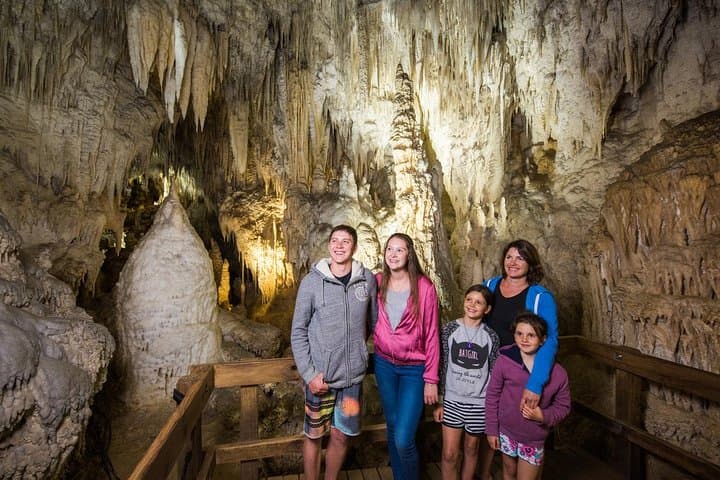
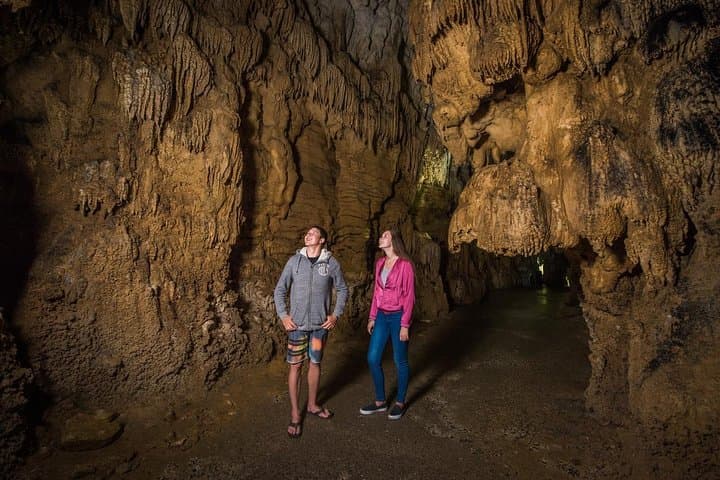
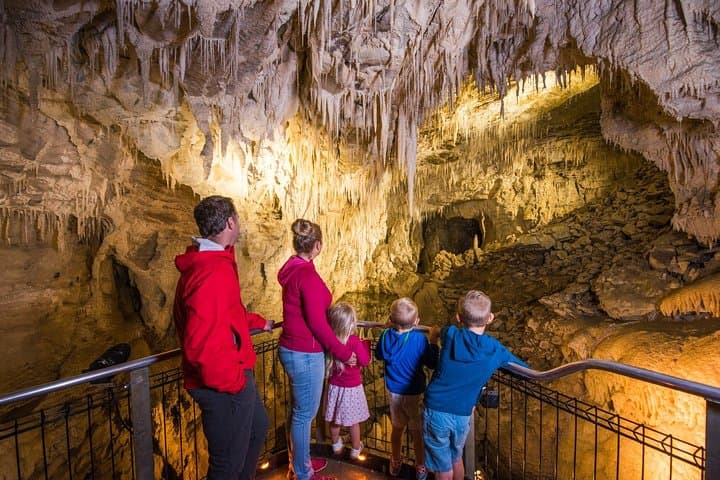
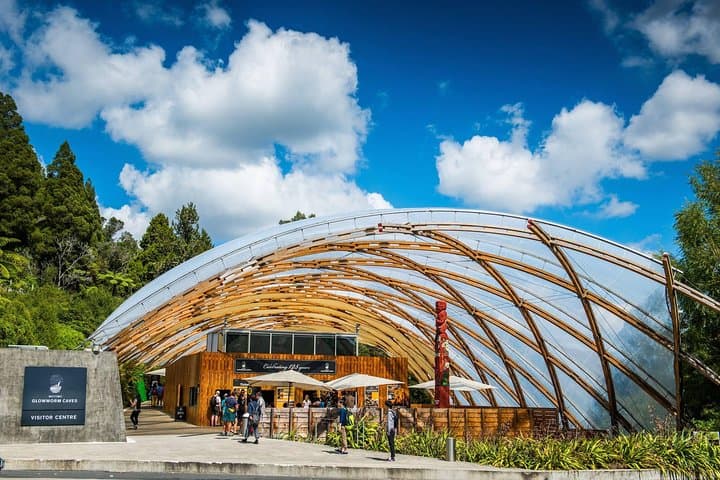
A cool hush meets you at the cave mouth as you step off the bush track into Aranui Cave — limestone walls lowering their voices, formations reaching down like patient hands. The guide leads a small group through a tight, dry cave whose quiet interior focuses attention on the sculpted stalactites, stalagmites and delicate flowstone curtains that have grown drip by drip over millennia.
A cool hush meets you at the cave mouth as you step off the bush track into Aranui Cave — limestone walls lowering their voices, formations reaching down like patient hands. The guide leads a small group through a tight, dry cave whose quiet interior focuses attention on the sculpted stalactites, stalagmites and delicate flowstone curtains that have grown drip by drip over millennia.
Aranui was rediscovered in 1910 by Ruruku Aranui and occupies a special place in local Māori stories. Geologically, the cave is a compact example of Waitomo’s karst landscape: former seabed limestone carved by chemistry rather than a running river, which is why it’s drier and hosts less cave life than neighboring systems. Culturally, the cave sits in the Ruakuri Scenic Reserve, and guides often explain both the geology and the Māori connection that gives the site its name and meaning.
The experience balances close-up viewing and interpretation — expect high chambers, narrow passages, and richly patterned formations illuminated by careful guide lighting. The entrance area supports a short 15-minute bush walk through native trap-lines and kauri fern pockets.
Practicalities: tours are short (about an hour), require comfortable, closed-toe shoes and a warm layer; stairs are part of the route so it’s not suitable for those with major mobility issues. Groups are intentionally small to protect fragile formations; touching is forbidden. Combine this stop with nearby Waitomo glowworm attractions or the Ruakuri Scenic Reserve walk for a fuller half-day in the karst country.