THE ADVENTURE COLLECTIVE® · Independent discovery and booking for outdoor travel

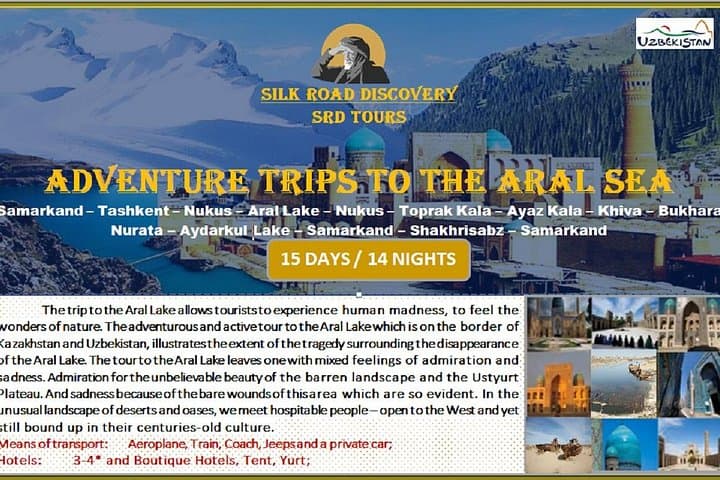
A 14‑day private adventure from Samarkand to the exposed seabed of the Aral Sea, combining Silk Road masterpieces with the haunting landscapes of Muynak and the Ustyurt Plateau. Expect long drives, yurt nights, and chance encounters with desert wildlife.
A 14‑day private adventure from Samarkand to the exposed seabed of the Aral Sea, combining Silk Road masterpieces with the haunting landscapes of Muynak and the Ustyurt Plateau. Expect long drives, yurt nights, and chance encounters with desert wildlife.
You step out of the vehicle onto a cracked, pale plain where rusting hulls puncture the horizon — the Muynak ship cemetery, proof the sea once reached here. Wind pushes fine salt toward a low sun; at night the Milky Way drapes itself over the yurt camp, and you realize this trip measures time in both ruins and stars.
Verified experiences and guided adventures in the surrounding area.
Operated by SILK ROAD DISCOVERY TOURS · Nukus, Karakalpakstan
You step out of the vehicle onto a cracked, pale plain where rusting hulls puncture the horizon — the Muynak ship cemetery, proof the sea once reached here. Wind pushes fine salt toward a low sun; at night the Milky Way drapes itself over the yurt camp, and you realize this trip measures time in both ruins and stars.
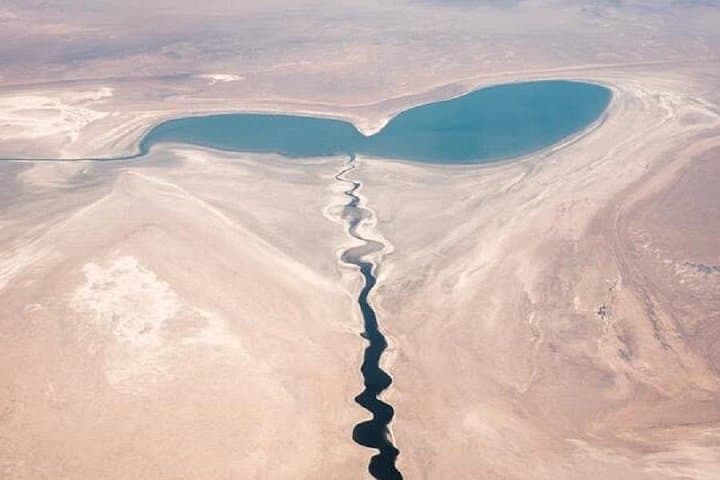
This 14‑day route threads two stories: the deep history of the Silk Road—Samarkand’s Registan, Khiva’s Ichan Kala, Bukhara’s madrasas—and the modern story of ecological collapse as Soviet irrigation drained the Aral Sea. Geologically the region shifts from the alluvial plains of the Amu Darya to the limestone escarpments of the Ustyurt Plateau and the sandy Kyzylkum Desert; the dried seabed shows evaporite salts and clay pans you can walk across when conditions permit.
Cultural touchpoints are immediate: bazaars that trade in nuts, dried fruit and ikat textiles; Karakalpak hosts who still keep yurt and camel traditions; and Nukus’s Savitsky Museum, which anchors Soviet-era art and Karakalpak heritage. Expect open‑fire dinners, yurt nights, and long drives broken by fortress ruins like Ayaz‑Kala and Toprak‑Kala.
Practical guidance: travel here means long transfers and basic rural facilities—pack for sun, wind, and cold nights; bring a headlamp, cash, and layered clothing. Road surfaces vary from paved highways to dusty tracks, so motion‑sickness meds and flexible timing help. Plan spring or autumn for milder temperatures; summer is hot and dusty. Respect local customs when visiting villages and archeological sites, and leave no trace on fragile salt flats.
moderate.
14 days.
Moderate fitness: able to handle consecutive travel days, short walks, and basic camp activities
Late spring (April–June) and early autumn (September–October) offer milder temperatures and clearer roads; summer can be very hot and dusty.
Some tour stops allow swimming in isolated, less saline pockets or lakes near the former coastline, but water quality varies—check with your guide before entering.
Expect a mix: paved intercity roads and long stretches of gravel or dirt track to reaches like Muynak and remote plateaus; travel times include buffer for slow sections.
Accommodations range from mid‑range hotels in cities to simple yurt camps near Aydarkul and the Aral Sea; prepare for basic facilities in rural areas.
The Aral Sea was once one of the world’s largest inland seas; from the 1960s large‑scale irrigation projects diverted inflows and caused catastrophic shrinkage. The route also follows ancient Silk Road cities that shaped Central Asian Islamic and trading culture.
The Aral disaster is ongoing—support local conservation projects where possible, avoid disturbing sensitive bird habitats, and minimize plastic and waste left in camps.
SILK ROAD DISCOVERY TOURS operates guided outdoor trips and adventures with an emphasis on safety, stewardship, and memorable experiences.
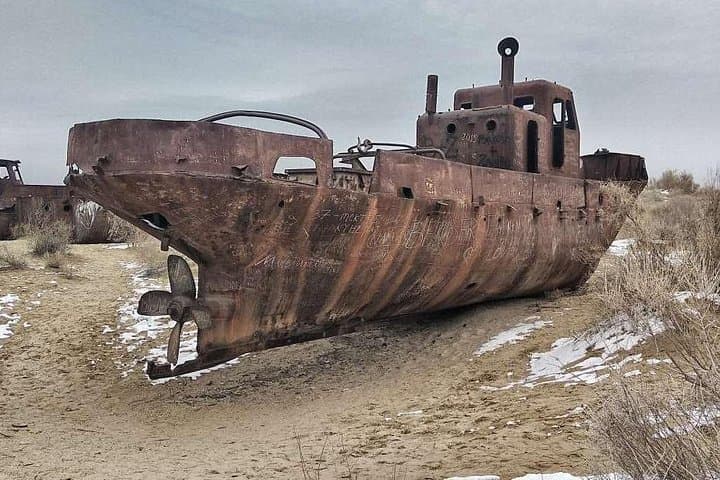
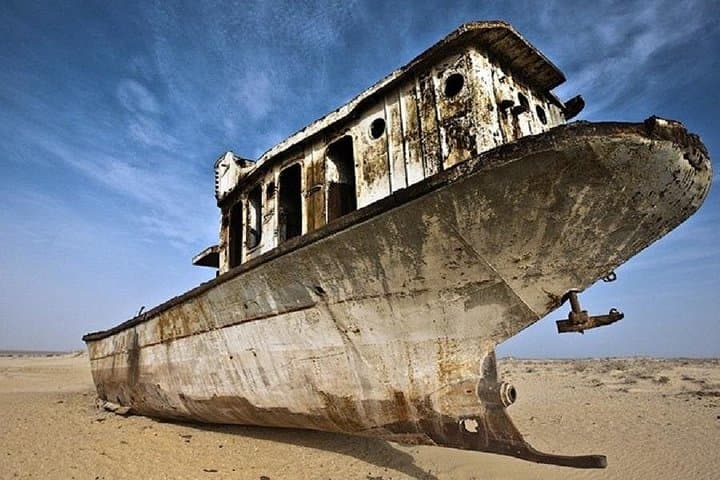
You step out of the vehicle onto a cracked, pale plain where rusting hulls puncture the horizon — the Muynak ship cemetery, proof the sea once reached here. Wind pushes fine salt toward a low sun; at night the Milky Way drapes itself over the yurt camp, and you realize this trip measures time in both ruins and stars.
You step out of the vehicle onto a cracked, pale plain where rusting hulls puncture the horizon — the Muynak ship cemetery, proof the sea once reached here. Wind pushes fine salt toward a low sun; at night the Milky Way drapes itself over the yurt camp, and you realize this trip measures time in both ruins and stars.
This 14‑day route threads two stories: the deep history of the Silk Road—Samarkand’s Registan, Khiva’s Ichan Kala, Bukhara’s madrasas—and the modern story of ecological collapse as Soviet irrigation drained the Aral Sea. Geologically the region shifts from the alluvial plains of the Amu Darya to the limestone escarpments of the Ustyurt Plateau and the sandy Kyzylkum Desert; the dried seabed shows evaporite salts and clay pans you can walk across when conditions permit.
Cultural touchpoints are immediate: bazaars that trade in nuts, dried fruit and ikat textiles; Karakalpak hosts who still keep yurt and camel traditions; and Nukus’s Savitsky Museum, which anchors Soviet-era art and Karakalpak heritage. Expect open‑fire dinners, yurt nights, and long drives broken by fortress ruins like Ayaz‑Kala and Toprak‑Kala.
Practical guidance: travel here means long transfers and basic rural facilities—pack for sun, wind, and cold nights; bring a headlamp, cash, and layered clothing. Road surfaces vary from paved highways to dusty tracks, so motion‑sickness meds and flexible timing help. Plan spring or autumn for milder temperatures; summer is hot and dusty. Respect local customs when visiting villages and archeological sites, and leave no trace on fragile salt flats.