THE ADVENTURE COLLECTIVE® · Independent discovery and booking for outdoor travel

Three days of dust, deserted ships and hilltop fortresses: this overland circuit from Nukus takes you to Muynak’s ship cemetery, the Ustyurt Plateau and a chain of Khorezm fortresses. Expect long drives, short hikes, and nights in yurt camps under a wide desert sky.
Three days of dust, deserted ships and hilltop fortresses: this overland circuit from Nukus takes you to Muynak’s ship cemetery, the Ustyurt Plateau and a chain of Khorezm fortresses. Expect long drives, short hikes, and nights in yurt camps under a wide desert sky.
The convoy rolls out before dawn across a hard, sun-baked plain; dust plumes rise and fall like low clouds as a sedan and a 4x4 thread toward the ghostly rim of the Aral Sea. By the first light rusted trawlers appear, half-buried on the former seabed at Muynak — a place where industry met climate and lost.
Verified experiences and guided adventures in the surrounding area.
Operated by Oxus Travel · Nukus, Karakalpakstan
The convoy rolls out before dawn across a hard, sun-baked plain; dust plumes rise and fall like low clouds as a sedan and a 4x4 thread toward the ghostly rim of the Aral Sea. By the first light rusted trawlers appear, half-buried on the former seabed at Muynak — a place where industry met climate and lost.
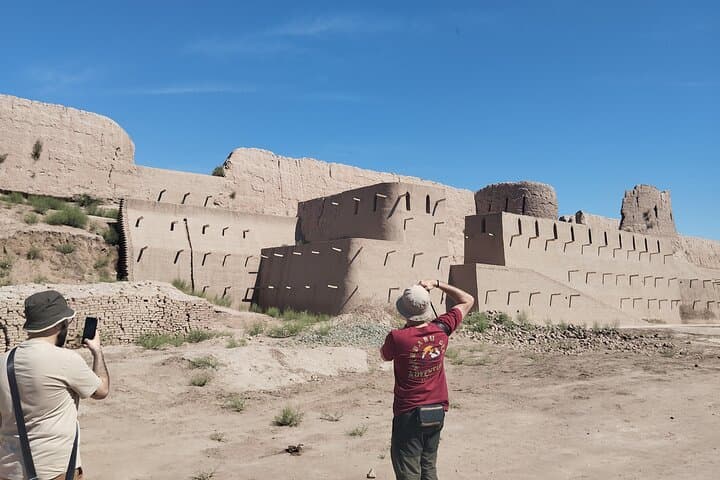
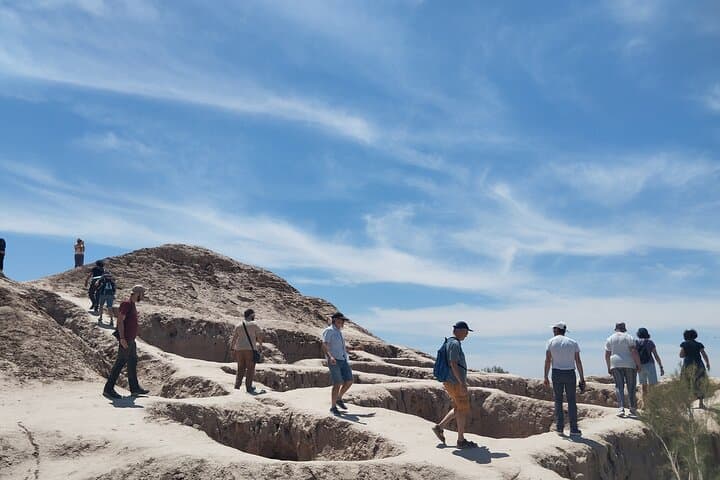
This three-day loop from Nukus traces millennia: Zoroastrian dakhmas on rounded bluffs, Khorezm fortresses built between the 1st century BCE and the medieval era, and the modern shock of vanished water caused by Soviet-era irrigation that diverted the Amu Darya. Geology here is blunt and open — wind-sanded plateaus, salt marshes of Barsakelmes, and the folded limestone escarpments of the Ustyurt, where erosion carves sheer canyons and sudden viewpoints.
Culturally, Karakalpakstan is quiet and proud; museums in Nukus preserve avant-garde art and local ceramics, while village markets still trade camel milk and hand-stitched textiles. Expect long drives between sites, short walks over fragile ruins, and two nights in simple yurt camps under a wide sky.
Practical guidance: travel with sun protection and plenty of water, plan for dust and variable phone signal, and follow guides on where to tread — archaeological sites are fragile. Start or finish in Nukus, Urgench, or Khiva depending on logistics; drivers experienced with desert conditions manage the route, but bring a tolerant pace and curiosity. This is an immersive, road‑based expedition that pairs stark landscapes with deep human history.
moderate.
3 days.
Moderate fitness for short on-site walks, some uneven terrain and long vehicle transfers
Yes — the itinerary is flexible and can start or end in Khiva, Urgench or Nukus; confirm pickup/drop-off when booking.
Expect roughly 1,200 km over three days with several multi-hour transfers between highlights; transportation time is included in the tour length.
Yes — nights are spent in simple yurt camps with basic facilities; options may include provided dinner and breakfast.
Minimum age listed is 15 for this tour; check with the operator about younger travelers and any additional requirements.
The Aral’s retreat resulted largely from mid-20th-century diversions of the Amu Darya and Syr Darya for cotton irrigation; nearby fortresses reflect Khorezm’s long role as a Silk Road frontier.
The region’s fragile desert and former seabed require low-impact travel—avoid disturbing salt flats and follow local guidance on waste and water use.
Oxus Travel operates guided outdoor trips and adventures with an emphasis on safety, stewardship, and memorable experiences.
The convoy rolls out before dawn across a hard, sun-baked plain; dust plumes rise and fall like low clouds as a sedan and a 4x4 thread toward the ghostly rim of the Aral Sea. By the first light rusted trawlers appear, half-buried on the former seabed at Muynak — a place where industry met climate and lost.
The convoy rolls out before dawn across a hard, sun-baked plain; dust plumes rise and fall like low clouds as a sedan and a 4x4 thread toward the ghostly rim of the Aral Sea. By the first light rusted trawlers appear, half-buried on the former seabed at Muynak — a place where industry met climate and lost.
This three-day loop from Nukus traces millennia: Zoroastrian dakhmas on rounded bluffs, Khorezm fortresses built between the 1st century BCE and the medieval era, and the modern shock of vanished water caused by Soviet-era irrigation that diverted the Amu Darya. Geology here is blunt and open — wind-sanded plateaus, salt marshes of Barsakelmes, and the folded limestone escarpments of the Ustyurt, where erosion carves sheer canyons and sudden viewpoints.
Culturally, Karakalpakstan is quiet and proud; museums in Nukus preserve avant-garde art and local ceramics, while village markets still trade camel milk and hand-stitched textiles. Expect long drives between sites, short walks over fragile ruins, and two nights in simple yurt camps under a wide sky.
Practical guidance: travel with sun protection and plenty of water, plan for dust and variable phone signal, and follow guides on where to tread — archaeological sites are fragile. Start or finish in Nukus, Urgench, or Khiva depending on logistics; drivers experienced with desert conditions manage the route, but bring a tolerant pace and curiosity. This is an immersive, road‑based expedition that pairs stark landscapes with deep human history.