THE ADVENTURE COLLECTIVE® · Independent discovery and booking for outdoor travel

Drive from Cape Town across vineyard-dotted passes to Aquila Private Game Reserve for a late-afternoon Big Five safari, capped with drinks and light snacks as the sun sinks. This inclusive sunset experience pairs close wildlife viewing with short interpretive stops and comfortable transport.
Drive from Cape Town across vineyard-dotted passes to Aquila Private Game Reserve for a late-afternoon Big Five safari, capped with drinks and light snacks as the sun sinks. This inclusive sunset experience pairs close wildlife viewing with short interpretive stops and comfortable transport.
You head east out of Cape Town as late afternoon light slants through mountain passes and rows of vineyards — the city falls behind and the Karoo’s open plains begin to breathe. By the time the 4x4 rumbles into Aquila Private Game Reserve, the sun has tipped toward the horizon and the savannah starts to change color, making the animals’ silhouettes sharp against the sky.
Verified experiences and guided adventures in the surrounding area.
Operated by african macaw dmc and Safaris · Touws River, Western Cape
You head east out of Cape Town as late afternoon light slants through mountain passes and rows of vineyards — the city falls behind and the Karoo’s open plains begin to breathe. By the time the 4x4 rumbles into Aquila Private Game Reserve, the sun has tipped toward the horizon and the savannah starts to change color, making the animals’ silhouettes sharp against the sky.
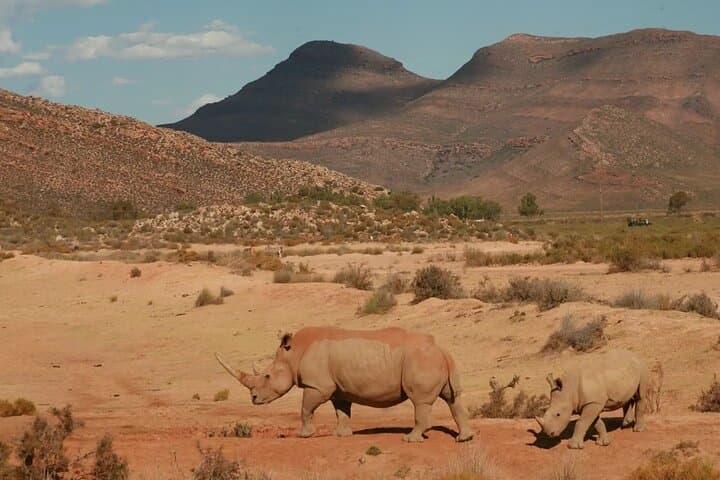
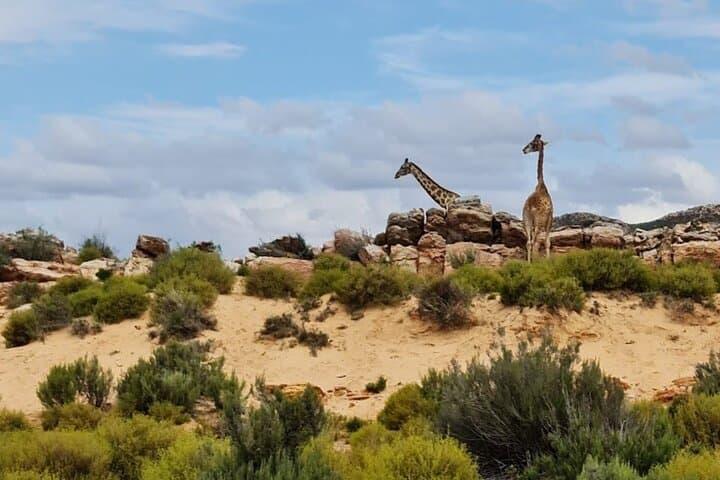
Aquila sits on converted farmland in the Western Cape; the reserve was established in the 1990s as part of a wave of private game reserves aimed at restoring fenced wilderness for conservation and tourism. Geologically, you’ll notice rolling shale and sandstone ridges that give way to plains where dry-country grasses dominate; the area transitions between fynbos-influenced slopes and semi-arid plains that support reintroduced plains game and the iconic Big Five.
Culturally, the route passes wine-producing valleys and small Karoo towns where Afrikaner and Cape Dutch histories meet post-apartheid tourism economies. Guides here tend to combine animal-focused natural history with practical conservation notes about rhino protection and habitat management.
Practical guidance: expect a long day—pickup in Cape Town, roughly 2.5 hours each way, with about two hours at the reserve including the sunset drive and snacks. Wear comfortable layers, bring binoculars and a camera with a mid-telephoto lens, and be prepared for bumpy tracks. Hydrate on the drive, respect the guide’s instructions around animals, and plan for limited mobile reception. The payoff is close-range wildlife viewing at dusk, when the light and quiet make the landscape feel alert and alive.
easy.
8–9 hours.
Suitable for most fitness levels; participants should be able to sit in a safari vehicle for extended periods and step up into a 4x4.
The pickup-to-dropoff window is about 8–9 hours total with roughly 2.5 hours each way, plus approximately two hours at the reserve.
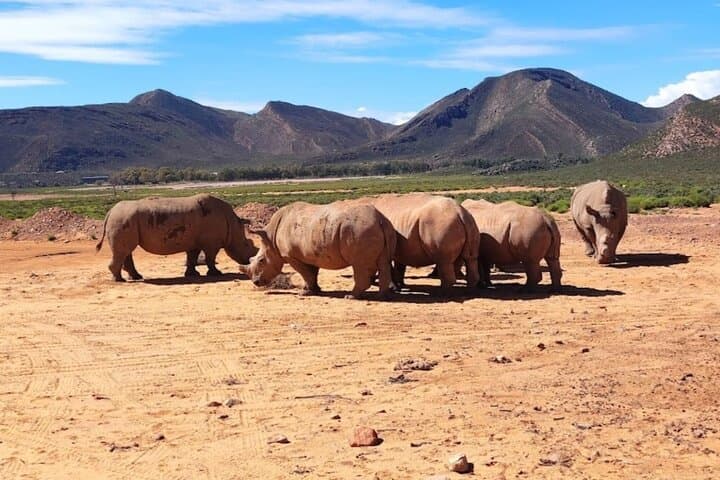
Sightings aren’t guaranteed, but Aquila manages resident herds of elephants, buffalo, rhino, lions, and giraffes—sunset drives are productive for sightings when animals are active.
Yes — the operator provides infant seats on request and the tour is described as suitable for all physical fitness levels; always disclose ages when booking.
The tour includes bottled water, drinks and light snacks at the reserve, but bring any personal medications and extra water if you need more than the provided amounts.
The reserve occupies former agricultural land converted in the late 20th century to support game reintroduction and private conservation-linked tourism, reflecting a regional shift toward wildlife economies.
Aquila participates in managed breeding and anti-poaching measures; visitors should follow guides’ rules to minimize disturbance and support reserve funding via park fees.
african macaw dmc and Safaris operates guided outdoor trips and adventures with an emphasis on safety, stewardship, and memorable experiences.
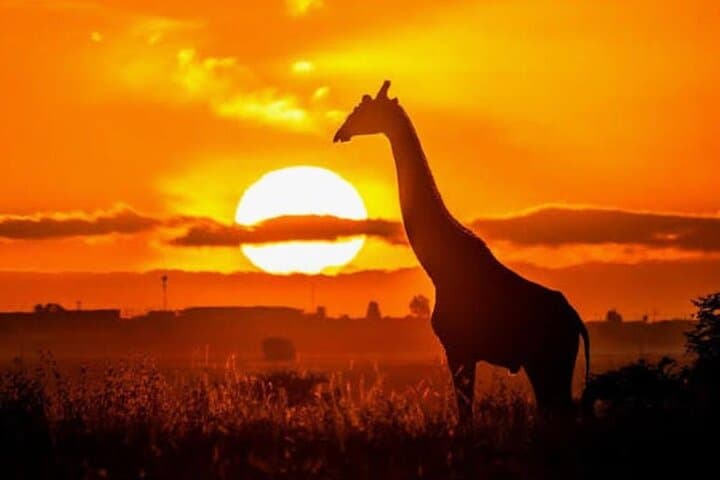
You head east out of Cape Town as late afternoon light slants through mountain passes and rows of vineyards — the city falls behind and the Karoo’s open plains begin to breathe. By the time the 4x4 rumbles into Aquila Private Game Reserve, the sun has tipped toward the horizon and the savannah starts to change color, making the animals’ silhouettes sharp against the sky.
You head east out of Cape Town as late afternoon light slants through mountain passes and rows of vineyards — the city falls behind and the Karoo’s open plains begin to breathe. By the time the 4x4 rumbles into Aquila Private Game Reserve, the sun has tipped toward the horizon and the savannah starts to change color, making the animals’ silhouettes sharp against the sky.
Aquila sits on converted farmland in the Western Cape; the reserve was established in the 1990s as part of a wave of private game reserves aimed at restoring fenced wilderness for conservation and tourism. Geologically, you’ll notice rolling shale and sandstone ridges that give way to plains where dry-country grasses dominate; the area transitions between fynbos-influenced slopes and semi-arid plains that support reintroduced plains game and the iconic Big Five.
Culturally, the route passes wine-producing valleys and small Karoo towns where Afrikaner and Cape Dutch histories meet post-apartheid tourism economies. Guides here tend to combine animal-focused natural history with practical conservation notes about rhino protection and habitat management.
Practical guidance: expect a long day—pickup in Cape Town, roughly 2.5 hours each way, with about two hours at the reserve including the sunset drive and snacks. Wear comfortable layers, bring binoculars and a camera with a mid-telephoto lens, and be prepared for bumpy tracks. Hydrate on the drive, respect the guide’s instructions around animals, and plan for limited mobile reception. The payoff is close-range wildlife viewing at dusk, when the light and quiet make the landscape feel alert and alive.